The sinkhole that forced the closure of Brynymor Road in Swansea last week is “significantly larger than first anticipated,” according to Uplands councillor Peter May, who shared an update on social media after meeting with Welsh Water engineers.
Cllr May said the company had accepted liability for the collapse, which is believed to have been caused by a major leak just above the affected area. That leak was repaired last week, but engineers are still working to assess the full extent of the damage beneath the surface.
“The hole is significantly larger than first anticipated,” he wrote, “and when I left site they were still trying to find the extent of the void under the road.” Based on surface cracking, the damage could stretch around three metres wide, five to six metres long, and just over one metre deep.
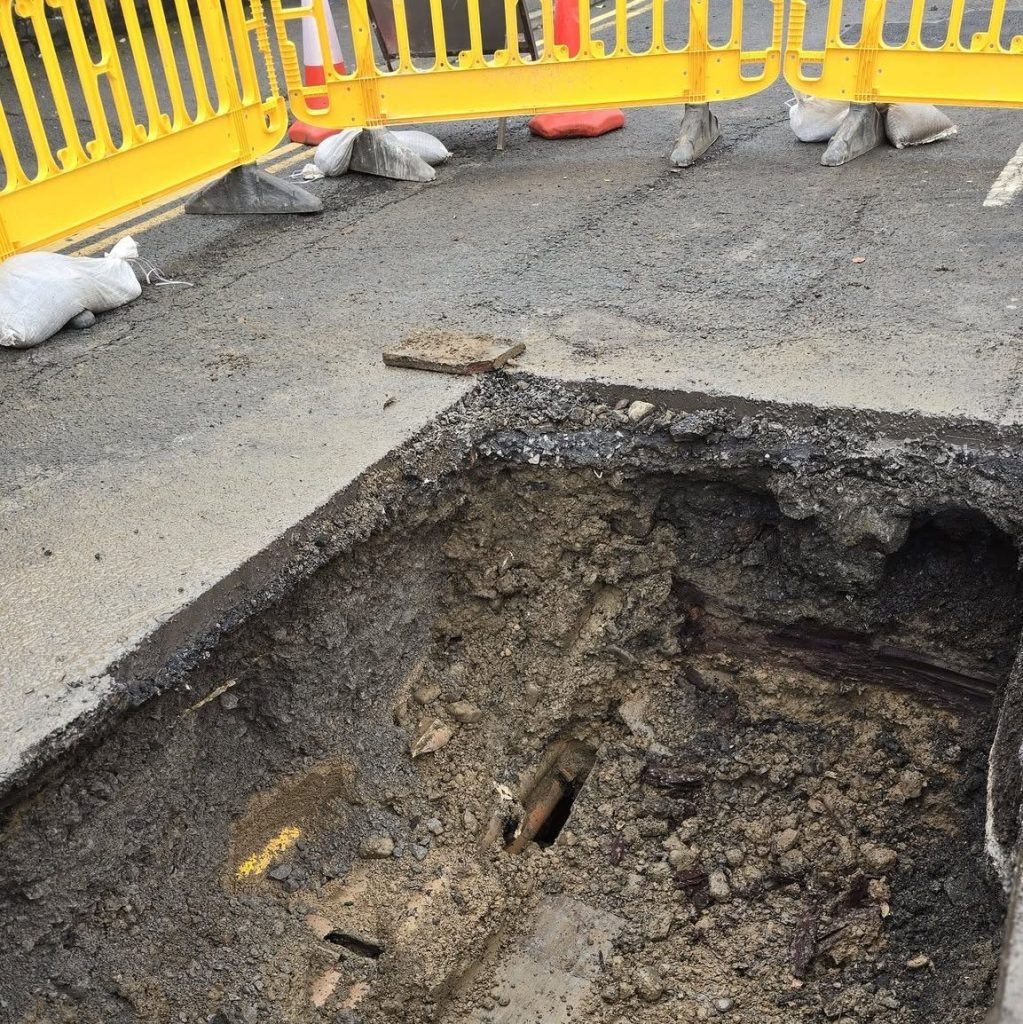
Welsh Water plans to excavate the area fully, backfill it with new material, and reinstate the carriageway. While repairs were initially hoped to be completed by Thursday evening, Cllr May said that timeline was “somewhat optimistic” and that a Friday reopening was more likely.
“There was a significant leak just above the sinkhole which was repaired last week,” he added. “Welsh Water agree that this has in all probability caused the collapse.”
Council investigation continues
Swansea Council last issued an update on 24 November, confirming that highways teams had begun investigating the cause of the sinkhole, which appeared at the junction of Brynymor Road and Westbury Street.
The council said the road would be reinstated once the investigation was complete and the area made safe. In the meantime, Brynymor Road remains closed to traffic between Westbury Street and Eaton Crescent. Westbury Street itself is open, but there is no access onto Brynymor Road from that junction. The section of Brynymor Road between St Helen’s Road and King Edward Road remains open to traffic.