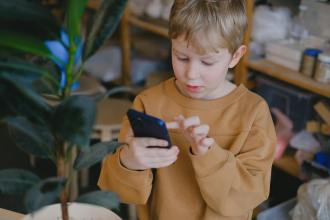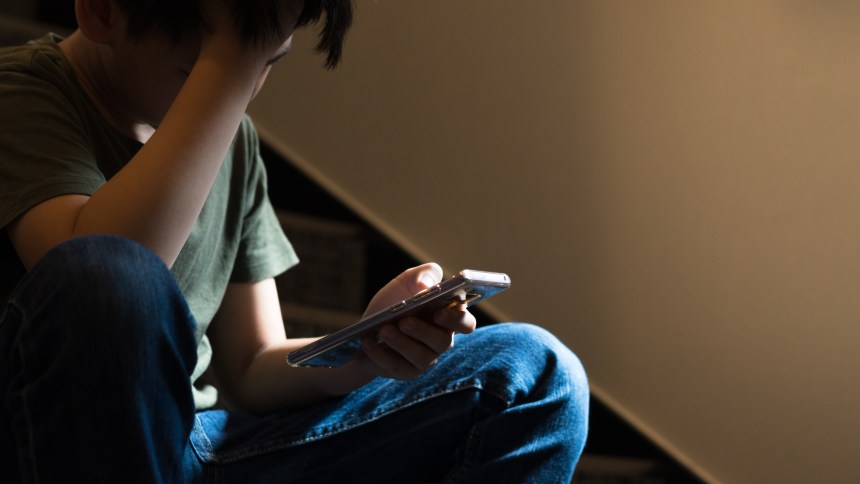
That’s the stark warning being issued on Safer Internet Day, as the Government and online safety experts urge parents to “wake up” to what their children are really seeing on their screens — and to start talking before the damage is done.
Ministers have launched a new campaign, You Won’t Know Until You Ask, after research revealed that while most parents think they understand the online world, a quarter admit they have no idea what their child is actually looking at.
Technology Secretary Liz Kendall said too many children are being left to face toxic content alone.
“Parents tell us they’re worried about what their children see online — and they’re right to be. Harmful content is reaching children younger and faster than ever before. We want to give parents the confidence to start these conversations, even when they feel awkward or difficult.”
She said the campaign is designed to help parents “cut through the noise” and give children the space to talk openly about what they’re seeing.
“This isn’t about spying on children,” she added. “It’s about helping them make sense of a world that can be overwhelming, confusing and sometimes dangerous.”
‘Parents don’t know what their kids are seeing’
The Government says the problem isn’t just what children search for — it’s what social media algorithms push at them. From body‑shaming and rage‑bait to misogynistic influencers and violent clips, harmful content can appear without warning.
The new guidance encourages parents to ask simple, open questions such as “How does this post make you feel?” or “Why do you think someone shared this?” — gentle prompts that help children think critically about what they’re scrolling through.
Officials say these conversations are crucial, because children are far more likely to speak up when something feels wrong if the door is already open.
Experts warn of hidden codes and secret slang
Online safety organisations say parents also need to be alert to the fast‑growing “hidden language” young people use to disguise what they’re talking about.
Safeguarding specialists warn that emojis and abbreviations are increasingly being used to hide bullying, drug references, sexual messages and extremist content — often in plain sight.
Dr Richard Anderson, from High Speed Training, said adults are often completely unaware of what these symbols really mean.
“What looks like a harmless emoji could actually be concealing racist remarks, drug‑related discussions, sexual propositions or cyber bullying. The double meanings give children plausible deniability, which makes it even harder for adults to spot danger early.”
Political pressure builds for an under‑16s social media ban
The warnings come as Westminster faces a major political fight over whether children should be allowed on social media at all.
Last month, the House of Lords voted 261 to 150 to support a ban on under‑16s using major platforms — a move backed by Conservative, Liberal Democrat and crossbench peers, as well as some Labour peers.
Supporters say teenage social media use has become a “societal catastrophe”, linking it to mental health problems, online radicalisation and classroom disruption. More than 60 Conservative MPs and a growing number of Labour MPs have publicly backed the idea, following similar moves in Australia.
But charities including the NSPCC warn a blanket ban could push children onto even more dangerous, unregulated sites. Labour has also said it won’t support the Lords’ amendment, calling the issue “extremely complex”.
The Government is now running a three‑month consultation looking at a possible ban, overnight curfews, tougher age checks and measures to curb “doom‑scrolling”.
What parents should do today
Ministers and safety experts say the most important step parents can take is simply to start talking — today, not tomorrow.
They say parents should explore apps with their children, stay calm and curious rather than confrontational, and make it normal for children to talk about things that upset or confuse them.
Parents can find full guidance at kidsonlinesafety.campaign.gov.uk.