Glangwili Hospital in Carmarthen is sitting on an £82 million backlog of high and significant risk maintenance and repairs — part of a Wales-wide bill that has now reached nearly £1 billion, new figures reveal.
New data from NHS Wales Shared Services Partnership shows the total backlog has grown to £917 million — a 71% rise in just four years — with more than £616 million needed to fix the most serious issues at twelve of Wales’ thirteen main hospitals.
Hywel Dda University Health Board, which runs Glangwili along with Prince Philip Hospital in Llanelli, Withybush Hospital in Haverfordwest and Bronglais in Aberystwyth, carries a combined backlog of £221 million across its four main hospitals. A detailed breakdown of the figures paints a stark picture of the estate:
Glangwili in Carmarthen has a total high and significant risk backlog of £82,097,174 across its 377 beds, with 65% of its space aged 50 years or more. Of that figure, £3.6 million is classified as high risk and £78.5 million as significant risk.
Withybush in Haverfordwest — which declared a major incident in 2023 after the discovery of potentially defective RAAC concrete in its structure, leading to ward closures — has a backlog of £63,055,228 across 211 beds. Some 74% of its space is aged 50 years or more, and £22.4 million of its backlog is classified as high risk — the largest high-risk share of the four hospitals.

Bronglais in Aberystwyth has a backlog of £37,381,068 across 170 beds, with 63% of its space aged 50 years or more and more than 40% of its space not considered fire safety compliant.
Prince Philip Hospital in Llanelli has a backlog of £25,017,426 across 264 beds. Notably, none of its space is aged 50 years or more, though £6.6 million of its backlog is classified as high risk.
The figures, covering 2024-25, show more than 30 NHS sites across Wales have more than half of their buildings predating the birth of the NHS in 1948. The only hospital with no maintenance problems is the recently-opened £350 million Grange Hospital near Cwmbran — the first major new hospital built in Wales in 20 years, and one that took decades from first proposal to opening.
Mark Dayan, a policy analyst at the Nuffield Trust health think tank, described the situation in Wales as a “worryingly large backlog of maintenance by anyone’s standards” — more than twice what the entire NHS in Wales spends in a year on all buildings and permanent equipment. He warned that the condition of buildings can have “a really limiting effect on healthcare,” particularly when health boards want to reconfigure services or shift planned care to reduce waiting times.
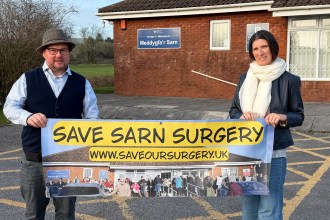
Carl Peters-Bond, independent Senedd candidate for Sir Gaerfyrddin, said the figures came as no surprise given the direction of travel in Hywel Dda. “The lack of investment at Prince Philip Hospital in Llanelli and Glangwili Hospital in Carmarthen is not unexpected, considering the health board’s intention to spend billions on a replacement hospital far away from where the majority of patients live,” he said.
Peters-Bond argues that the current health board and trust system is failing communities through bureaucracy and duplication, and is calling for a single integrated NHS for Wales with social services brought under the same umbrella. “Bureaucracy is breaking families — and that must change,” he said. “I believe in cutting waste, joining up services, and making sure resources go where they’re needed most. By sharing resources across the country, services can be provided in communities where they’re needed.”
With the Senedd election less than a month away, the state of NHS Wales buildings has become a battleground across the parties.
Welsh Labour is pledging a £4 billion Hospitals of the Future fund to build new hospitals across Wales over the next ten years. The fund includes a “hospital development in west Wales” which, as we reported in March, appears to refer to Hywel Dda’s long-standing and controversial proposal for a new urgent and planned care hospital near St Clears or Whitland in Carmarthenshire — a scheme that would see Glangwili and Withybush downgraded to community hospitals. The party says it will also continue making capital available to health boards to maintain the existing estate in the meantime.
Plaid Cymru called the backlog “eye watering” but said Labour’s pledge “simply doesn’t add up.” Health spokesman Mabon ap Gwynfor described it as “nothing more than another empty promise from Labour that once again won’t be delivered,” and said Plaid would prioritise tackling the high-risk maintenance backlog and carry out urgent repairs to protect the safety of staff and patients, assessing the estate on a case-by-case basis.
Reform UK’s James Evans said crumbling buildings, burst sewage pipes and rodents in hospitals were “completely unacceptable” and called for the Welsh government’s capital budget to be prioritised on clearing the maintenance backlog rather than promising new hospitals. Welsh Conservative leader Darren Millar said his party would declare a health emergency and invest in extra capacity including new community hospitals, diagnostic centres and surgical hubs. The Welsh Liberal Democrats said they would prioritise upgrading the worst parts of the NHS estate, backing a replacement for the University Hospital of Wales while linking capital investment to reforms in social care. The Green Party called the backlog “a disgrace” and pledged a multi-year programme to bring existing facilities up to a safe, modern standard.
Whatever the complexion of the incoming Welsh government after May’s election, the NHS estate it inherits will present an immediate and expensive challenge.