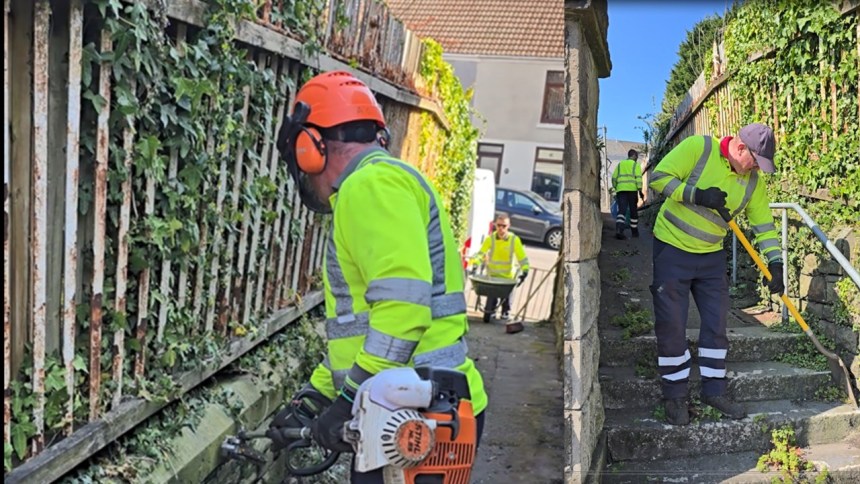
Swansea Council’s CWOT – or their less snappily titled Cleansing Ward Operative Teams – have been helping residents keep their communities looking neat and tidy, visiting more than 1,000 weeding and litter hotspots over the last year.
The popular team has visited every community targeting overgrowth, uncovering footpaths that have succumbed to nature, as well as clearing litter and ensuring street and road signs are clean and can be read more easily.
The Council launched the CWOT initiative more than two years ago so that teams could carry out enhanced cleansing work that are not part of the regular cleansing activities operating in the city.
The council says it forms part of its continuing commitment to the people of Swansea, working side by side with them to keep their communities clean by responding positively to their priorities.
The public play their part by reporting issues to their local councillor who then contacts the CWOT service. Every ward in Swansea has received multiple visits over the last year.
Sites tackled in the last year have resulted in freshly cleaned pavements and steps, cut-back of overgrowth and hundreds of tonnes of vegetation removed, along with lanes and alleys between houses and off the beaten track being brought back to life.
Cyril Anderson, Swansea Council’s Cabinet Member for Community Services, said: “The CWOT service is a real asset to the Council, going above and beyond expectations to keep our communities neat and tidy.
“The work the CWOT do to spruce up neighbourhoods makes everyone feel better about the place where they live and encourages others to play their part too by not dropping litter or leaving dog mess behind when they’re out with their pet.”
He added: “The CWOT initiative is all part of the Council’s £2m a year commitment to tackling litter and fly-tipping in our neighbourhoods. Local councillors supported by local residents are our eyes and ears for the CWOT initiative, and the feedback so far has been extremely positive.”
The council added that if you think there’s an area in your ward the CWOT can assist with, then let your local councillor know so that they can submit the work to the team for completion on their next visit.