



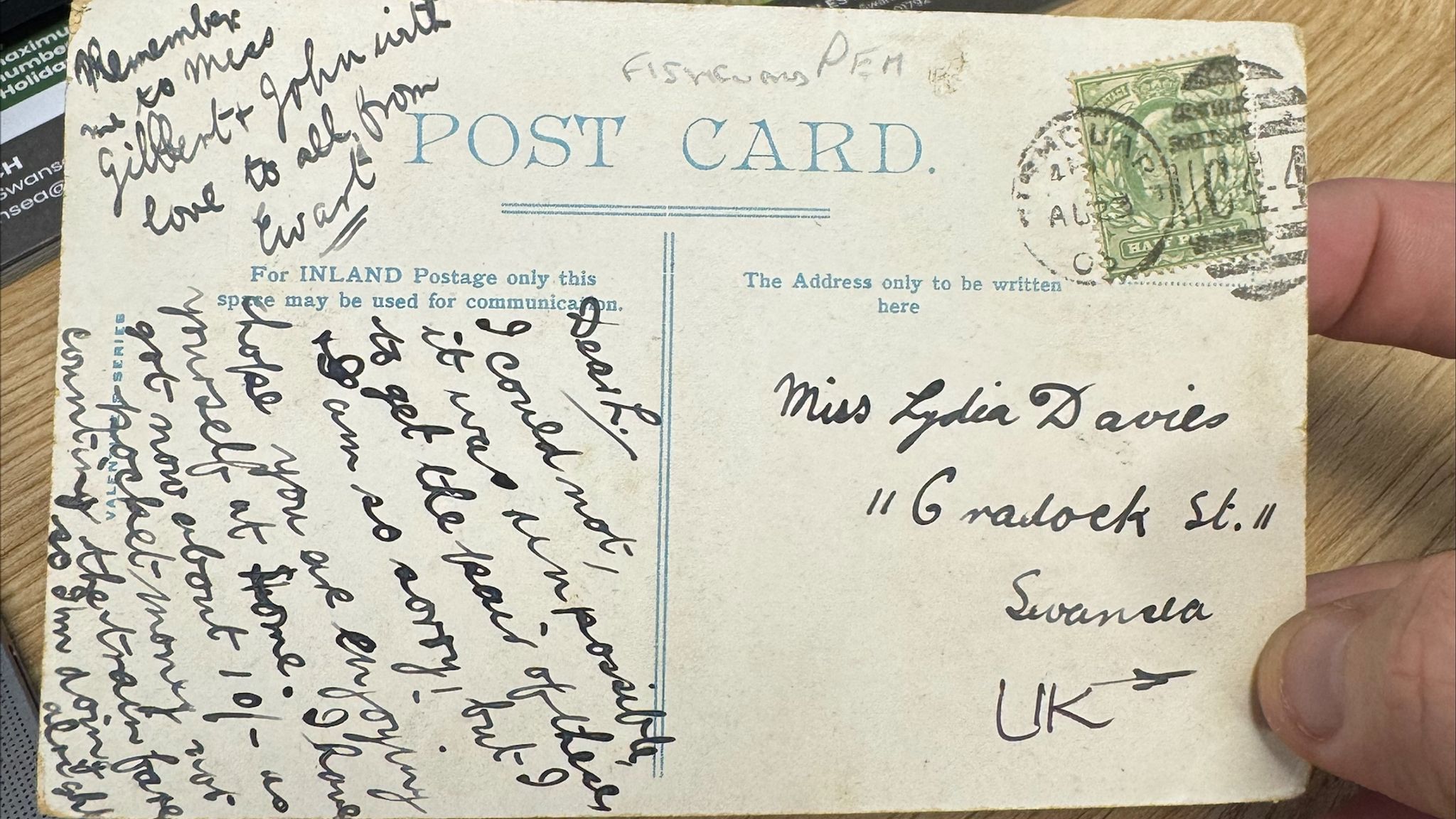
A postcard has been delivered to an address in Swansea 121 years after it was sent.
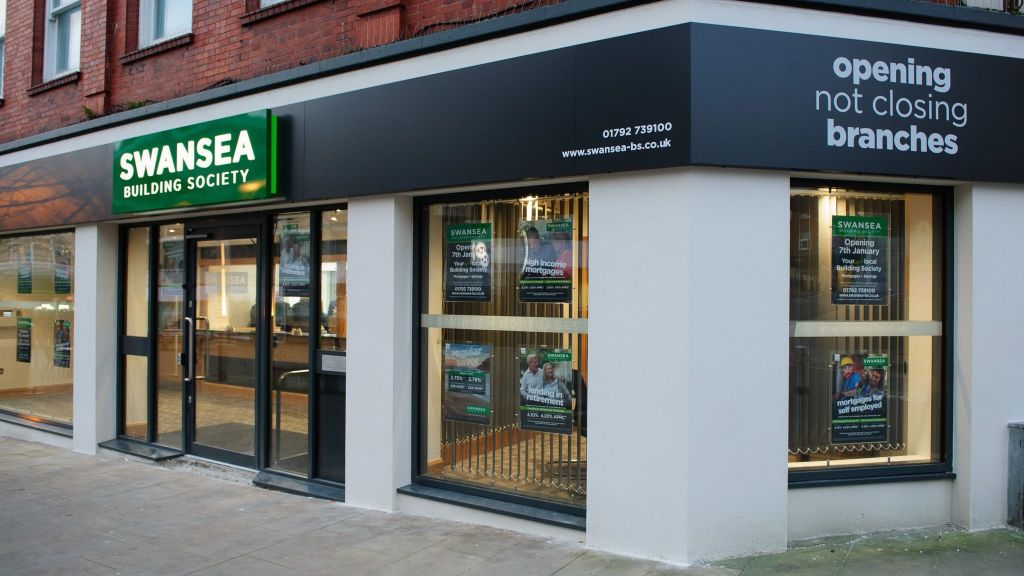
Staff couldn’t believe their eyes when going through the mail at their Cradock Street head office on Friday, 16 August.
Alongside the usual mortgage and savings-related letters appeared a postcard, which dropped out from the middle of the pile with a King Edward VII stamp on it, dated 3 August, 1903.
It was written for a woman named Lydia Davies, who presumably lived there at the time there were houses at the address, instead of the building society.

Henry Darby, marketing and communications officer at Swansea Building Society, said:
“It turned up completely out of the blue on Friday.
“The postman came to the door as normal with lots of letters regarding mortgages and savings and stuff for our team to process.
“As one of the managers was going through it, a postcard dropped onto the table, not in an envelope, not with a note, just as it was.”
“The address is correct, we are still 11 Cradock Street, but it’s 121 years later than expected. It’s wild, actually. A little bit spooky.
“The stamp itself is King Edward, so he was king from 1901 until 1910, and you could tell straight away from the handwriting and the way it speaks, ‘dearest, I could not’, it was very much of the time.
“From what we can work out, the postage stamp says August 3, 1903. Pencilled on the top it says Fishguard, Pembrokeshire, so we’re wondering if it’s come from Fishguard to Miss Lydia.
“It’s quite vague – the postcard. They are speaking of something they are both aware of but don’t want to reveal it on the postcard.”
The front of the postcard depicts a drawing of a wintry scene with a stag in the foreground standing over a frozen tree stump, with a body of water and snowy mountains beyond, all beneath a starry sky.
At the top corner, the postcard reads: “Remember me to Miss Gilbert & John with love to all from [unreadable]”.
The main body of the postcard says: “Dear L. I could not, it was impossible to get the pair of these. I am so sorry, but I hope you are enjoying yourself at home. I have got now about 10 [unreadable] pocket money not counting the train fare so I’m doing alright.”
The building society has put an appeal out on social media asking for anyone with information on Ms Davies, or anything else to help shed light on the mystery, to come forward and get in touch via their social media channels.
Mr Darby added: “We know it’s quite long ago, but we thought it would be so fascinating to know what was life like on Cradock Street 121 years ago.
“The building society itself was set up 20 years after the postcard was sent. From what we could gauge looking at the archives, we think there were more traditional houses in this place which were bombed, and our office is a rebuild but the address has stayed the same.
“Opposite, the Albert Hall was open at the time in the 1860s, when Oscar Wilde performed, so Lydia was probably walking across the road to see those people who performed there.”
A Royal Mail spokeswoman said:
“It is likely that this postcard was put back into our system rather than being lost in the post for over a century. When an item is in our system, we are under obligation to deliver it to the correct address.”
[Lead image: Henry Darby]





Her name was LYDIA MARIA DAVIES born in 1886 in Marylebone. She was 17 at the time of the postcard and lived with her parents, JOHN and MARIA DAVIES. According to the 1901 Census, her father was a Master Tailor & Clothier. She also had two brothers and three sisters at the time of the census.