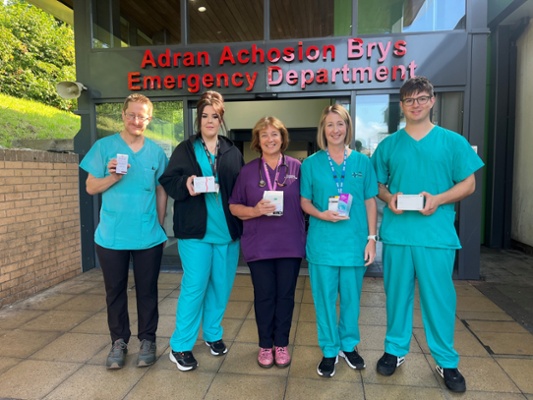
Following a brief trial, steps have now been taken to ensure medications – which included tablets, inhalers and insulin – follow patients swiftly after their transfer from the Emergency Department (ED) to another ward, with a member of the pharmacy team collecting them on a daily basis between Monday to Friday.
In just a week, medications totalling £800 have already been returned to patients who had moved wards.
Scaled up over the course of a year, that will mean around £41,600 of medication will be given back to patients who were prescribed it; or restocked and used for other patients.
Reducing the risk of medication being wasted, in terms of energy savings, is 6,000kg of CO2 equivalent saved – which equals 12 return trips in a car from Land’s End to John O’Groats.
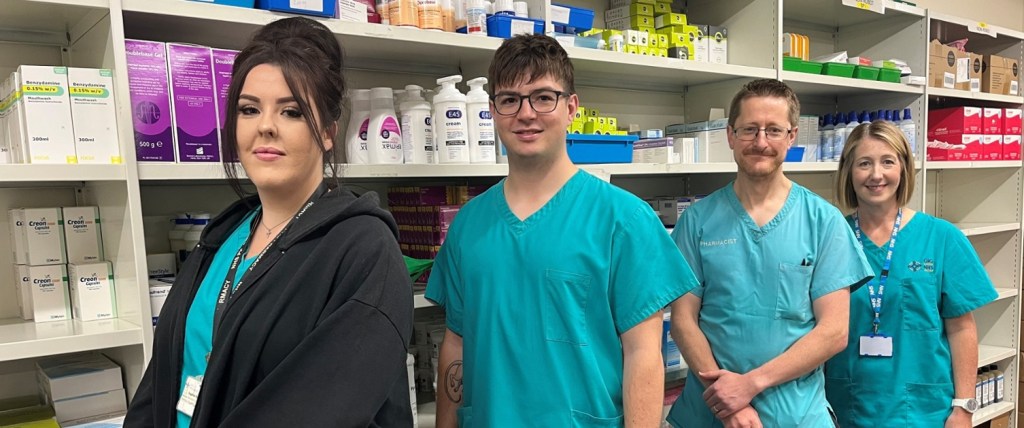
The trial was led by pharmacy staff Daniel Greenwell, Clare Williams, Sophie Rogers and Joseph Penaluna.
Daniel said: “The analysis revealed that medications were frequently being left behind in ED, affecting both patient care and increasing costs and waste.
“While medications that aren’t transferred are typically returned to pharmacy stock, this process is less efficient, particularly when partially used boxes can’t be returned to automated systems and instead must be stored manually.
“The ED is an incredibly busy environment, and when an inpatient bed becomes available patient transfers need to happen quickly. Medications can easily be left behind in this process, but our intervention aims to address this.
“We are now looking to work with ED colleagues to improve medication transfer during out-of-hours periods and weekends, as failures during these times can still lead to missed or delayed doses.”
[Lead image: Swansea Bay University Health Board]