



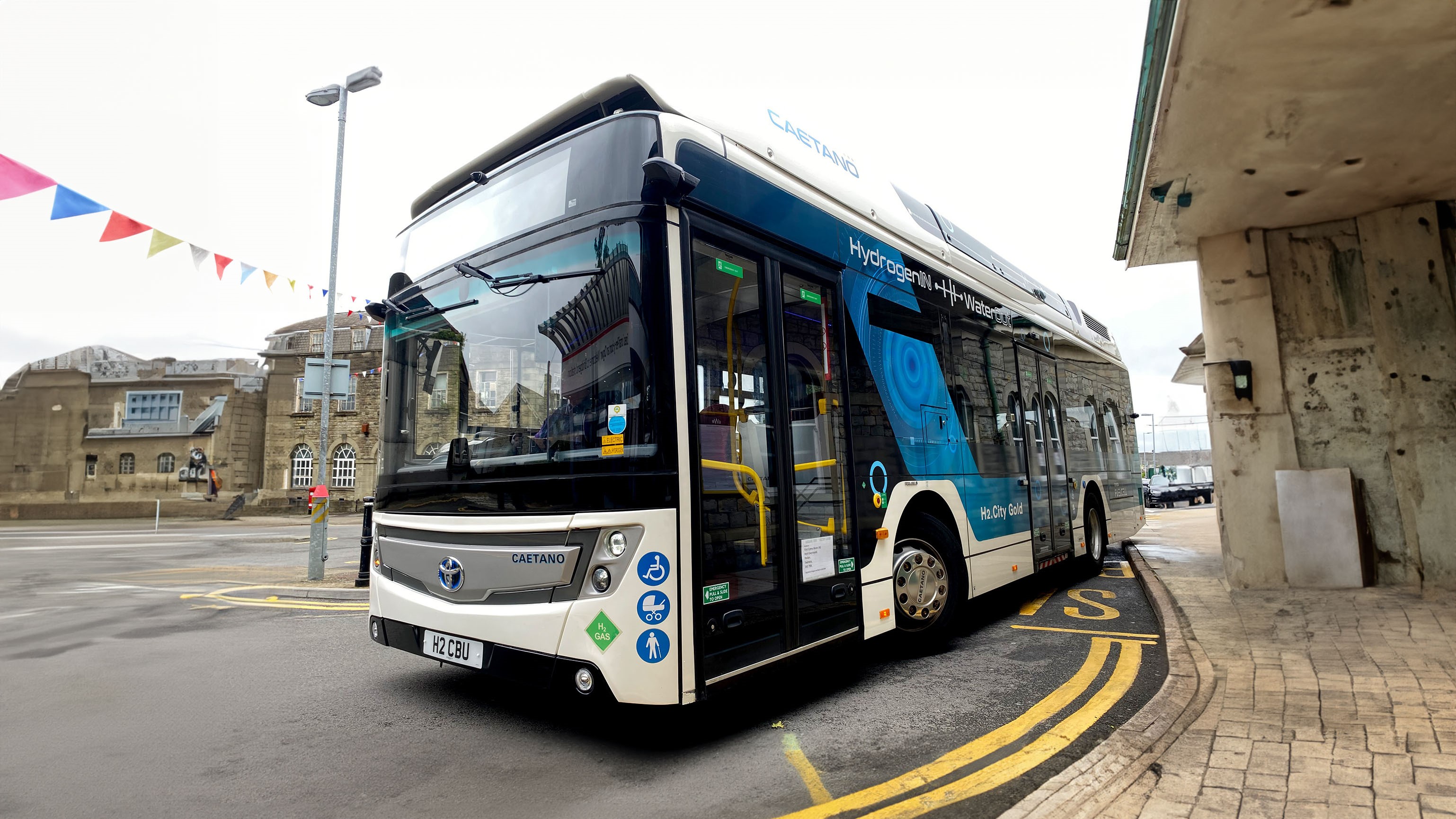
Buses powered by hydrogen fuel cells could be serving routes across Swansea Bay by 2027, under proposals being explored by Transport for Wales and Swansea Council as part of a sweeping revamp of the Welsh bus network.
The new low-emission vehicles are expected to be trialled within the city, alongside a planned hydrogen refuelling hub near Fabian Way — one of several infrastructure priorities outlined in the new South West Wales Regional Transport Plan, covering Swansea, Neath Port Talbot, Carmarthenshire and Pembrokeshire.
Speaking at a recent climate change and nature scrutiny meeting, Swansea Council’s Head of Highways and Transportation, Stuart Davies, said the city’s ageing fleet could be replaced with a mix of hydrogen and electric buses, coinciding with proposed bus franchising reforms set to roll out regionally in 2027.
“We don’t see shiny vehicles,” Mr Davies told councillors, describing the current fleet as “hand-me-downs of hand-me-downs.”
Hydrogen buses use fuel cells to convert hydrogen into electricity, producing lower emissions and enabling faster refuelling compared to battery-electric models. The technology is already in limited use across the UK, but Swansea could be among the first Welsh cities to embrace it at scale.
Meanwhile, battery-electric buses have already been introduced on Carmarthen to Aberystwyth services operated by Transport for Wales, hinting at a multi-fuel future for Wales’ bus network.
Regional Transport Plan Sets Ambitious Goals for 2025–2030
The newly submitted transport plan — developed after a public consultation involving over 1,700 residents and organisations — prioritises an integrated system that promotes public transport, cycling and walking.
Key local elements include:
- A hydrogen refuelling hub on Fabian Way
- Replacement of Baldwin’s Bridge, enabling better connectivity to Langdon Road and SA1
- Support for more frequent bus services and safe active travel routes
Welsh Government’s transport strategy aims to reduce car miles per person by 10% by 2030 and boost the proportion of journeys made on foot, bike or public transport from 32% to 45%.
Matt Bowyer, Swansea Council’s Highways Group Leader, acknowledged the challenge ahead:
“Encouraging people to ditch their car is probably the most difficult priority to achieve.”
Welsh Government Backs Fleet Modernisation
In a statement provided to Swansea Bay News, Cabinet Secretary for Transport and North Wales, Ken Skates, said:
“As part of plans to improve the bus network in Swansea, including new fleet, we are considering a number of options aimed at reducing emissions and the average age of the fleet.”
This builds on earlier commitments to bus franchising, where decisions on timetables, fares and routes will be made jointly by Welsh Government, Transport for Wales and local councils, with bus companies bidding to deliver services under contract.
Local Control, National Vision
South West Wales will be the first of four regions to adopt the new model in 2027 — potentially transforming how bus services are managed and delivered across Swansea, Neath Port Talbot, Carmarthenshire and Pembrokeshire.
For more context on the upcoming reforms, read our previous coverage: 🔗 Major changes proposed to bus network ahead of 2027 reforms






Hydrogen buses are facing significant challenges, including high costs, fuel supply issues, and reliability problems. But don’t worry Swansea council as a plan with other people’s money??? They are insane.
Hydrogen buses are roughly twice as expensive to purchase as electric buses and have running costs at least three times higher???
it will see a nice changing of the ageing fleet first in swansea has presented us with