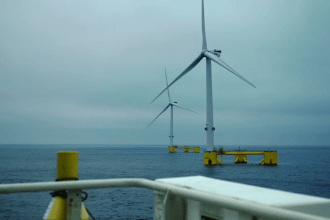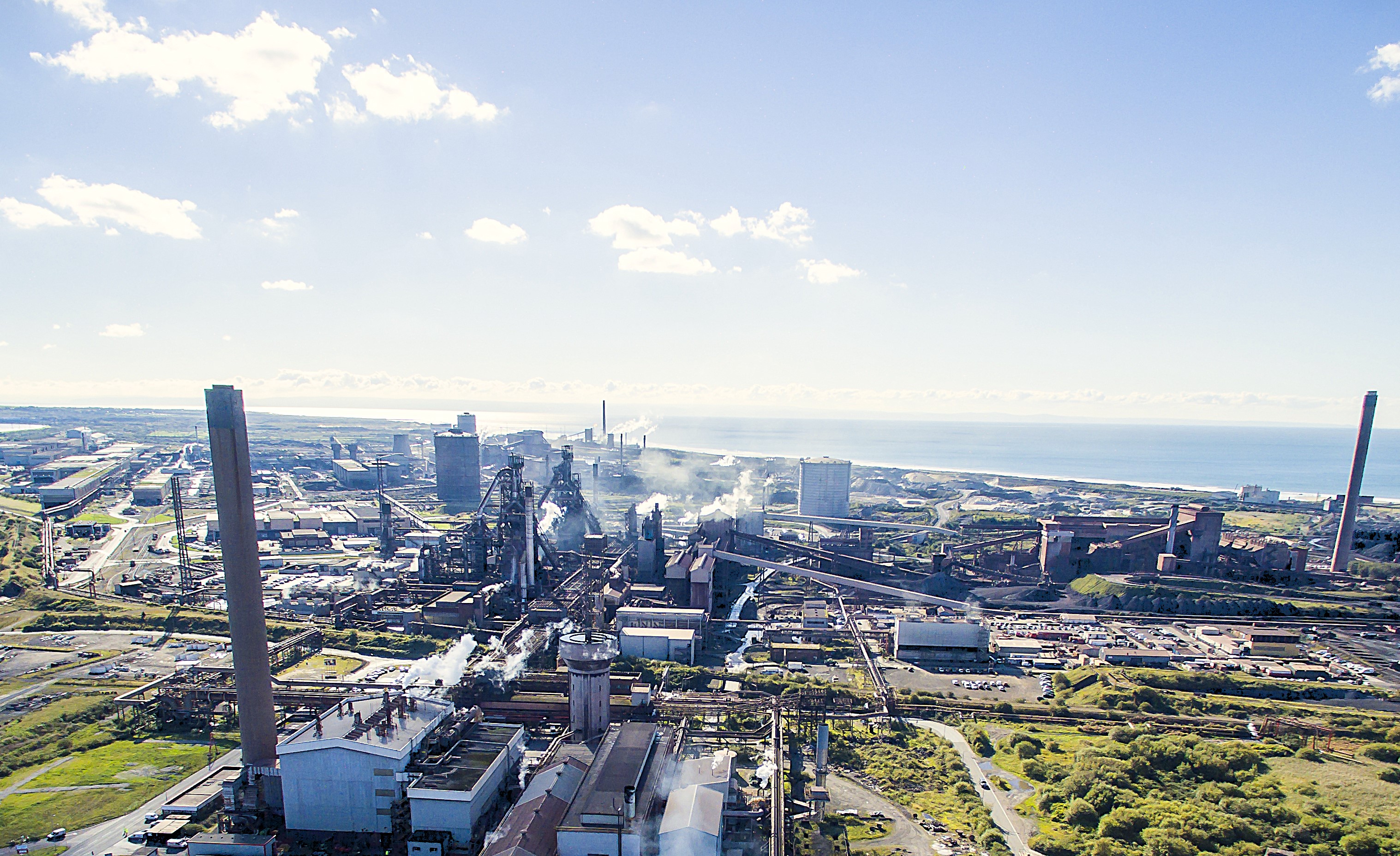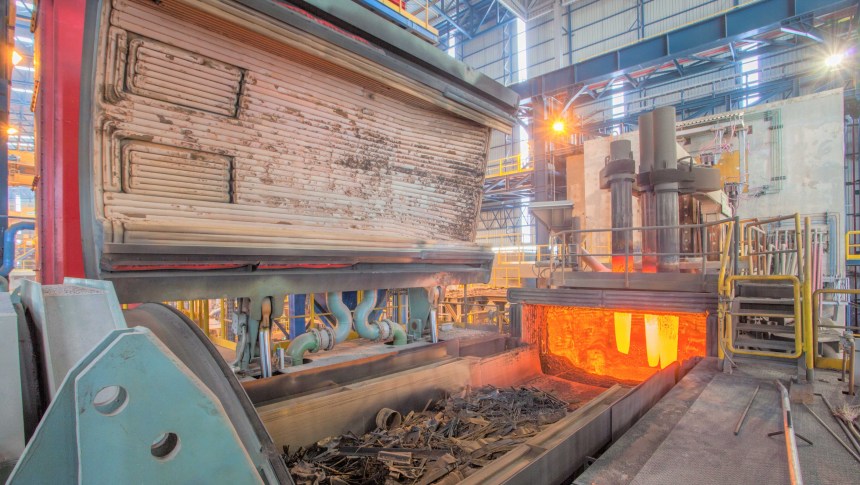
Researchers backed by Welsh Government funding have launched a project that could see the steel being made in Port Talbot’s new electric arc furnace used to build the next generation of wind turbine towers — creating a direct link between the town’s industrial future and Wales’s clean energy ambitions.
The consortium, led by the Offshore Renewable Energy Catapult, includes Tata Steel UK, energy companies RWE and Bute Energy, and engineering firms Hutchinson Engineering and Ledwood. It has been awarded £174,000 through the Welsh Government’s SMART Flexible Innovation Support scheme to research a new approach to turbine tower design using thin strip, coil-based steel produced in low-emission electric arc furnaces.
The significance for Port Talbot is immediate. Tata Steel is currently in the middle of a £1.25 billion transition from blast furnace steelmaking to electric arc furnace production — a transformation that has already cost thousands of jobs at the steelworks but which the company says will deliver a cleaner, more competitive future. As Swansea Bay News has reported extensively, construction of the new furnace is now under way, with commissioning expected by the end of 2027 or early 2028.
The type of steel at the heart of this new research project — thin strip, coil-based product made in an electric arc furnace — is precisely the kind of output that Port Talbot’s new operation will be able to produce. That steel is also the feedstock that flows downstream to operations including the Trostre tinplate works in Llanelli, which produces coated steel for food and drink packaging and which is directly dependent on the Port Talbot supply chain.
The turbine tower research aims to solve a specific problem in the UK’s renewable energy sector. Most wind turbine towers currently built in Britain rely on thick steel plate imported from overseas — creating a bottleneck in the supply chain and adding cost and carbon to projects. The consortium wants to develop a design that replaces imported thick plate with domestically produced thin strip coil steel, using engineering techniques borrowed from the marine and aerospace industries to create structures that are lighter, stronger and cheaper.
Crucially, the proposed design would also be dismantlable and recyclable — meaning that when turbines reach the end of their working life, the steel could be melted down and reused. Bute Energy’s Catryn Newton described it as a circular economy vision for Welsh steel: end-of-life turbines helping to power homes and industry for decades could eventually be recycled through the electric arc furnace and transformed into the towers of the next generation.
“If we get this right, we could see end of life turbines that have been helping to power homes and industry across Wales for the past 30 years, recycled and sent to the newer electric arc furnaces,” she said. “The work of this group is exploring whether that scrap metal can be transformed into a material that could be used in the next generation turbine towers, helping to power Wales’ clean power future.”
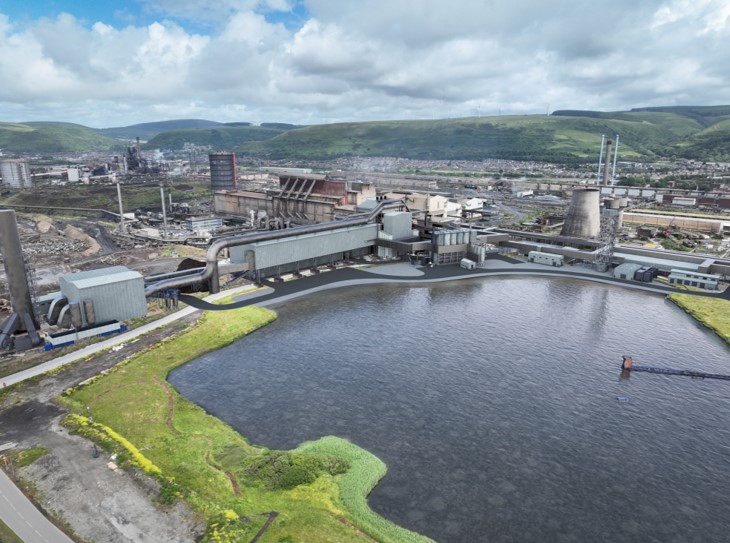
(Image: Tata Steel)
Tata Steel’s Sumitesh Das said the company was excited to be involved in research that could position Wales as a global hub for this kind of innovation. “As Tata Steel UK transitions to electric arc furnace steelmaking, our ambition is to ensure domestic supply chains capitalise on the growth of clean energy and help drive economic growth in the UK,” he said.
The project comes as Port Talbot’s industrial community continues to navigate the painful consequences of the blast furnace closures, which took around 2,800 jobs with them. The hope — articulated by politicians, unions and the company itself — has been that the new electric arc furnace would not only preserve steelmaking in the town but open doors to new markets and new applications for Welsh steel. This wind tower project is one of the first concrete examples of what that future might look like in practice.
Aberafan Maesteg MP Stephen Kinnock welcomed the research, saying it was essential that British and Welsh steel played a central role in the clean energy transition. “This research demonstrates how Wales and the UK can remain at the forefront of the transition to renewable energy,” he said. “By decreasing reliance on imported steel we can bolster energy security, create economic growth, secure regional jobs, and support offshore wind deployment in the Celtic Sea and beyond.”
Rebecca Evans MS, Cabinet Secretary for Economy, Energy and Planning, said the investment reflected the Welsh Government’s commitment to building a greener economy. She pointed to the potential for creating high-value jobs and strengthening supply chains as Welsh industry pivots towards clean energy.
The Celtic Sea, off the coast of Pembrokeshire and west Wales, is one of the most promising sites for floating offshore wind development in the UK. Port Talbot — with its established steel expertise, its port infrastructure and its proximity to that potential wind farm zone — has long been identified as a natural base for offshore wind supply chain activity. As Swansea Bay News has reported, a £64 million wind energy hub plan for Port Talbot has already been put forward with the promise of up to 5,000 jobs.
The first phase of the new research project will focus specifically on onshore turbine tower design and the commercial case for using locally produced coil steel. If the concept proves viable, the researchers say it could be extended to offshore and floating wind applications in later phases — potentially unlocking a significant new market for the steel being made in Port Talbot and processed downstream at Trostre.