Swansea streets in line for rain gardens
Swansea Council has scooped grants to draw up plans for rain gardens and other drainage features around Beach Street, St Helen’s Road and the Brynymor Street junction. The aim is to cut down on surface water flooding in busy city streets and stop polluted run‑off pouring into drains and streams.
Carmarthenshire car parks targeted
Carmarthenshire County Council will use its share of the cash to design drainage improvements at Llandovery Castle car park and Newcastle Emlyn car park. Both sites have long struggled with flooding, and the new schemes are intended to stop dirty water flowing into the Tywi and Teifi rivers — both protected Special Areas of Conservation.
Schools join the fight against flooding
The charity Trees for Cities has also been awarded funding to design drainage projects at three schools — St Cadocs, St Illtyds and Glyncoed — where rain gardens and other SuDS features could help keep playgrounds and classrooms dry while boosting biodiversity.
Sandfields shows what’s possible
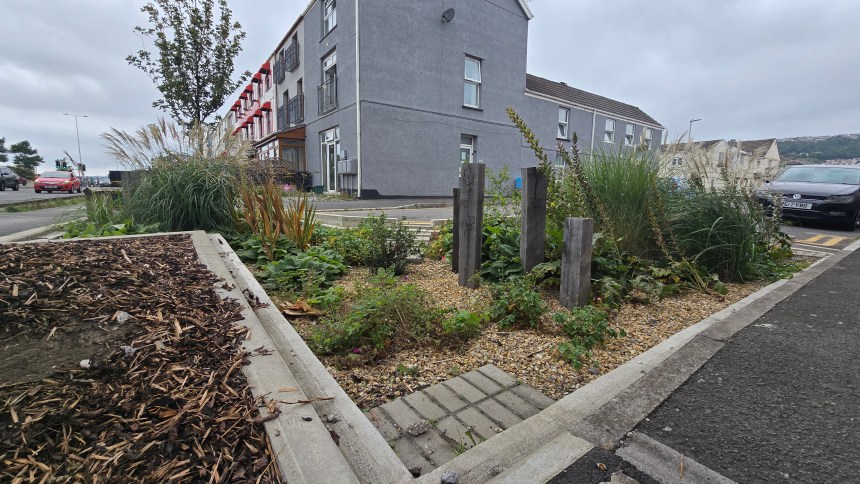
The new funding comes hot on the heels of a rain garden already installed in Swansea’s Sandfields area, where planters and green drainage features have been used to soak up excess water and reduce flooding risk for residents. The Sandfields scheme has been hailed as a practical example of how sustainable drainage can transform urban streets — turning problem flood zones into greener, more resilient spaces.
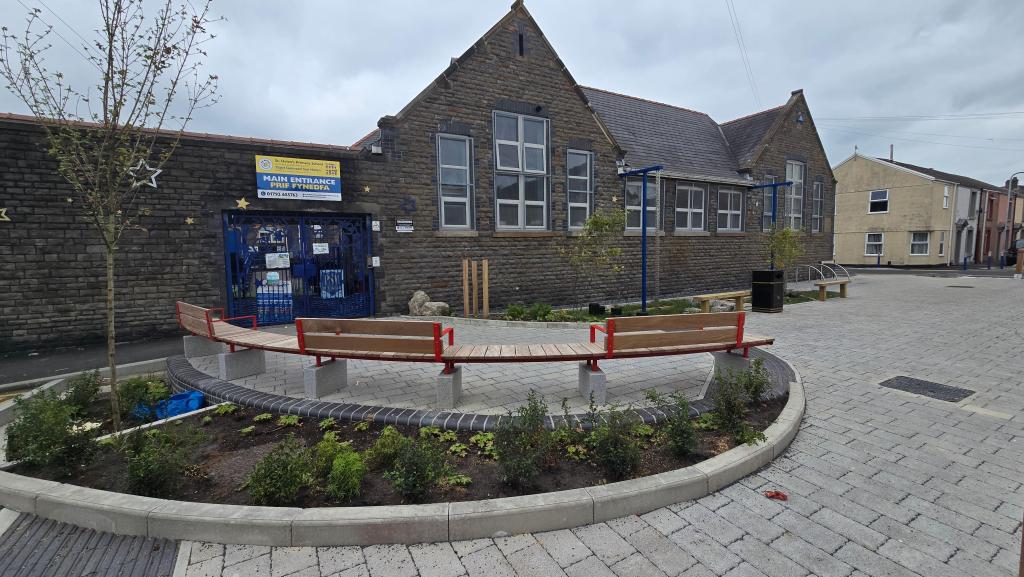
(Image: Swansea Council)
Backed by Welsh Government
The grants, worth between £15,000 and £30,000 each, come from the Welsh Government’s Nature and Climate Emergency Capital Programme, which also supports peatland restoration, mine clean‑ups, fisheries and national forests.
“Greener, more resilient communities”
Helen Haider, Lead Specialist Advisor at Natural Resources Wales, said:
“These grants will help the five projects move another step towards creating greener, more resilient communities. Sustainable urban drainage solutions can help us tackle both climate and nature emergencies — reducing surface water flooding, pollution and enhancing biodiversity.”