A specialist deep-ground radar scan was carried out at the County Hall car park in Carmarthen on Sunday, as researchers attempt to solve a century-old mystery. The site was once the gardens of the former Carmarthen prison, where public executions took place throughout the 1800s.
Convicted Killers and a Forger
The hunt is on for the remains of five men executed between 1818 and 1894. Among those believed to still lie beneath the tarmac are four convicted murderers and one man hanged for forgery.
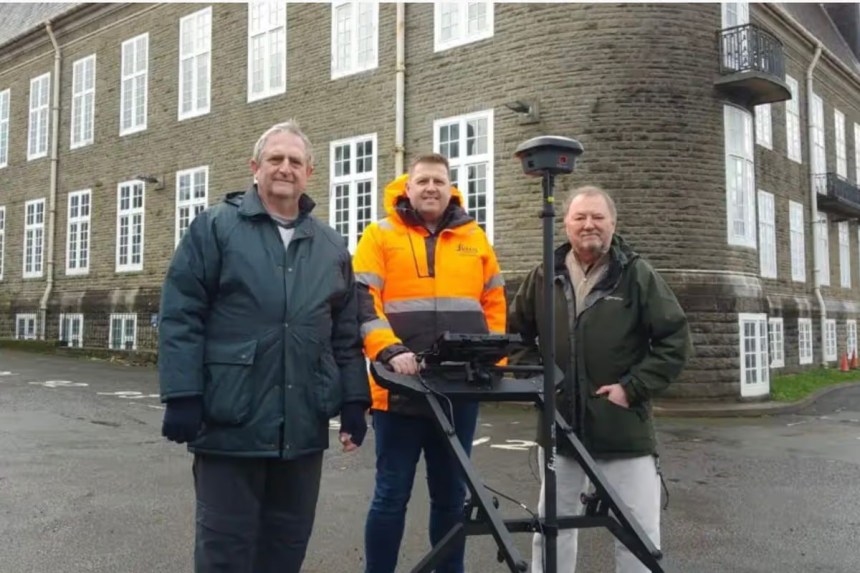
Using a high-tech digital radar scanner, Shane Gwilt from Leica Geosystems scoured the car park surface to detect any anomalies in the ground that could indicate burial sites.

(Image: Carmarthenshire Council)
‘A Mystery Worthy of Sherlock Holmes’
The project has been driven by former Mayor of Carmarthen, Richard Goodridge, who has spent two years researching the site’s dark history. He believes it is “unbelievable” that the bodies were not moved when the prison was demolished in the 1930s.
Richard Goodridge said:
“I strongly believe that the remains of these five convicted felons still remain where they were buried after their execution. It is the last piece of the jigsaw puzzle that will lay to rest a mystery that has fascinated Carmarthen residents for over a hundred years. Finding them will bring an end to a mystery worthy of a Sherlock Holmes novel!”
Results Sent to Italy
While the scan has been completed, the findings have now been sent to Italy for expert analysis. The results are expected to be returned within a week, potentially confirming the location of the lost graves.
Cllr Alun Lenny, Cabinet Member for Resources, added:
“The work didn’t disturb the car park surface in any way and was at no cost to the council. But it may add another chapter to the colourful history of Carmarthen as Wales’ oldest town—we await the results with anticipation!”
No Plans to Disturb the Dead
Despite the search, Carmarthenshire County Council has confirmed it has no intention of disturbing or exhuming the remains if they are found. For now, the five men will remain part of the hidden history beneath the feet of council workers and visitors.