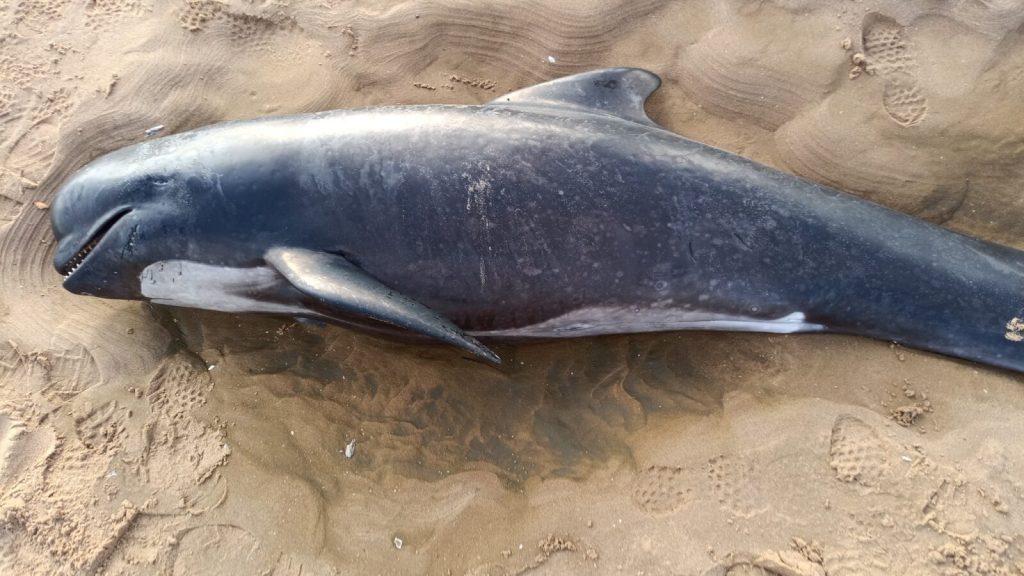
The young long‑finned pilot whale, measuring just over 2.7 metres, was discovered on 1 September at Rhossili Bay near the Hillend caravan site. Members of the public tried to return it to the sea, but it died before help could arrive from the Coastguard and British Divers Marine Life Rescue (BDMLR).
Experts believe the animal may have become separated from its tightly bonded family group, which could explain its stranding. Its body has been taken for a full post‑mortem by the Cetacean Strandings Investigation Programme (CSIP).
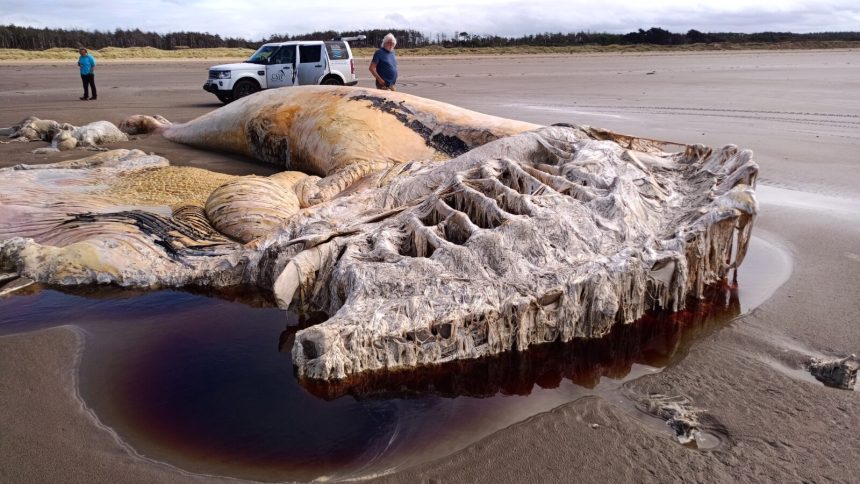
Later the same day, the remains of a huge fin whale were found on Cefn Sidan sands. From the beach, you can see Worm’s Head at Rhossili — a reminder of just how close the two incidents were. At more than 21 metres long, with a head over 5 metres in length and 2.5 metres wide, it was an extraordinary sight.
Fin whales are the second largest whale species after the blue whale, and strandings in Wales are exceptionally rare — only four have been recorded in the past 24 years, the last in the River Dee in 2020. This specimen had been dead for some time and was badly decomposed, but samples have been taken for genetic analysis and to test for environmental contaminants.
A spokesperson said:
“To see two whales of such different species strand on the same day in Wales is highly unusual. Every stranding gives us vital information about the health of our seas and the challenges marine life is facing.”
Response teams have thanked BDMLR and Carmarthenshire Council for their assistance.
Reporting strandings Anyone who finds a stranded marine animal should call 0800 652 0333.
- If the animal is alive, select option 1 to be connected to BDMLR.
- For dead strandings, select option 2 and follow the instructions.