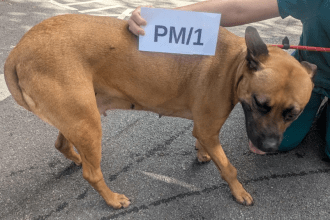
Yesterday, the Welsh Government published its response to a public consultation on the licensing of animal welfare establishments, activities, and exhibits. It outlines a phased approach towards the creation of a national model for the regulation of animal welfare in Wales.
“Good intentions are not enough”
For many years, Dogs Trust say they have campaigned for the regulation of rehoming centres, following a string of high-profile cases where individuals behind so-called “sanctuaries” and “rehoming organisations” were found guilty of cruelty and neglect. Currently, anyone can open a rehoming centre without any requirement for training, experience, or appropriate facilities or funding. Dogs Trust believes this regulatory gap puts animals’ lives at serious risk, and this is a view shared with people across Wales, with 82% of respondents to the consultation agreeing with Dogs Trust that it was important to regulate domestic and international animal welfare establishments.
Recent incidents that have led to Dogs Trust calling for regulation to be introduced include individuals becoming overwhelmed by the number of animals in their care, lacking the skills to meet even basic welfare needs, or operating under the guise of rescue centres while engaged in puppy farming or illegal trading. In such cases, animals have suffered neglect and abuse due to poor oversight and a lack of minimum standards.
Claire Calder, Head of Public Affairs at Dogs Trust, said: “We are delighted by this announcement that rehoming centres across Wales will finally be subject to regulation. While many excellent rescue centres are doing vital work, the lack of licensing means that anyone, regardless of knowledge, experience, or intent, can set up a centre and potentially cause serious harm.
“We know from running our network of rehoming centres, including those in Cardiff and Bridgend, that good intentions are not enough. We need robust legislation to ensure every rescue dog is safe, well cared for, and treated with the respect they deserve. Proper oversight is essential to protect animals and uphold public trust. Whilst we are encouraged by the Welsh Government’s decision on this matter, we urge them to move quickly to release their proposals, so that every rescue dog has the protections they deserve.”
Welsh Government to Bring Forward Greyhound Racing Ban This Autumn
The consultation response also confirmed that the Welsh Government will bring forward legislation to ban greyhound racing later this year. Earlier this year, Deputy First Minister Huw Irranca-Davies announced a government commitment to banning greyhound racing in Wales, but at the time, did not outline timescales or plans for this. Yesterday’s publication of the results of the Welsh Governments consultation on licensing of animal welfare establishments, activities, and exhibits outlined that an Implementation Group will be established to provide expert advice and support the legislative process, and stated that legislation to deliver on its commitment to ban greyhound racing will be brought forward in the autumn.
Dogs Trust, alongside other members of the Cut the Chase Coalition – including RSPCA Cymru, Blue Cross, Greyhound Rescue Wales, and Hope Rescue – has long campaigned for an end to greyhound racing, citing the avoidable injuries and deaths caused by racing.
The Dogs Trust claim that since 2018, more than 2,700 greyhounds have died or been euthanised as a result of their involvement in racing across the UK – although this figure has been disputed by industry regulator. Dogs Trust say they expect the upcoming Greyhound Board of Great Britain injury and fatality data, due to be published any day, to sadly confirm many more deaths in the past year alone.
Dogs Trust claim that beyond injuries on the track, there are widespread welfare concerns throughout greyhounds’ lives – from poor kennel conditions and inadequate nutrition to issues with transport, health, and enrichment. The animal welfare charity also claims that the Greyhound racing industry has been criticised for a lack of transparency, weak regulation, and inconsistent enforcement.
These claims have been refuted by the Greyhound Board of Great Britain (GBGB), who say that as regulator of licensed greyhound racing, the organisation works to uphold the highest standards of welfare at kennels and when being transported. This includes an accredited inspection scheme for GBGB-licensed trainers’ residential kennels and that residential kennels must meet publicly available standards.
The GBGB also say that a comprehensive Code of Practice has been produced in consultation with animal welfare charities and veterinary professionals, that sets out clear rules and guidelines on how greyhounds should be looked after at home at their trainer’s kennels. This includes specific requirements around diet, bedding, kennel construction and size, dental care, environmental enrichment as well as daily exercise routines.
The GBGB also criticised the Dog’s Trust’s claims of lack of transparency.
A spokesperson for the GBGB said: “In publishing our annual, independently verified Injury and Retirement Data, GBGB has gone beyond the requirements set out by DEFRA and has published a full breakdown of injuries and fatalities.
“As regulator, GBGB ensures strong adherence to its over 200 Rules of Racing. If anyone is found in breach of the Rules, they are fully investigated and can face disciplinary action including fines and lifetime bans from the sport”.
The GBGB goes on to say that the Dog’s Trust’s use of cumulative figures for fatalities is misleading.
The GBGB spokesperson added: “2,700 is the total number of registered greyhounds (excluding those categorised as having died from terminal illness) who died from 2018 to 2023, including those put to sleep on veterinary advice for reasons unrelated to racing and those who experienced sudden death – which can unfortunately occur in any animal – as well as those deemed unsuitable for homing by behavioural specialists, something which, again, all animal charities must consider when rehoming any animal.
“This cumulative figure also fails to reflect how the number of fatalities has reduced significantly during this period. Since 2018, the number of registered greyhounds that were put to sleep at the racecourse has fallen by 51%.
“As GBGB’s independently verified injury and retirement data for 2024, published today, shows the track fatality rate remained consistent with the previous year at 0.03% and half of what it was in 2018.”
Claire Calder, Head of Public Affairs at Dogs Trust, says: “The Welsh Government’s commitment to ending greyhound racing marks a significant and long-overdue step forward for animal welfare. Thousands of dogs have died or suffered serious injuries in the name of entertainment – this is simply unacceptable.
“We commend the Senedd for its leadership. With Wales taking action, we urge England, Scotland, and Northern Ireland to follow suit and end this inhumane practice once and for all.”