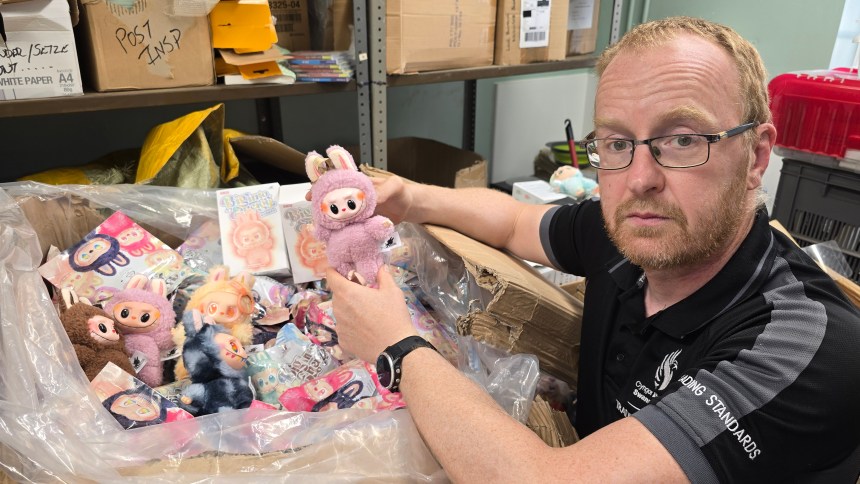
A surge in demand for collectible TikTok toys has led to more than 1,500 counterfeit items being seized from shops across Swansea, as part of a major investigation by Swansea Council’s Trading Standards Team.
The plush ‘Labubu’ toys, manufactured by Pop Mart, have exploded in popularity thanks to viral social media posts and celebrity endorsements from stars including Dua Lipa and Rihanna. The highly sought-after keyrings and plushies are often packaged in ‘blind boxes’, where buyers don’t know which character they’ll receive until they open it. Many are being resold online and in shops for double or triple their original price.
But recent visits to over a dozen Swansea retailers revealed a darker side to the craze: counterfeit products of poor quality, posing potential risks to children’s safety. Officers seized over 1,500 fake items in the latest phase of the Council’s wider crackdown on unsafe and illicit toys.
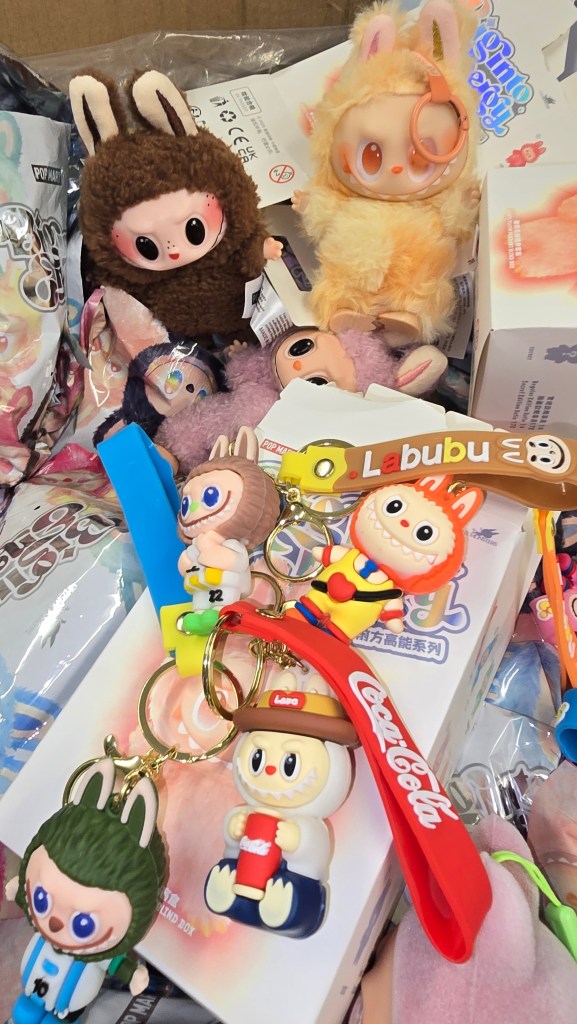
(Image: Swansea Council)
Rhys Harries, Swansea Council Trading Standards Team Leader, said:
“We’ve visited more than a dozen shops so far and have seized a large number of these toys. Some stores had already sold out due to demand, and many were unaware they were selling counterfeit products, believing them to be legitimate.”
“Some of the seized toys were extremely poor quality and could be easily pulled apart, which presents a serious choking hazard for babies and young children. We need businesses and parents alike to understand the dangers.”
The toy seizure comes on the back of a £10 million counterfeit toy operation led by Swansea Council in London, where Trading Standards officers tracked supply lines back to major distribution hubs outside the city.
Cllr. David Hopkins, Cabinet Member for Corporate Services and Performance, said:
“This counterfeit toy seizure is significant not only for Swansea, but for consumer protection across the UK. Our Trading Standards team has shown outstanding commitment to following the trail of fake and dangerous toys.”
Swansea Council is continuing its campaign to raise awareness about the dangers of counterfeit goods—especially when targeting young consumers—and urges businesses to remain vigilant about sourcing stock from trusted suppliers.