


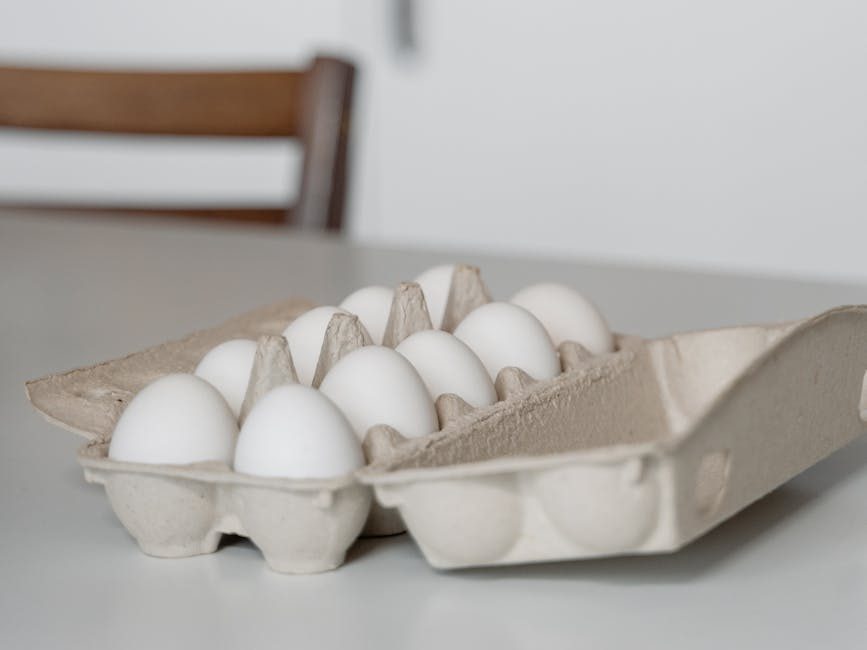
Wales is one of the UK’s free-range egg powerhouses — so a decision by Sainsbury’s to phase out brown eggs altogether could be felt keenly on Welsh farms.
Sainsbury’s, the UK’s second-largest supermarket, has confirmed it is “aiming towards 100%” white eggs across its own-brand ranges, in what it says is a move to cut its carbon footprint.
Sainsbury’s says a study of its own supply chain found white eggs carry a 12.7% lower carbon footprint than brown — driven by better feed efficiency and the longer productive life of white-laying hens.
It insists the change is about the breed of hen, not how they are kept. “100% of our shell eggs will remain free range,” the company said.
That detail matters in Wales. According to Welsh Government consultation figures, Wales produces 21.1% of the UK’s free-range eggs — more than a fifth of the national total — with 90.7% of Welsh production already in free-range systems.
Wales is home to around 350 egg-producing holdings housing some 2.3 million laying hens, according to Welsh Government figures — a small share of the UK flock by volume, but one heavily weighted towards the premium, free-range end of the market.
(Image: J Sainsbury)
A Sainsbury’s spokesperson said: “White eggs have the same delicious taste and nutritional benefits as their brown counterparts, but result in lower emissions and better welfare outcomes for the hens that lay them.”
The spokesperson added: “We know Brits love their eggs and, as we work with suppliers to transition all our own brand to white shells, they can now enjoy them knowing they are better for the environment and the hens.”
The supermarket says white-feathered hens typically eat less, live longer and are less prone to feather pecking — which it argues is better for welfare as well as carbon.
But the plan has already drawn political fire in the Senedd.
Laura Anne Jones, a Reform UK Member of the Senedd, accused the supermarket of treating egg colour as “a climate emergency.”
“People want affordable food, decent quality and the freedom to choose,” she said. “They do not want to be lectured by supermarket executives obsessed with ticking net zero boxes.”
She went on: “This is exactly the sort of madness that people are fed up with. Every aspect of daily life now seems to be viewed through the lens of carbon emissions, from how we travel to what we eat and now even the colour of the eggs in our fridge.”
Jones also questioned the science, arguing that white-egg-laying hens “have shorter productive lives, meaning more birds need to be bred, reared and incubated” — a claim that runs directly counter to Sainsbury’s, which says white hens live and lay for longer.
“Sainsbury’s needs to realise the colour of the egg is down to the breed and genetics of the hen and not net zero wizardry,” she said.
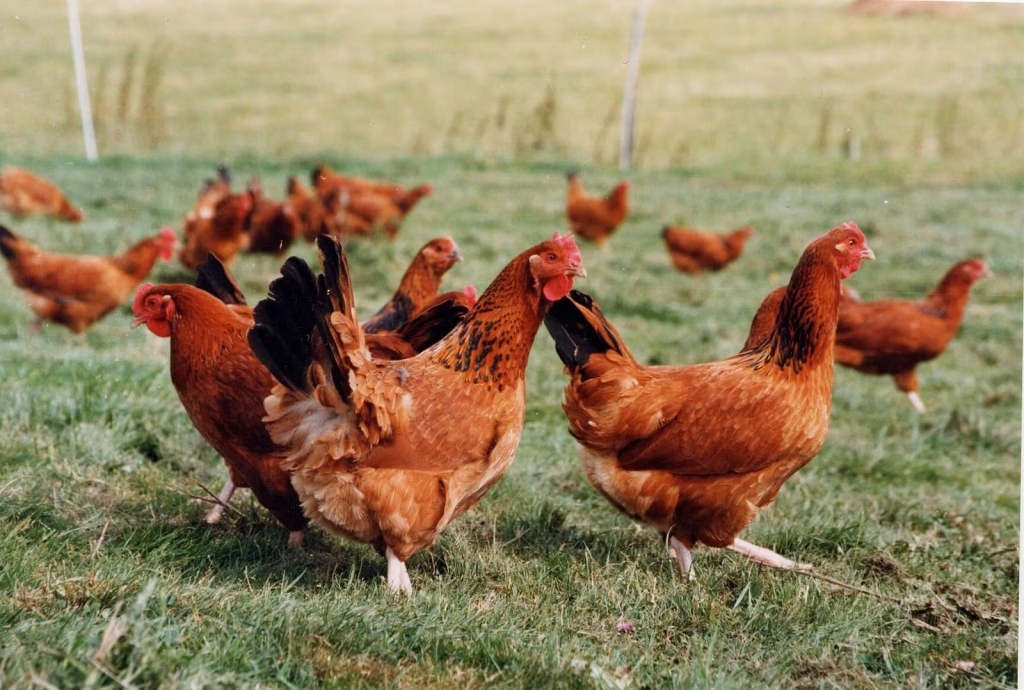
(Image: Compassion in Food Business)
There is a practical hurdle, too. White-egg-laying hens currently make up just 15% of the UK’s national flock, according to the British Egg Industry Council — meaning supermarkets could face supply constraints as farmers gradually switch their birds.
For Welsh producers, the change would mean ordering different chicks when flocks are replaced, rather than rebuilding sheds — the farming system stays free range, only the breed of hen changes. Welsh farmers may be well placed for that: an NFU survey reported by Farmers Weekly found Welsh laying sheds are the youngest in the UK, averaging nine years old against 19 in England.
Sainsbury’s is the first major UK supermarket to explicitly commit to switching its own-brand range to white eggs, and rivals will be watching how shoppers take to it. The chain has set retail trends before — its 2023 switch to vacuum-packed mince drew complaints at first but was later echoed elsewhere.
It is not the first time Sainsbury’s has reshaped its egg supply. In 2024 it launched a producer group promising egg farmers prices linked to the cost of production, reported by Farmers Weekly, in return for a continued drive on welfare and carbon reduction.
Brown eggs have dominated British shelves for decades, after shoppers came to associate them with being more natural — but white eggs were the norm in the 1970s, and remain far more common in the United States, where they make up around three-quarters of those sold.
Discover more from Swansea Bay News
Subscribe to get the latest posts sent to your email.