Pembrokeshire and Port Talbot have emerged as two of Wales’s leading net zero economic hotspots in major new analysis published today — but campaigners and business leaders are warning Wales is falling behind England and Scotland on building out its £13 billion renewable energy pipeline.
The research, commissioned by the Energy and Climate Intelligence Unit (ECIU) and analysed by CBI Economics and The Data City, found that net zero-related industries now contribute £4 billion in economic value to Wales each year and support more than 41,300 jobs — 4.3% of the country’s total economic output.
Pembrokeshire among top four hotspots
Pembrokeshire has been named among Wales’s top four net zero economic hotspots, with the industry accounting for 5.3% of the county’s local economic output and supporting around 1,600 jobs.
The county’s position is anchored by emerging low-carbon infrastructure including a consented 100 MW green hydrogen facility at the Pembroke Net Zero Centre, alongside battery storage projects and a network of solar installation businesses serving homes and commercial premises across the county.
Pembrokeshire sits alongside Wrexham (7% of local economic output, 2,340 jobs), Rhondda Cynon Taf (5.2%, 2,890 jobs) and Newport (5.1%, 2,620 jobs) as the four areas where the net zero economy is most concentrated.
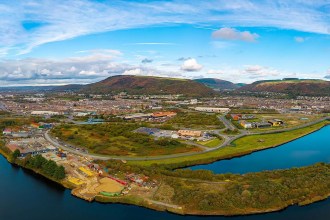
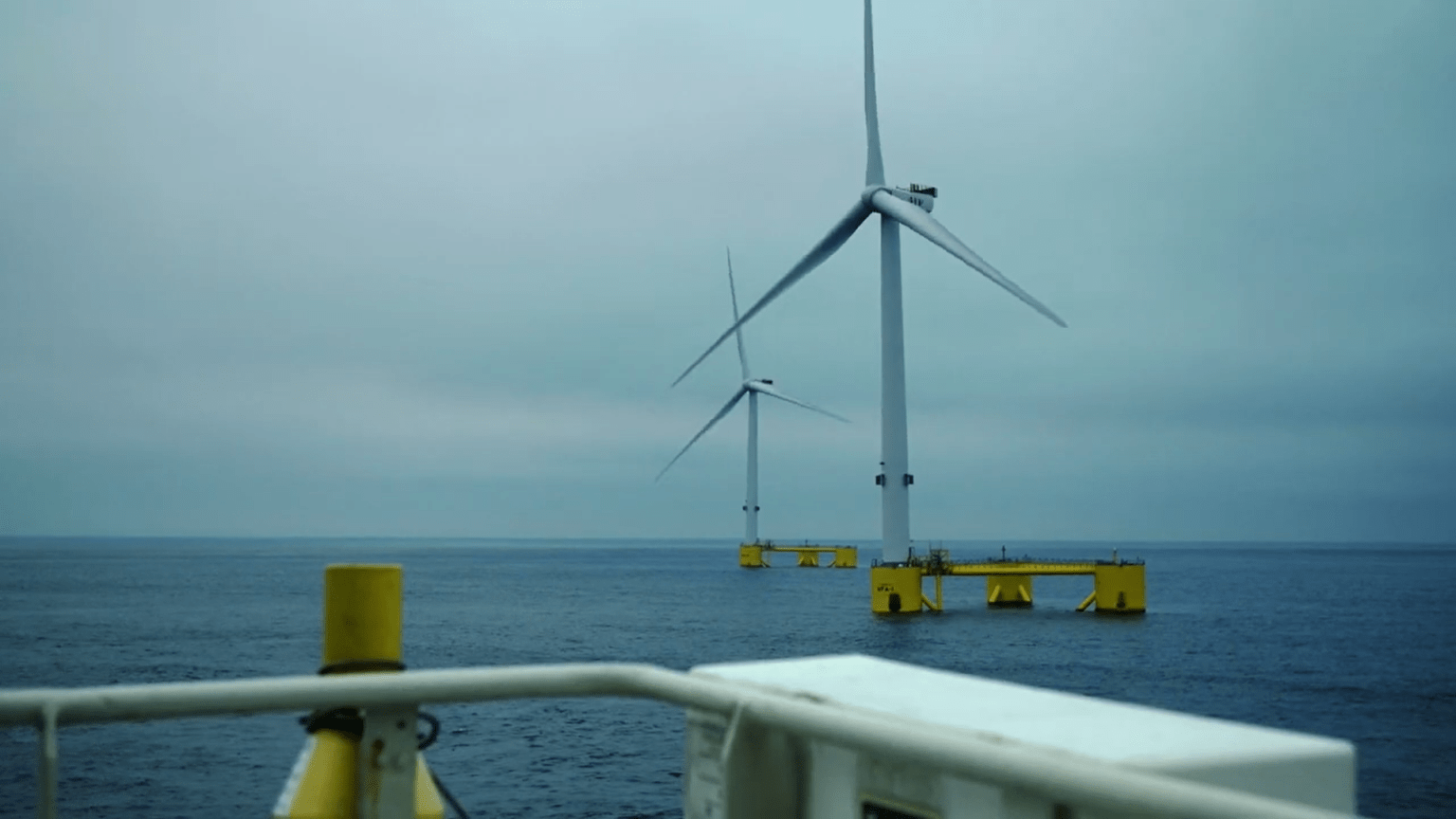
Port Talbot in the frame for £64m wind investment
Secretary of State for Wales Jo Stevens said the UK Government was determined to put Wales “at the heart of our clean energy mission” — pointing to £2.5 billion already invested in new nuclear at Wylfa, and up to £64 million committed to support floating offshore wind in Port Talbot.
Ms Stevens said the UK Government was also planning to speed up delivery of major clean energy infrastructure projects by “protecting them from legal challenges and delays.”
“The UK Government recognises the key role that the Welsh clean energy industry plays in boosting the country’s economic growth, securing our energy independence, bringing down household bills, and supporting over 40,000 jobs in Wales,” she said.
Higher-paid, higher-productivity jobs
The ECIU/CBI analysis also found that workers in the Welsh net zero economy are significantly more productive than the national average — generating £117,500 in economic value per worker, around 1.7 times the wider Welsh average.
That translates into higher wages. Average salaries in the sector are £39,812 — around 11% above the Welsh industry average of £35,796.
The jobs are spread across energy generation, manufacturing, construction, engineering and professional services, from solar panel installers to electric vehicle charging companies. Around 160 firms across Wales are now involved in heat pumps and other renewable heating technologies.
1,300 businesses — most of them small
The report identifies more than 1,300 net zero businesses now operating across Wales, with 87% of them small or medium-sized enterprises. Around one in six (15%) have started up within the past five years.
Russell Greenslade, CBI Wales Director, said the report underlined how central the net zero economy now is to Wales’s future prosperity.
“With our unique natural assets, strength in advanced manufacturing and well-established supply chains, we’ve long known that the net zero economy presents a major commercial opportunity for Wales,” he said.
“From onshore and offshore wind to carbon capture and emerging clean technologies, Wales can be at the forefront of the UK’s energy transition, with high-value, highly productive jobs created in every part of the country.
“The UK and Welsh Governments must now work in partnership with business to seize that opportunity. That means creating a stable, competitive business environment and investing in the skills that will enable Welsh workers to thrive in the energy transition.”
Warning: “Wales has slipped behind”
But the report carries a clear warning: Wales risks falling further behind England and Scotland unless renewable energy build-out is accelerated.
Peter Chalkley, Director of the ECIU, said hundreds of small businesses are driving the Welsh net zero economy forward — “installing heat pumps and solar panels, developing smart software for charging EVs and producing green hydrogen.”
But he warned that “Wales has slipped behind England and Scotland in its construction of renewable energy set against the backdrop of the US Iran conflict and the second oil and gas price crisis in just a matter of years.”
“With countries and states covering 84% of the global economy committed to net zero, Wales is very much part of a global race to build competitive, clean industries,” he said.
“This means there is real jeopardy for jobs and livelihoods if politics and policy shift and Wales starts to fall behind — standing still is unfortunately a recipe for decline.”
£13.1 billion pipeline at risk
The analysis identifies a potential £13.1 billion renewable energy generation infrastructure pipeline in Wales, representing 10.9 gigawatts of capacity — but warns that not all of this is yet guaranteed to be built.
The figure reflects the scale of investment that could flow into Welsh communities including Pembroke, Port Talbot, Milford Haven and Swansea Bay over the coming decade if delivery accelerates — and the scale of the opportunity that could be missed if it does not.
The new Plaid Cymru-led Welsh Government, which took office earlier this month following the May 2026 Senedd election, has set out clean energy as a central plank of its economic strategy. The UK Government and the new Welsh Government must now align on delivery timetables for the major projects that will determine whether the £13 billion pipeline turns into real jobs and infrastructure on the ground.

Discover more from Swansea Bay News
Subscribe to get the latest posts sent to your email.