

A result that defied the polls
Plaid Cymru’s emphatic victory in Caerphilly has sent shockwaves through Welsh politics. What had been billed as a tight contest between Plaid and Reform UK ended in a resounding win for Plaid, leaving Reform bitterly disappointed and Labour facing a collapse in support.
Labour acknowledges the scale of the setback
The by‑election was fought in difficult circumstances, following the death of long‑serving Labour MS Hefin David. Labour’s campaign had already acknowledged the challenge, with a spokesperson thanking supporters as polls closed and paying tribute to David’s role at the heart of the constituency.
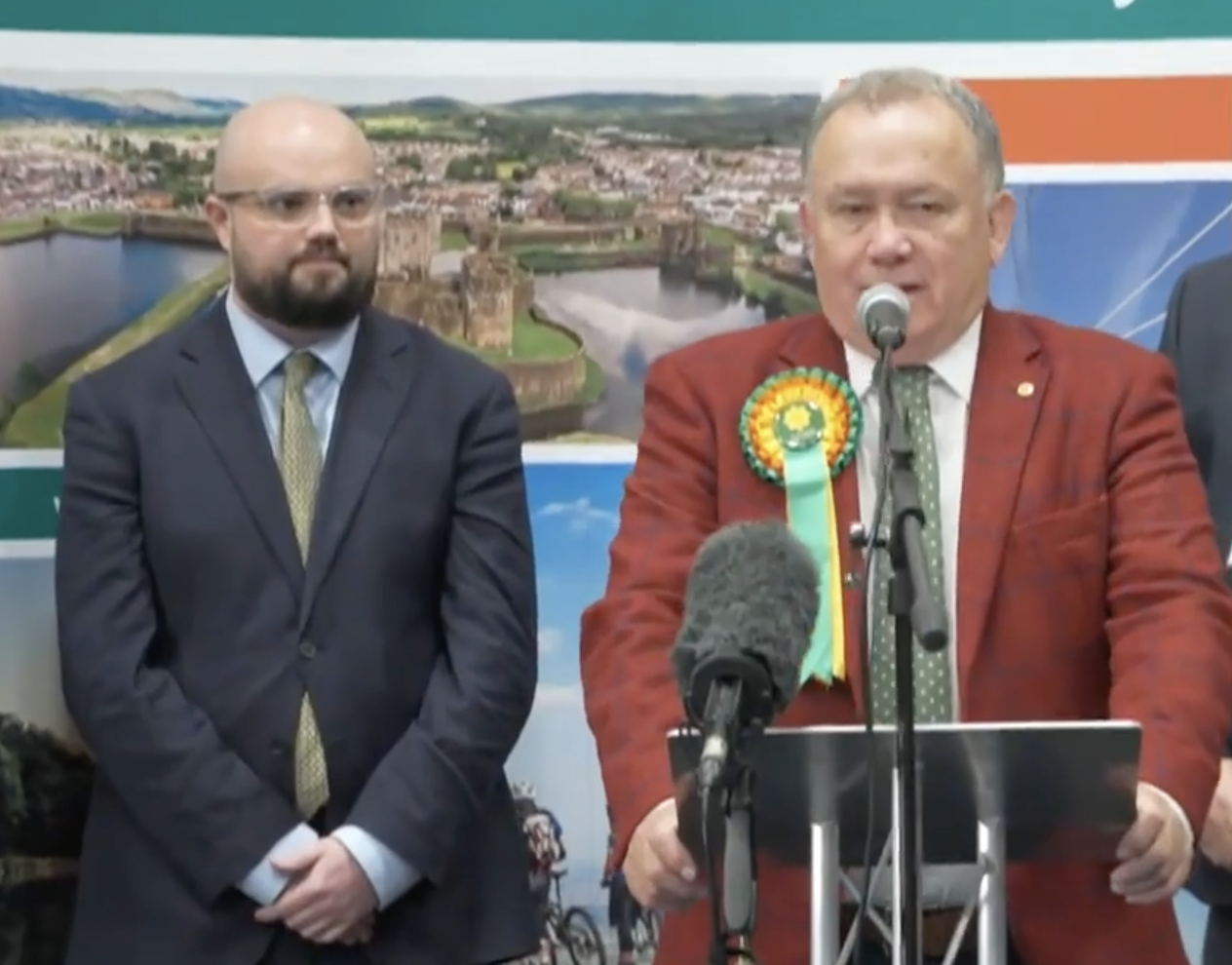
After the result, Welsh Labour leader Eluned Morgan said:
“This was a by‑election in the toughest of circumstances, and in the midst of difficult headwinds nationally. I want to thank our candidate, Richard Tunnicliffe — a good man who stood because of his desire to serve his community. Welsh Labour has heard the frustration on doorsteps in Caerphilly that the need to feel change in people’s lives has not been quick enough. We take our share of the responsibility for this result. We are listening, we are learning the lessons, and we will come back stronger.”
Labour figures also argue that part of their collapse in Caerphilly may have been down to tactical voting. With Reform seen as the main challenger, some Labour supporters are thought to have lent their votes to Plaid in order to block a Reform win. Party strategists suggest those voters could return to Labour in May under the new proportional system, when the pressure to vote tactically will be much weaker.
Plaid energises voters, Reform falters
For Plaid, the scale of the win was striking. Just days earlier, polling suggested Reform were edging ahead nationally, with Plaid slipping and Labour stabilising. Caerphilly was meant to be the test case for that trend. Instead, Reform failed to mobilise its base, Plaid energised voters far beyond expectations, and Labour’s vote share collapsed to levels that would once have been unthinkable in a former stronghold.
What it means under the new Senedd system
The implications stretch well beyond the valleys. In South West Wales, where the new Senedd electoral system will see six‑member super constituencies elected by the D’Hondt method, the Caerphilly result offers a glimpse of how voter behaviour might shift. Under first‑past‑the‑post, anti‑Reform voters coalesced around Plaid. Under proportional representation, those votes could fragment — with Plaid still well‑placed to secure multiple seats within a super constituency, but with opportunities for smaller parties such as the Greens to benefit if Labour’s support continues to erode.
Reform’s challenge ahead
Reform’s disappointment is also telling. Caerphilly was one of the most favourable battlegrounds for their message, yet they fell well short. If they struggled to convert polling strength into votes in a concentrated campaign, the challenge of sustaining momentum across all of Wales under proportional representation looks even steeper. In a six‑seat super constituency, Reform would need consistent support across the whole area to win even one or two seats. For South West Wales, where Reform had hoped to make inroads in coastal and commuter towns, the lesson is that national polling numbers may flatter their real electoral strength.
Labour’s collapse and the road to May
Labour’s collapse is perhaps the most dramatic element. Once dominant in the valleys, their vote share in Caerphilly fell into low double figures. If replicated across the new super constituencies, Labour could see its representation shrink dramatically. In South West Wales, that could mean losing one or more of the six seats available, with Plaid or smaller parties stepping into the gap. Labour’s own statements acknowledge the scale of the challenge: gratitude to campaigners, recognition of voter frustration, and a promise to rebuild.
Poll vs. reality: the numbers
The Beaufort poll published just before the by‑election suggested a knife‑edge race: Plaid on 37%, Reform on 36%, Labour on 24%. The actual Caerphilly result was very different: Plaid 47.5%, Reform 36.1%, Labour 11.1%. That means Plaid outperformed by more than ten points, Reform flatlined, and Labour collapsed by almost thirteen points.
Applied across Wales, those swings would transform the Senedd projections. Instead of Reform leading on 37 seats, Plaid would surge to around 35, Reform would fall back to the mid‑20s, and Labour would slump to the low teens. Smaller parties would hold steady, with the Greens potentially gaining from disaffected Labour voters.
Senedd projections: Poll vs. Caerphilly‑adjusted
| Party | Poll projection (96 seats) | Adjusted projection (Caerphilly swing) |
|---|---|---|
| Plaid Cymru | 25 | ~35 |
| Reform UK | 37 | ~26 |
| Welsh Labour | 24 | ~13 |
| Welsh Conservatives | 7 | 7 |
| Green Party | 2 | 3 |
| Welsh Lib Dems | 1 | 1 |
| Total | 96 | 96 |
South West Wales super constituencies
| Super constituency (seats) | Poll projection | Adjusted (Caerphilly swing) |
|---|---|---|
| Gŵyr Abertawe (6) | 3 Reform, 2 Lab, 1 Plaid | 3 Plaid, 2 Reform, 1 Lab |
| Brycheiniog Tawe Nedd (6) | 3 Reform, 1 Lab, 1 Plaid, 1 Lib Dem | 2 Plaid, 2 Reform, 1 Lab, 1 Lib Dem |
| Afan Ogwr Rhondda (6) | 3 Reform, 2 Lab, 1 Plaid | 2 Plaid, 2 Reform, 2 Lab |
| Sir Gaerfyrddin (6) | 3 Plaid, 2 Reform, 1 Lab | 4 Plaid, 1 Reform, 1 Lab |
| Ceredigion Penfro (6) | 3 Plaid, 2 Reform, 1 Lab | 4 Plaid, 1 Reform, 1 Lab |
| Pen‑y‑bont Bro Morgannwg (6) | 2 Reform, 2 Lab, 1 Con, 1 Plaid | 2 Plaid, 2 Reform, 1 Lab, 1 Con |
What this could mean for the Senedd
If the Caerphilly result were to be repeated across Wales, the political map would be transformed. Plaid Cymru would emerge as the largest party in the Senedd for the first time since devolution, overtaking both Reform UK and Labour.
But even with a Caerphilly‑style surge, Plaid would still fall short of the 49 seats needed for an outright majority in the new 96‑seat chamber. That makes a Plaid‑led rainbow coalition the most likely outcome — with Labour’s co‑operation still essential, and smaller progressive parties such as the Greens or Liberal Democrats holding the balance of power.
Such an arrangement would mark a historic shift. Labour, which has dominated Welsh politics since 1999, would no longer be the largest party. Instead, Plaid would be in the driving seat, but governing would depend on building alliances. For South West Wales, that could mean Plaid consolidating Carmarthenshire and Ceredigion, breaking through in Swansea, and reshaping the region’s representation in the Senedd.
In short, Caerphilly may prove to be more than a by‑election upset. It could be the first glimpse of a new era in Welsh politics — one where coalition, not single‑party dominance, becomes the norm.

Discover more from Swansea Bay News
Subscribe to get the latest posts sent to your email.





“If”…..