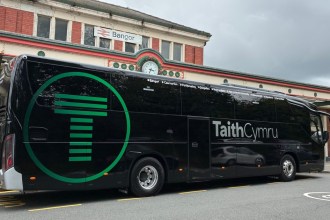



South West Wales is seeing a sharp rise in public transport use, with more people travelling by train and big changes coming to the bus network. But while investment is flowing, questions remain about whether the region is ready to deliver the shift in how people get around.
Figures from Transport for Wales’ latest annual report show a 20% jump in rail journeys across Wales in 2024/25, with 31.7 million trips made — many on brand-new trains now operating on the Wales and Borders network. The Cardiff–Swansea corridor was among the busiest routes, with improved reliability and newer rolling stock helping to attract more passengers.
That’s backed up by the Office of Rail and Road, which found that TfW Rail had the biggest increase in passenger journeys of any UK operator, up 19% in the first quarter of 2025. Passenger vehicle kilometres — a measure of how far trains travel with people onboard — also rose by 23%, suggesting more trains running more often and with more people onboard.
Across the UK, rail use is bouncing back. A recent UK Government report shows that daily rail arrivals into major cities hit their highest level since records began in 2010, with 1.86 million arrivals on a typical autumn day in 2024. While most of the top 10 busiest trains were in England, the Cardiff–Swansea corridor was flagged as one of Wales’ most crowded routes.
Bus reform: South West Wales goes first
While rail use is rising, the biggest shake-up is coming to the bus network. South West Wales — covering Swansea, Neath Port Talbot, Carmarthenshire and Pembrokeshire — will be the first region in Wales to adopt bus franchising under the Welsh Government’s Bus Reform Bill, with changes set to begin in summer 2027.
Under the new system, decisions on routes, timetables and fares will be made centrally by Transport for Wales and the Welsh Government. Operators will bid to run services under new contracts, and a Proposed Base Network has already been drawn up. Public feedback is being gathered through drop-in sessions and online surveys.
The aim is to simplify routes, improve frequency, and better link buses with trains and walking routes. But TfW admits that funding and staffing limits mean not every request can be met in the first phase.
Local transport grants: £27 million for South West Wales
To support the transition, councils in South West Wales received a combined £27 million in transport grants for 2025/26 — part of a wider £110 million funding pot for local authorities across Wales.
Here’s how some of that money is being spent:
- Carmarthenshire: £2.05m for Llanelli Interchange, £1.14m for Black Bridge active travel route, £574k for Sandy Road Corridor, and £450k for 20mph rollout
- Neath Port Talbot: £1.6m for Fabian Way drainage, £440k for Neath Transport Hub, £990k for Neath to Cilma active travel route, and £890k for Harbourway safety upgrades
- Pembrokeshire: £6m for the Milford Haven Interchange, upgrading the train station and creating better links for buses, taxis and walking routes
- Bridgend: £226k for bus station displays, £119k for Pen y Fai active travel route, and £208k for 20mph rollout
- Swansea: £1.5m for strategic bus corridors, £913k for Taff Trail upgrades, and £188k for road safety measures
The grants cover a mix of road safety schemes, bus infrastructure upgrades, electric vehicle charging points, and active travel routes — with funding awarded based on criteria set out in TfW’s Active Travel Fund guidance.
Active travel: investment up, impact unclear
Despite the funding boost, a recent report from Audit Wales says the Welsh Government is still a long way from meeting its active travel goals. The watchdog found that while spending has increased — with £65 million allocated in 2024/25 — actual walking and cycling rates remain low.
In 2022/23, just 51% of people walked once a week for travel, down from 60% in 2019/20. Cycling rates have stayed flat at around 6%.
The report warns that without better evidence and stronger local delivery, “doing more of the same may simply produce the same results.” It also highlights gaps in data, inconsistent reporting by councils, and a lack of focus on behaviour change.
In South West Wales, councils have submitted dozens of active travel schemes — from school routes in Carmarthenshire to coastal links in Pembrokeshire — but delivery varies widely. The Active Travel Board’s annual report notes that while infrastructure is improving, the shift in how people travel is still “painfully slow”.
What’s next?
With rail use rising, bus reform on the horizon, and millions in transport grants flowing to the region, South West Wales is entering a pivotal phase in how people get around.
But the challenge now is delivery. As Audit Wales puts it, the Welsh Government and its partners must “reflect on why, in over a decade, the Active Travel Act has not yet had the desired impact” — and ensure future funding leads to real change.

Discover more from Swansea Bay News
Subscribe to get the latest posts sent to your email.