

The bad news
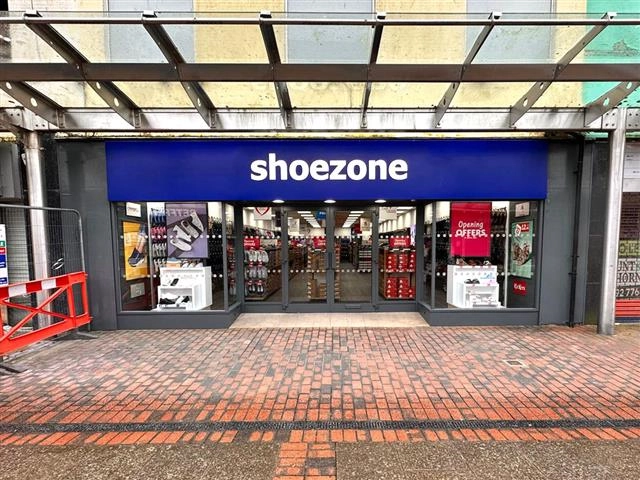
Shoe Zone is in trouble. The chain has just reported a £5.3 million loss — nearly double what it lost this time last year. It closed 14 stores in the past six months alone and is now shutting half its warehouse.
The company blames the war in Iran for pushing up shipping costs, and two government budgets for making shoppers too nervous to spend. Even its online sales — usually its bright spot — fell 6% in the latest figures. It had hoped to make a £1 million profit this year. It now thinks it’ll lose between £1 million and £2 million.
Why some stores are more at risk than others
Shoe Zone has been quietly carrying out a plan for years. The company is shutting its smaller, traditional high street shops and replacing them with bigger stores in retail parks that sell branded shoes like Skechers alongside its own cheap range.
By last September, it had already converted 201 of its stores to the bigger format. Only 68 of the old-style smaller shops remained — down from 112 the year before. The company wants to finish the job by the end of 2027.
The pattern is clear from what’s already happened across south-west Wales. In 2019, Shoe Zone opened a big new store at Cross Hands Retail Park — and six months later, the Ammanford town centre branch on Quay Street closed for good.
In 2023, it relocated from its smaller traditional Union Street store in Swansea city centre to the much larger former Next unit on Oxford Street. Six months later, the Morriston branch closed permanently.
Maesteg lost its Shoe Zone in 2020 and Haverfordwest followed in 2021 — both were traditional town centre shops and neither appears on the company’s store locator any more.

The stores in south-west Wales — starting with the safest
Safe: Cross Hands Retail Park
Opened in 2019 as Shoe Zone’s first out-of-town store in Wales, Cross Hands is the chain’s regional anchor for west Wales — open until 7pm on weekdays and stocking a wide range of branded footwear. This is precisely the model the company is investing in. It’s about as safe as it gets.
Safe: Swansea, Oxford Street
When Shoe Zone moved from its smaller Union Street store into the old Next unit on Oxford Street in 2023, it was a statement of intent. Large, modern and well-stocked, this is one of the company’s own concept stores — the kind of unit it wants more of, not fewer.
Reasonably safe: Port Talbot, Aberafan Centre
Inside the Aberafan Shopping Centre, this is a covered unit which is generally more stable than a standalone high street branch. Port Talbot faces its own economic headwinds following the steel industry’s decline, but the shopping centre location provides some protection.
Reasonably safe: Carmarthen, Merlin’s Walk
Opened in October 2024, the Carmarthen store is one of the newest Shoe Zone branches in Wales. It sits along Merlin’s Walk — an open pedestrianised street linking the town centre with Friars Park car park — rather than in a covered shopping centre. A store this new is unlikely to close soon, but its open high street setting means it faces the same footfall pressures as any other town centre shop.
Worth watching: Neath, Green Street
Neath’s store was refurbished and reopened in September 2023 as a modernised unit with a bigger range of brands. The recent investment suggests Shoe Zone sees a future here — but it’s still a traditional town centre store on an open high street, and those are exactly the ones the company has been closing elsewhere.
Most at risk: Llanelli, Stepney Street
Llanelli’s Shoe Zone is a long-established traditional high street shop — exactly the type the company has been systematically shutting. No closure has been announced. But with Cross Hands Retail Park already drawing shoppers from across west Wales, Llanelli faces the same question Ammanford did in 2019: does a traditional town centre branch still make sense when there’s a bigger, better-stocked store just up the road? Of all the south-west Wales stores, this one fits the at-risk profile most closely.

(Image: Google Maps)
What happens next
Shoe Zone is fighting on multiple fronts — rising costs, falling sales, a shrinking store network and mounting losses. The company says it is still investing in its future, including launching a TikTok shop to drive online sales. But the high street has already claimed Wilko, Debenhams and countless others that once seemed like fixtures, and with losses mounting and the 2027 transformation deadline approaching, the clock is ticking for its remaining traditional stores.
South-west Wales has already seen this story play out before. TGJones — the chain that took over from WHSmith — is facing its own crisis, with seven local branches at risk and a High Court hearing on its future expected in late June.

Discover more from Swansea Bay News
Subscribe to get the latest posts sent to your email.