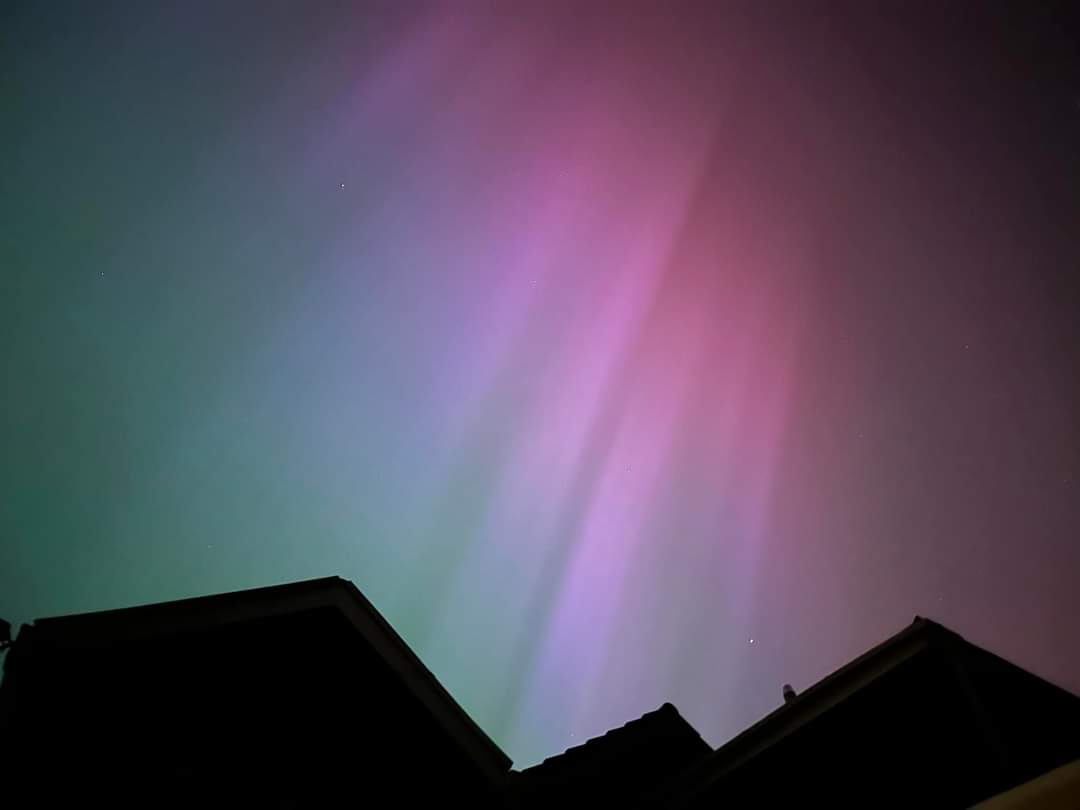
It is the first time in 20 years that the Northern Lights have been spotted in Wales and at nearly midnight last night the sky was awash with colour.
Many stargazers would look in awe at the sky as the Northern Lights also known as Aurora borealis appeared after a rare geomagnetic storm.
Fear not if you didn’t catch them, however, as if the clouds stay away from the sky there will be a second chance to see the spectacular sight at around 11pm tonight.
Weatherman Chris Page offered his top tips on seeing the lights tonight.
- Look to the northern horizon: The aurora is drawn towards the polar regions of the Earth. As a result you might not be able to see it directly overhead, but as it happens so high in sky look towards the northern horizon where it’s likely to be dancing.
- You can see it with the naked eye but cameras tend to capture it better. This is because cameras can adapt to different wave lengths better than our eyes. Give yourself time to adjust, at least 10 minutes.
- Find dark, open spaces: Seek out locations away from city lights and other sources of light pollution. Open fields, parks, or remote areas with unobstructed views of the northern horizon are ideal for aurora watching.
- Be patient and persistent: Seeing the aurora requires patience and persistence, as it can be unpredictable and may not appear every night, even during periods of high activity. Stay flexible with your plans and be prepared to wait for hours if necessary.
- Use long exposures for photography: If you’re interested in photographing the aurora, use a camera with manual settings and a tripod to capture long exposures. Experiment with different exposure times and ISO settings to achieve the best results.
- Stay up late: Auroras are often most active in the late evening to early morning hours, so plan to stay up late or wake up early for the best chance of seeing a spectacular display.
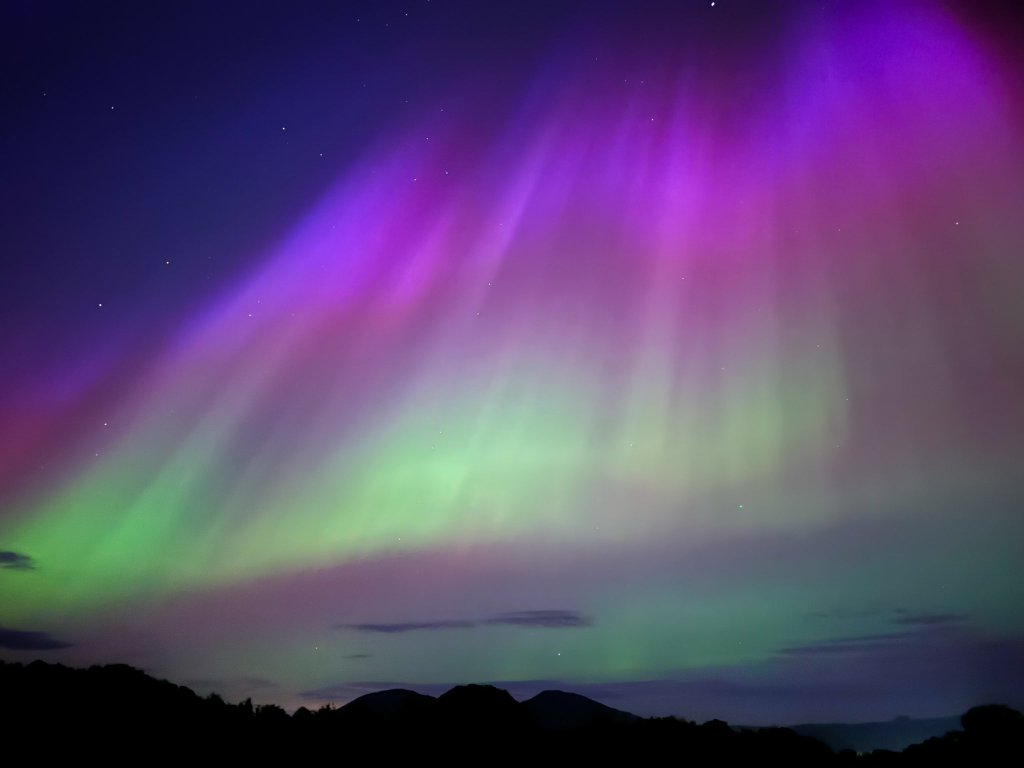
Explaining why the sky turns a purple based rainbow colour the National Oceanic and Atmospheric Administration said:
“The Northern Lights are vibrant curtains of light seen in the night sky, ranging from green to pink and scarlet. They are caused by charged particles from the sun interacting with gases in the Earth’s atmosphere.
“The geomagnetic storm hit earth on Thursday and could affect communications, GPS and power grids.
“The cause of this storm is a large complex sunspot cluster and is 17 times the diameter of earth, with the last storm with a G5 rating hitting earth in October 2003 which caused power outages in Sweden.”
[Lead image: Richard Bond]