Plans to transform one of Swansea city centre’s most prominent historic hotels have been approved, with the Grand Hotel on Ivy Place set to more than double its bedrooms from 53 to 106 as part of a major expansion aimed at achieving a 4-star rating.
Swansea Council’s planning committee approved the scheme on Tuesday afternoon — but not without noting a significant controversy over excavation work carried out without planning permission at a site adjoining a historic Quaker burial ground.
The Grand Hotel, a four-storey Art Deco building constructed in the 1930s, sits directly opposite Swansea railway station and is described in planning documents as one of the first landmarks visible to visitors arriving in the city by train. The applicant is Mr Con Maloney.
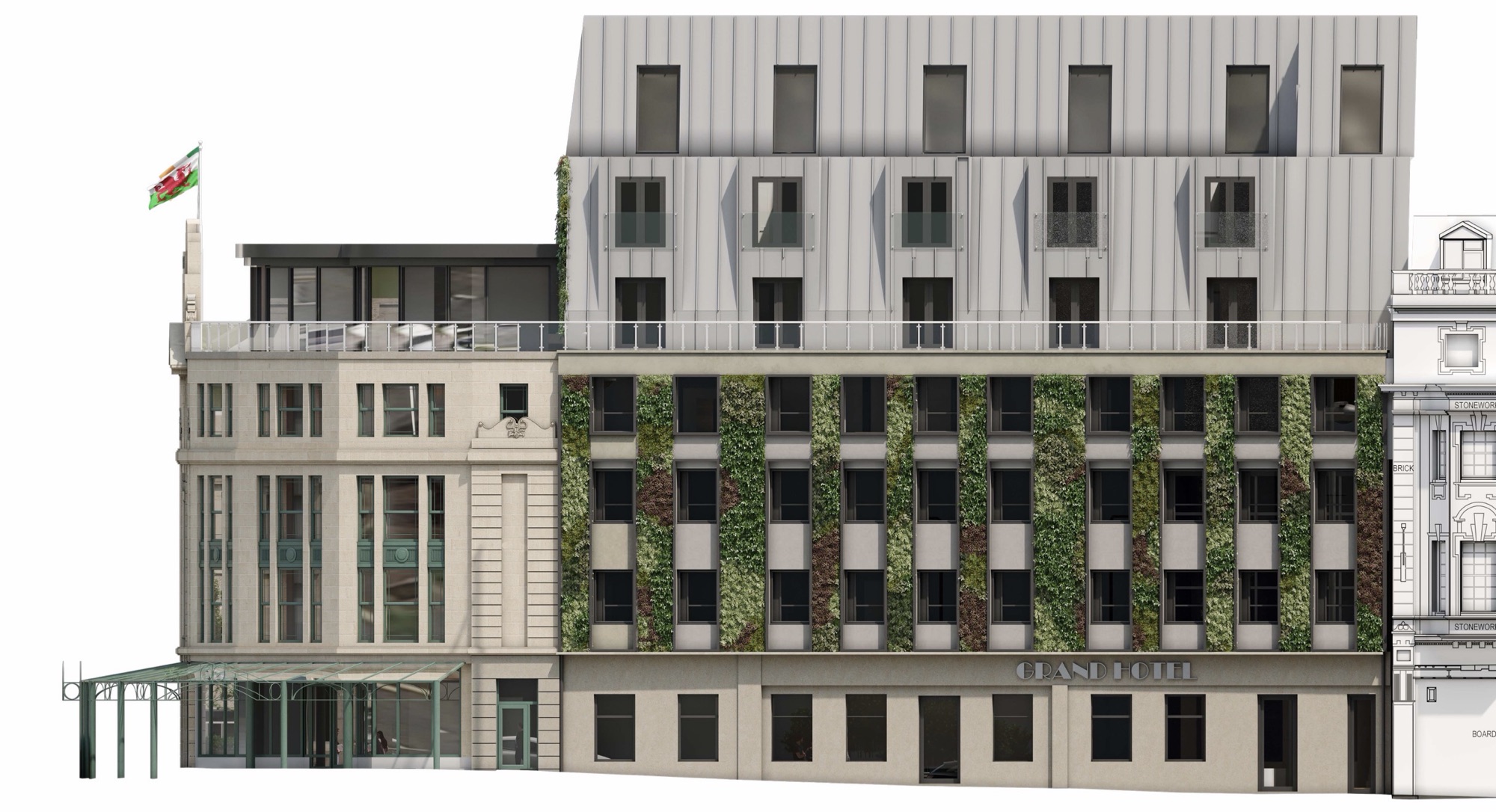
Swansea Bay News first reported on the Grand Hotel plans last October, when an earlier version of the scheme received planning permission for 42 additional bedrooms. The applicant returned with an amended scheme adding a further floor — taking the additional rooms from 42 to 57 — after steel design costs came in significantly higher than originally budgeted.
The revised scheme, designed by Lawray Architects (application reference 2025/2514/FUL), will add rooms across six floors: 8 bedrooms on each of the first and second floors, 13 on each of the third, fourth and fifth floors, and two further rooms alongside a bar and lounge on the rooftop level. A new basement cellar, a gym for hotel guests, additional lifts and a reconfigured and enlarged ground-floor function room are also included.
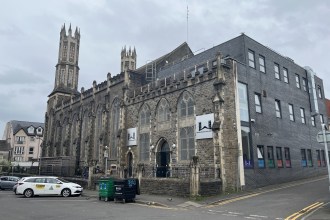
However, the committee report noted that the applicant had already excavated a basement without planning permission, and without the archaeological watching brief required under conditions attached to the original consent. The hotel site adjoins the former Quaker Meeting House — built in 1807 — and its associated burial ground, and during excavation a human inhumation from the Quaker burial ground was discovered.
The council’s archaeological consultants Heneb (Glamorgan Gwent Archaeological Trust) said it was “reasonable to conclude” that further archaeological deposits including human remains may have been damaged or destroyed during the unmonitored work. The committee report stated the failure to undertake proper archaeological mitigation “is regrettable and not condoned” and weighed against the application. However, the committee approved the scheme on the basis that the regeneration benefits for High Street outweighed the identified archaeological harm.
A new condition has been attached requiring a full written scheme of historic environment mitigation to be submitted before any further development takes place.
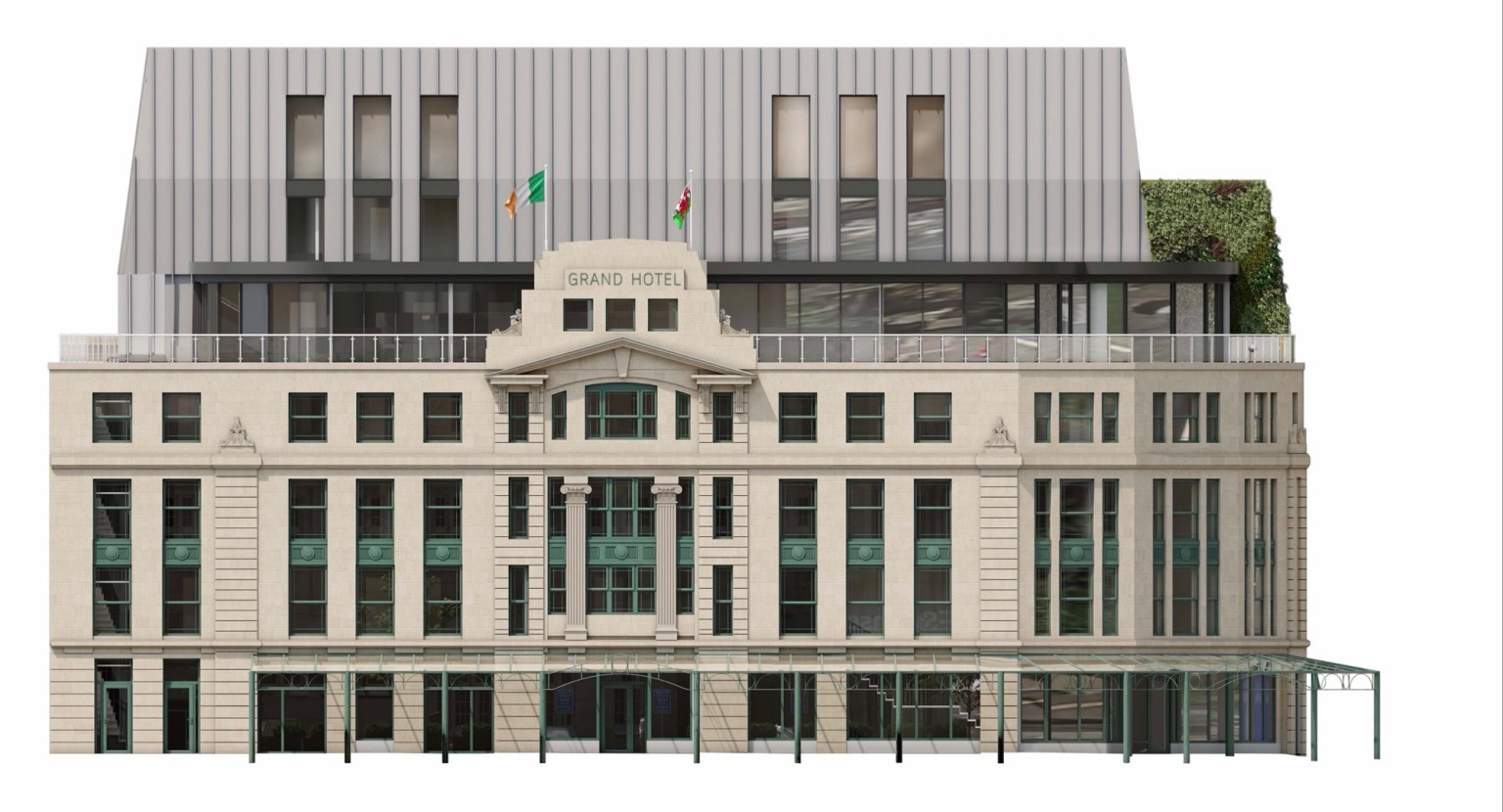
The historic 1930s Art Deco façade facing the railway station will be preserved and enhanced, with new upper floors set back behind the main building line. One of the most distinctive design features is a living green wall on the west elevation facing High Street — a modular vertical garden system that will support biodiversity, reduce noise pollution and improve air quality. Dark aluminium cladding originally proposed for the rooftop extension was changed to a lighter grey zinc cladding following visual testing.
The new upper floors use a mansard roof design, with dormer windows and Juliet balconies throughout the upper levels and large openings at roof level for city views from the bar and lounge. Bird boxes and bat boxes will be installed within a month of the development’s completion as part of the scheme’s ecological enhancement commitments.
All consultees — including Natural Resources Wales, Highways, Drainage and Welsh Water — raised no objection to the scheme. No objections were received from neighbouring properties during the pre-application consultation process.
The committee report describes the High Street area as being in “major need of regeneration” and notes the hotel expansion could act as a catalyst for wider investment. The scheme falls within a Strategic Development Area under Swansea’s Local Development Plan, which specifically identifies High Street as a priority area for regeneration linking the railway station to the retail centre.
Construction will be restricted to 8am to 6pm Monday to Friday and 8am to 1pm on Saturdays.

Discover more from Swansea Bay News
Subscribe to get the latest posts sent to your email.