


It is the issue that has filled Torsten Bell’s postbag more than any other this year — and when he opened up a public meeting on children’s social media use in Swansea this week, it was standing room only.
Parents spoke of children glued to screens for hours on end. Teachers described what they see on the frontline every day. Charity leaders raised the mounting evidence on mental health. And beneath it all ran a question that nobody has yet managed to answer satisfactorily: if the government bans under-16s from social media, can it actually be enforced?
The meeting, held on Thursday 14 May, was organised by the Swansea West MP to feed local voices into the UK Government’s Online Safety Act consultation on protecting children online — including proposals to restrict social media use for under-16s. Bell had called the meeting in April after his office was inundated with correspondence from constituents worried about the issue.
The consultation — launched by the Department for Science, Innovation and Technology — is examining a range of potential measures. These include requiring social media platforms to do far more to verify the ages of users, potential restrictions on under-16s accessing platforms entirely, and tougher rules on how AI chatbots and gaming platforms interact with children.
Residents at Thursday’s meeting heard first from a panel of expert speakers — researchers, campaigners and people who deal with the consequences of children’s social media use in their work every day.
The data presented at the meeting made for uncomfortable reading. According to the Children’s Commissioner for Wales and Ofcom, one in five children in Wales spends more than seven hours a day on a screen — and most children aged between three and five already have their own social media profile.
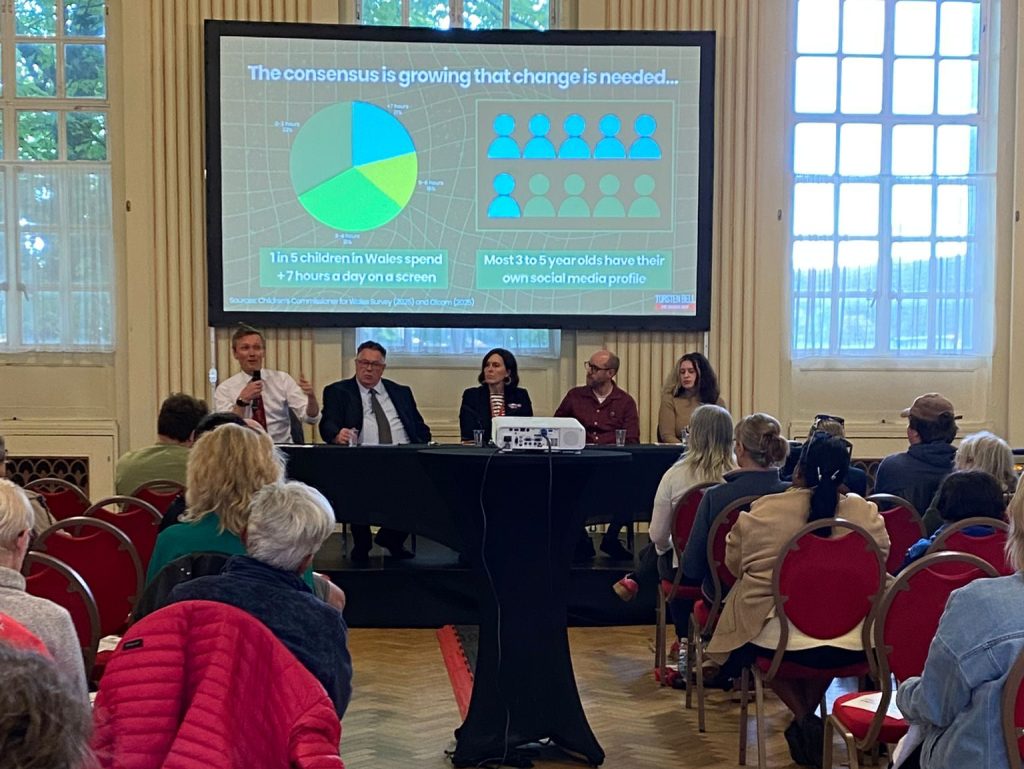
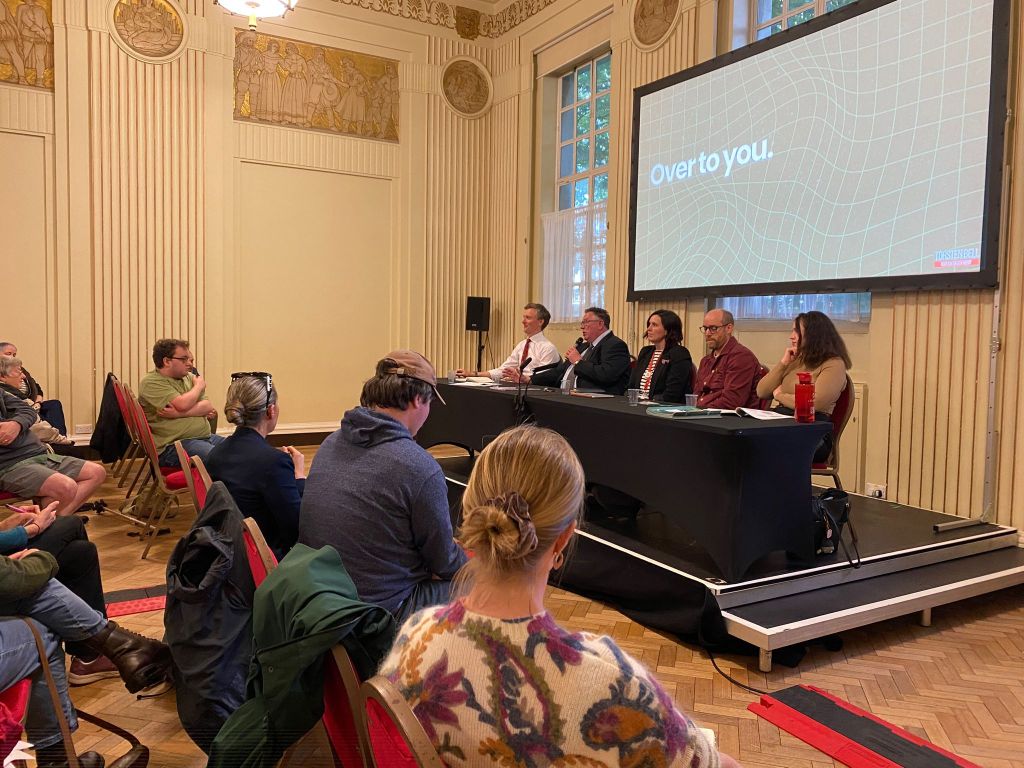
The audience then shared their own experiences, and the room was not of one mind. There were parents who want action now, convinced that social media is damaging their children’s wellbeing and mental health. There were others who questioned whether an age limit could be meaningfully policed — and whether it might drive young people further underground online rather than protecting them.
Bell said the quality of the debate had struck him. “This public debate showed just how deeply people in Swansea care about this issue,” he said. “Parents, teachers and young people themselves all recognise that technology has transformed childhood in ways we are only beginning to understand.”
He added that the issue felt personal as well as political. “Many of us do already know how much we’d have missed out on as a teenager if the time and attention sink of social media had got in the way,” he said.
The concerns raised in Swansea are not new — and not unique to the city. A Bridgend school warned last year that pupils could face expulsion over abusive TikTok posts. Research published on Safer Internet Day found that half of parents had never spoken to their children about harmful online content. And more than 60 Labour MPs have now backed calls for a ban — among them local MPs Tonia Antoniazzi and Henry Tufnell.
The political pressure on the government to act is growing. Australia introduced a full ban on social media for under-16s last year, becoming the first country in the world to do so, and the move sparked intense debate in Westminster about whether the UK should follow suit.
But critics of an outright ban — including some who spoke at Thursday’s meeting — argue that determined teenagers will simply find workarounds, and that the real answer lies in better platform regulation and education rather than blanket restrictions that may prove unenforceable.
What is not in dispute is the scale of the problem. The Llanelli MP’s office has described parents being shocked to discover their children had secret online identities — building up lives in apps their parents had never heard of, talking to strangers, and consuming content far removed from what they had been allowed to access at home.
Bell urged everyone who could not make Thursday’s meeting to respond to the consultation directly before the deadline. “The experiences and differing views everyone shared will be fed directly into the Government’s consultation,” he said.
“For anyone that couldn’t make it along, there is still time to have your voice heard — please do fill in the survey on my website and ensure the UK Government has heard your views before decisions about further action are taken,” he added.
The consultation closes on 26 May. Responses can be submitted via Torsten Bell’s website at torsten-bell.com.

Discover more from Swansea Bay News
Subscribe to get the latest posts sent to your email.