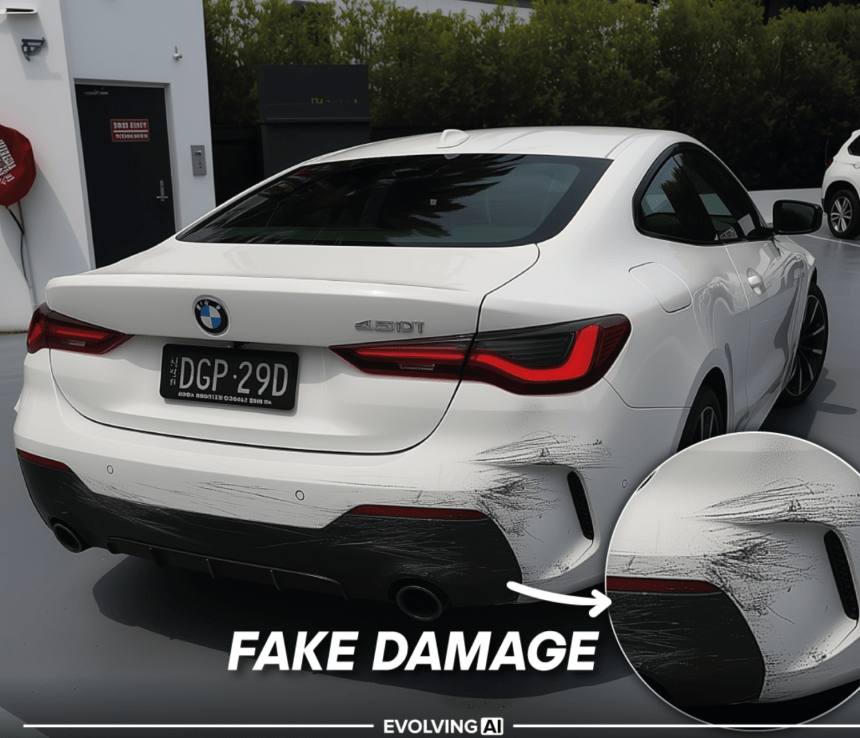
While social media is loving the latest AI image trends (like the Studio Ghibli filter and custom action figures), there’s a darker side too. Instagram accounts have shown how easily fake dents, smashed lights, and scratches can be added to images – and passed off as real car damage.
But it’s no joke. As Alicia Hempsted, insurance expert at MoneySuperMarket, warns:
Fraudulent claims using AI tools are a criminal offence under the Fraud Act 2006. Offenders could face up to 10 years in prison – even years after the claim is made.
MoneySuperMarket is also offering drivers practical tips to avoid having their genuine claims flagged for tampering – including why even basic edits like sharpening an image can cause problems.
With artificial image generation software like GPT-4o now readily available to the public, the car insurance experts are warning that people who use the technology to make fraudulent claims would face severe consequences, including prison.
The astounding image generation skills of GPT-4o have sparked viral trends recently, including the Studio Ghibi image filter trend and the currently popular personalised action figure trend.
Instagram account ‘Evolving AI’ shared an image showing how easily fake damage can be artificially generated onto an image of a real car, highlighting how Chat-GPT and other AI image generators could lead to an increase in insurance fraud.
What are the consequences of using AI images on insurance claims?
There are currently over 40,500 searches made on Google every month for ‘AI image generation’, but fraudsters trying to fool insurance providers could face harsh punishments if they are found to have used AI tools to digitally manipulate their images.
Alicia Hempsted, car insurance expert at MoneySuperMarket, explains: “Making fraudulent claims using AI tools is insurance fraud and is a criminal offence under the Fraud Act 2006. Offenders who are caught using artificially generated images to make claims, could face imprisonment of up to 10 years and a criminal record. Fraudsters who think they will get away with claims because this is new technology should be aware that they could be brought to justice years down the line.”
“If you do need to make an insurance claim, it’s important that you accurately document the damage – and do not apply any filters or edit images, even if it’s just to sharpen them.”
Tips for taking photos of car damage for insurance claims
- The best time to take photos of car damage is as soon as possible after the damage occurs, as long as it is safe to do so.
- A camera on a phone is perfectly acceptable for taking damage photos, just make sure the lens is clean and the area is well lit.
- Wide shot images are useful to get a wider context of the damage, and close up shots are useful too to help spot details. Always include photos of the license plates involved in the damage.
- Capture any interior damage from multiple angles to help with context, as well as close ups.
- Do not apply any filters or post-edits, even if it’s just to sharpen the image as this could be considered tampering.
Don’t miss the latest motoring and transport news on our website here.