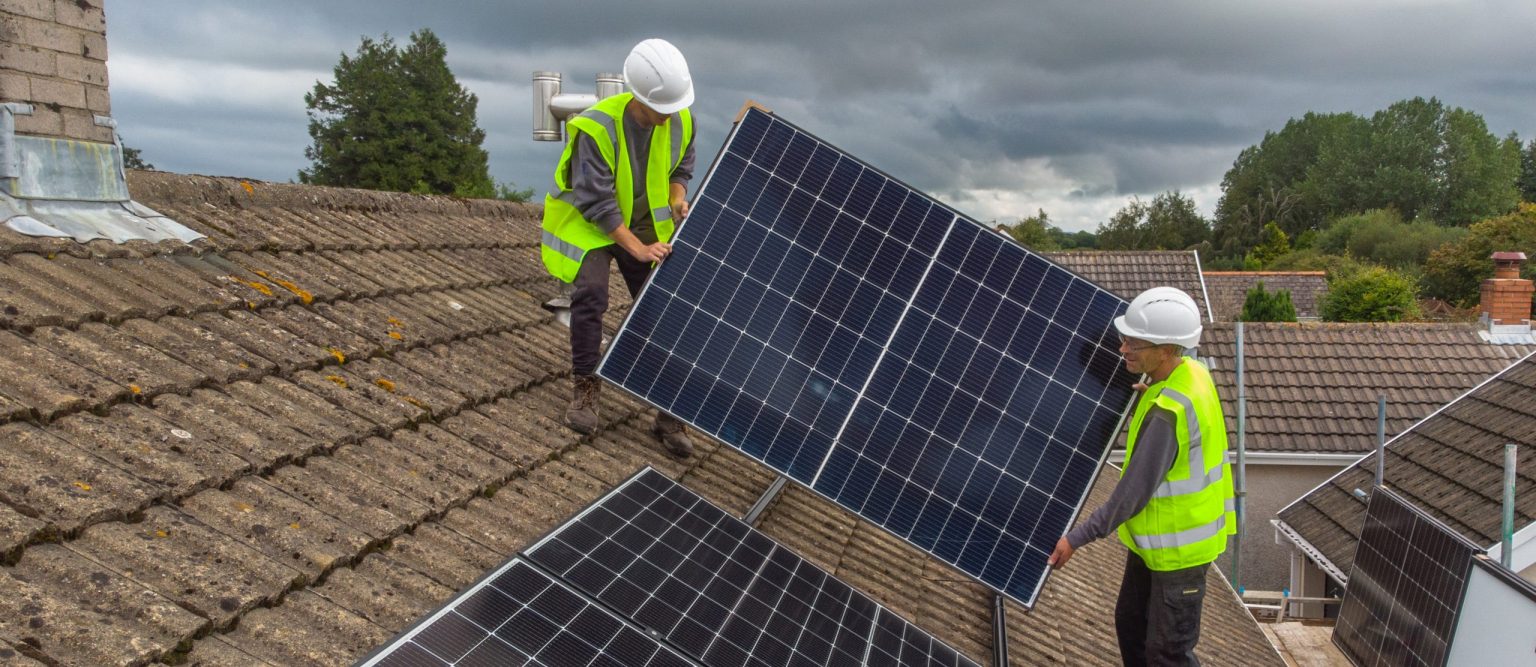
New analysis of government data has revealed a striking divide in solar panel adoption across south-west Wales – with rural Pembrokeshire and Carmarthenshire leading the way while urban areas including Swansea and Neath Port Talbot lag well behind.
The figures, analysed by energy firm E.ON UK from government renewable energy data, show that nearly one in seven households in Pembrokeshire now has solar panels installed – one of the highest adoption rates anywhere in Wales.
Pembrokeshire has 8,007 solar panel installations across 55,500 households – an adoption rate of around 14%. That puts the county second only to Anglesey among all Welsh counties, and well ahead of the Welsh average.
Carmarthenshire is not far behind, with 8,864 installations across 81,800 households – an adoption rate of just under 11%. The county ranks second in Wales for the total number of installations, behind only Powys, which tops the table with more than 9,000 systems.
The picture is very different in the more urban south. Swansea – despite having 105,000 households, making it one of the largest local authority areas in Wales – has just 5,329 installations, an adoption rate of around 5%.
Neath Port Talbot records a similar rate, with 3,390 installations across 62,400 households – around 5.4%. Bridgend sits between the two, with 3,636 installations across 62,400 households – an adoption rate of just under 6%.
The pattern reflects a broader national trend, with rural counties – where larger properties, more roof space and greater access to grants and incentives tend to drive uptake – significantly outperforming urban areas where flat roofs, terraced housing and rented accommodation create more barriers to installation. Gowerton’s large-scale solar farm, which took a major step forward after securing UK Government funding, demonstrates the appetite for larger renewable projects in the region.
A spokesperson for E.ON UK said the data showed the scale of the opportunity that remained. “Expanding solar adoption across both households and businesses will be key to making the energy transition affordable, sustainable and secure,” they said. “As technology becomes more accessible and installation costs continue to fall, the path to energy independence is opening for more communities.”
The data is based on photovoltaic installation figures for 2024, sourced from the UK Government’s regional renewable electricity statistics and the MCS Certified installer database.
Discover more from Swansea Bay News
Subscribe to get the latest posts sent to your email.