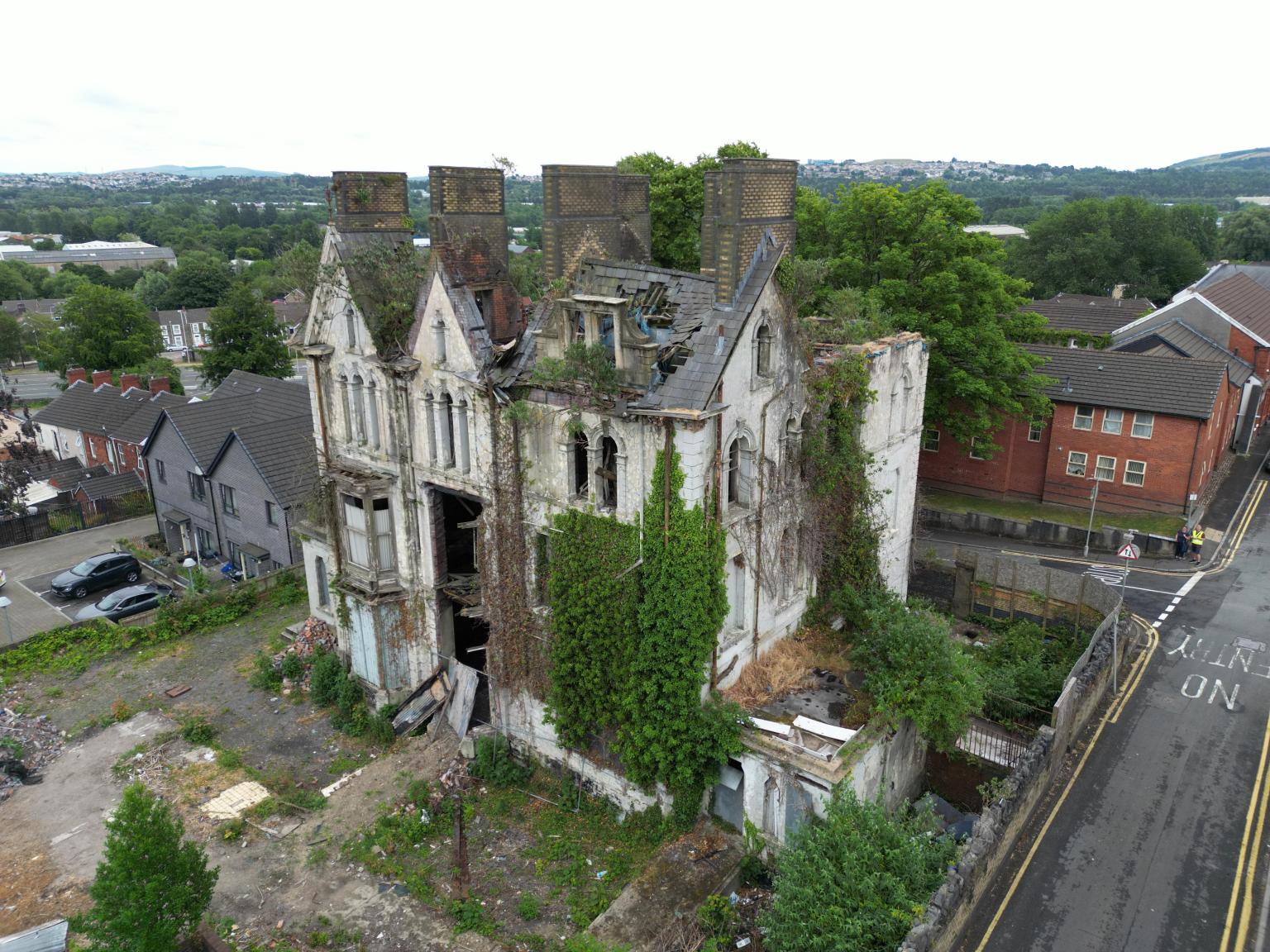
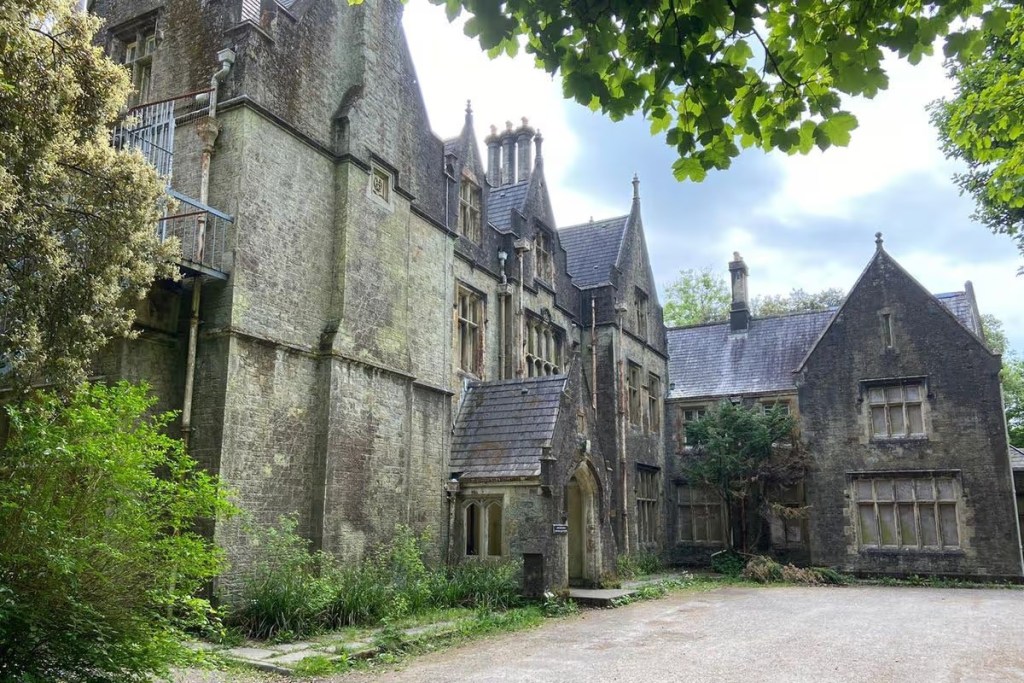
Swansea has been crowned Wales’ “haunted house” capital, but before you call in an exorcist, check the radiators.
The title comes from a Haunted Home Risk Index drawn up by engineering firm Ailsa, which did not count a single ghost.
Instead, it scored Wales’ four cities on the things that make a house cold, noisy and creaky: how many homes were built before 1930, how many have the worst energy ratings, and how many have poor walls or heating.
Swansea scored 66.5 out of 100, the firm says, well ahead of Cardiff on 37.4, Wrexham on 30.2 and Newport on 28.3.
More than half of Swansea’s homes have poor walls
By Ailsa’s figures, 37.4% of Swansea homes were built before 1930, against 26.8% in Cardiff.
More than half (53.2%) have walls rated poor or very poor for energy efficiency. Another 11.2% sit in the bottom three bands, E to G, of the energy performance certificate (EPC) every home needs when it is sold or let.
Heating was the one measure Swansea did not top. Just 1.4% of its homes have poor heating, behind Cardiff’s 1.6%.
It is the second Halloween in a row a company has put Swansea near the top of a haunted league table. Last year an insurer ranked it the fourth most haunted city in the UK, partly because of its older housing.
‘Hunting for faults rather than phantoms’
Jamie Burns, an engineering expert at Ailsa, said the kit ghost hunters use on TV is not far off what engineers use. “Ghost hunters are often shown using things like thermal imaging and ultrasound equipment to search for unusual sounds, heat signatures or other unexplained activity,” he said.
He said engineers work on the same principles, “except rather than looking for ghosts, we’re looking for problems”.
He added: “In a funny way, you could say engineers like us are already professional ghost hunters, we’re just normally hunting for faults rather than phantoms.”
Footsteps on the landing? Blame the pipes
Footsteps across an empty landing can be vibrations from the heating, pumps, appliances, passing traffic or the house next door, travelling through joists and pipework, Ailsa says.
A bang in the loft at night is often the house cooling down, as pipes, radiators and roof timbers shrink when the temperature falls.
Whispering behind the walls is more likely to be fans, boilers or water moving through pipes. A rattling cupboard door may just be the washing machine on spin, or a lorry going past.
Cold spots and flickering lights
That icy patch by the window may be nothing more than a draught. Gaps around doors and windows, poor insulation and blocked radiators all leave cold spots, especially in older homes.
Flickering lights can mean a loose connection or a faulty fitting. Ailsa says changing the bulb is a sensible first step, but if it keeps happening, call a qualified electrician.
A groaning boiler or pump could have worn bearings or misaligned parts. If anything starts to smell hot, leak, shake, trip the electrics or get louder, the firm says to switch it off if it is safe to do so and call a professional.
If the cold spots are the real problem, the Welsh Government’s free Nest advice line on 0808 808 2244 can check whether you qualify for free energy efficiency improvements.
Prefer your scares on purpose? Margam’s Scream Time trail runs until 1 November.

Discover more from Swansea Bay News
Subscribe to get the latest posts sent to your email.