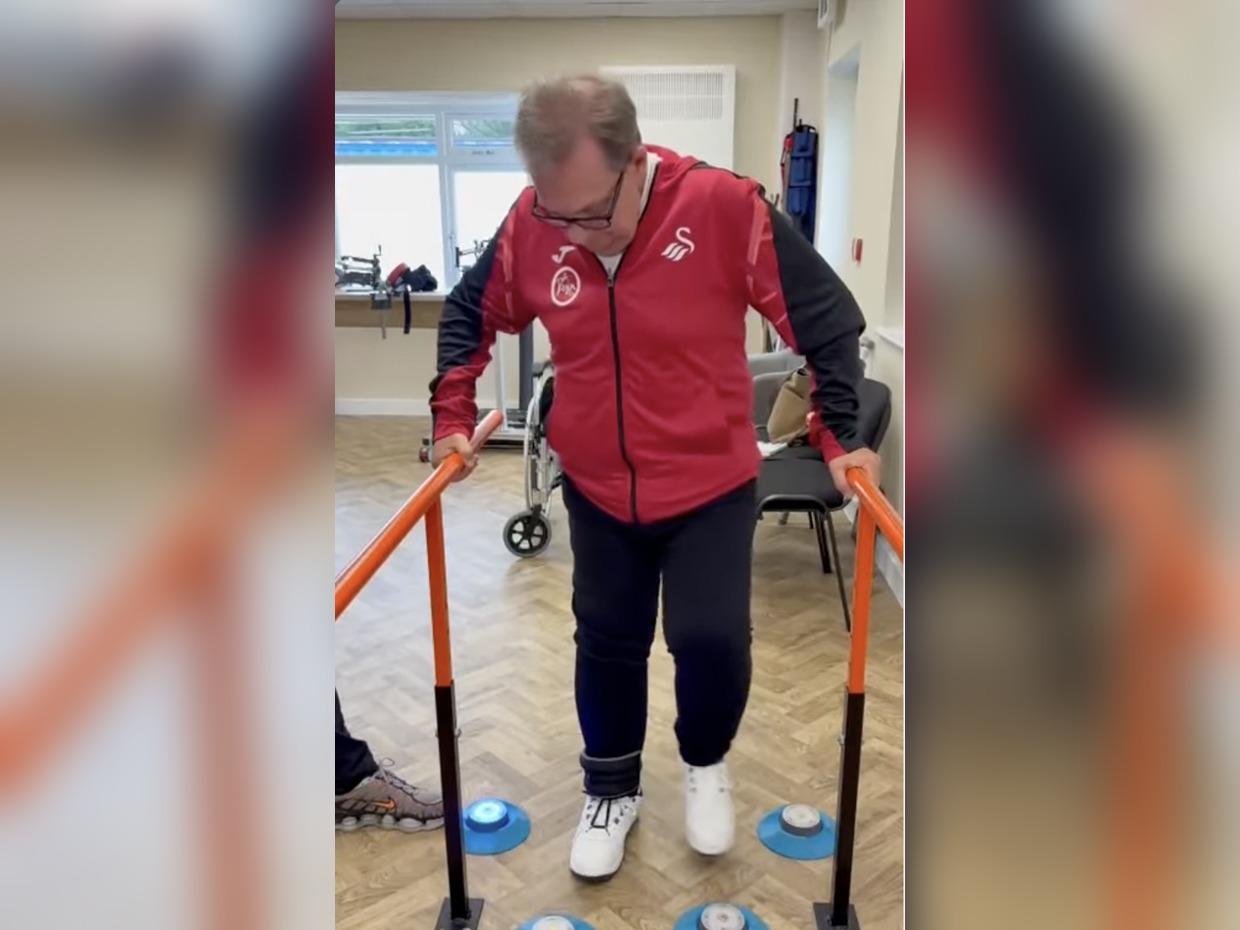
Kev Johns made himself a promise when he arrived in hospital after his stroke: he would walk out. Eight and a half weeks later, he did.
Nine months on, the Swansea entertainer and broadcaster is back at work with the Swans, and he says the physiotherapy he still has every week is what keeps him going.
He told the Stroke Association he was hitting new milestones all the time: “I can walk up the stairs now. The other day, I took my dishes out by myself.”
He added: “I’m reaching milestones every day, and that’s really, really encouraging for me and making me feel like the old Kev.”

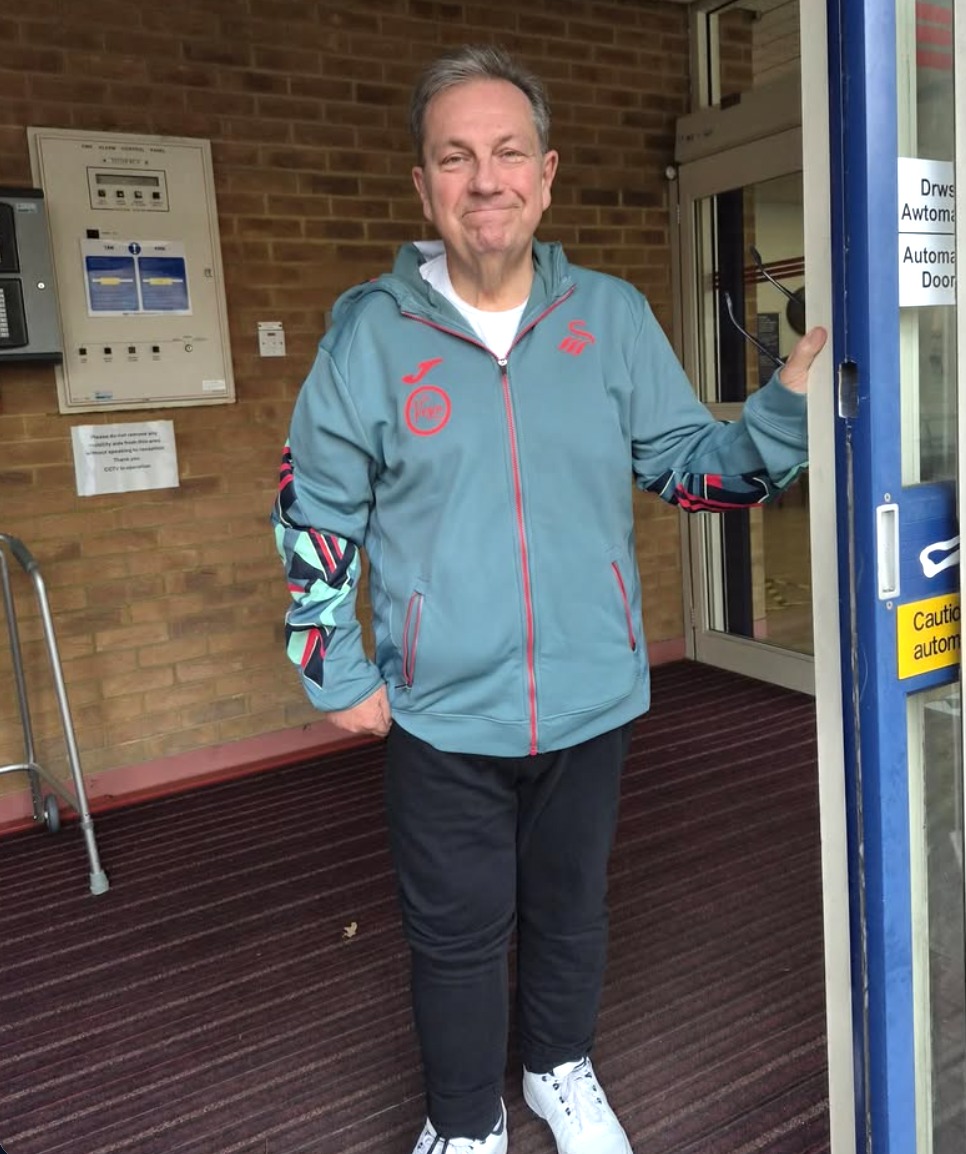
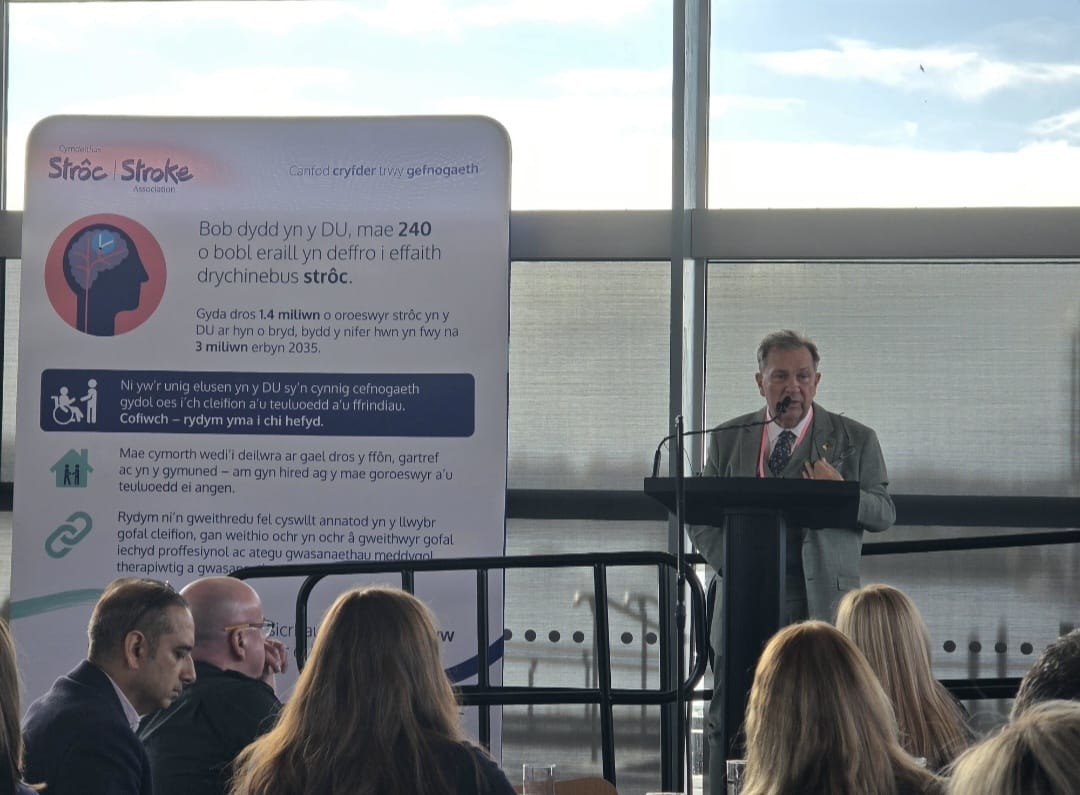
Kev is sharing his story as the charity warns that stroke could cost Wales £1.87bn a year by 2035, unless more is done to prevent it and to support people after they leave hospital.
Its new report, The Cost of Stroke in Wales, estimates that 6,071 people in Wales had a stroke in 2025 and that 72,749 are living with its effects. It expects that second figure to pass 104,000 by 2035, a rise of 43 per cent.
From Morriston Hospital to the half-time microphone
Kev’s stroke came in February. He first felt unwell while working in Pembrokeshire, and he got worse over the following days before he was diagnosed and admitted to hospital, the charity says.
He spent four days at Morriston Hospital. He was then moved to Neath Port Talbot Hospital for rehabilitation.
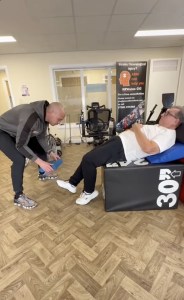
Since getting home he has had a weekly outpatient physio session, and he pays for two more sessions a week at N R Wales, the ARNI training centre in Glynneath.
He said both had made a difference to him: “These give me hope.”
By May he was well enough to cut the ribbon at the new CK Foodstores in Bynea. In July he thanked the therapists who helped him walk and talk again as he collected an honorary doctorate from Swansea University.
He is now doing about 40 per cent of his usual role at the club, the charity says. That includes the half-time microphone: “I’m doing interviews and I’m saying, ‘Come on the Swans’ at half-time.”
He said the welcome had meant a lot: “To have that support from the crowd and from the people of Swansea has been fantastic.”
‘What happens to people who cannot afford it?’
The Stroke Association says Kev’s reliance on private physio raises a harder question: what happens to stroke survivors who need more rehabilitation but cannot pay for it themselves?
Ruth Jones, a 40-year-old primary school teacher from Conwy, was sent home within 24 hours of treatment for her stroke in September 2021, with no rehabilitation or follow-up, the charity says.
She had to fight to get the help she needed. “If I hadn’t spoken up, I don’t know where I’d be now,” she said.
Katie Chappelle, the charity’s associate director for Wales, said recovery “must not end when someone leaves hospital”.
She said: “That support should not depend on where someone lives or whether they can afford to pay privately.”
Charity’s call to the Welsh Government
Ongoing care for stroke survivors in Wales already costs around £860m a year, £680m of it in personal social services, according to the report.
The charity wants the Welsh Government to fully fund and deliver the new Quality Statement for Stroke, and to end what it calls a postcode lottery in rehabilitation. It says that job cannot be left to individual health boards alone.
Anyone affected by stroke can call the Stroke Association’s support helpline on 0303 3033 100.

Discover more from Swansea Bay News
Subscribe to get the latest posts sent to your email.