

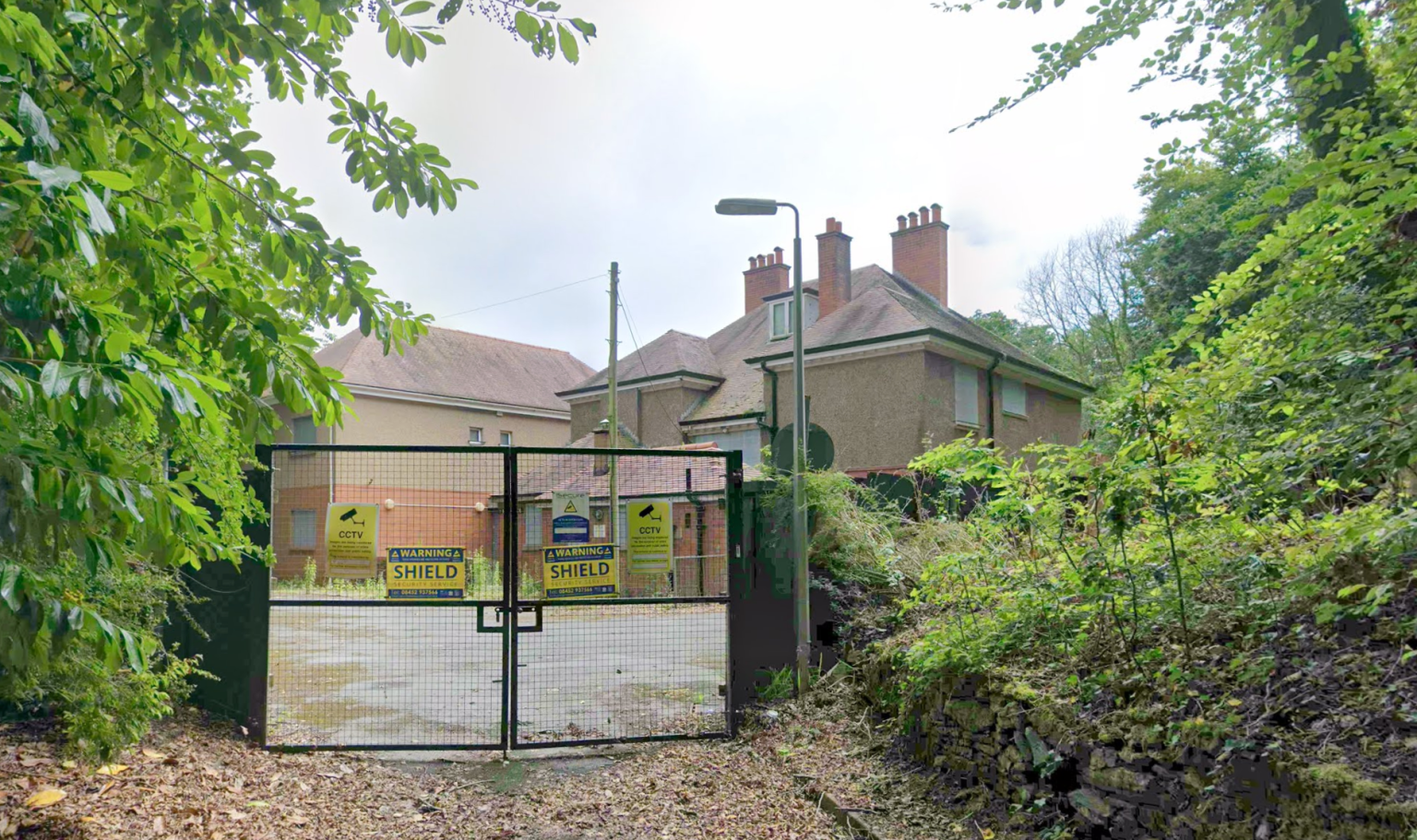
A women’s centre that Cockett residents fought hard to stop — and lost — still has not opened four years after it was announced, and MPs now say ministers cannot even confirm whether it ever will.
The Swansea Residential Women’s Centre, planned for the Trehafod building in Cockett, was meant to open its doors in 2024.
Today it stands empty, its £10m funding pulled, while a cross-party committee of MPs brands the delays “unacceptable.”
The verdict comes in Jagged Justice, a report on prisons and rehabilitation in Wales published this month by the House of Commons Welsh Affairs Committee.
It is a striking turn in a saga that pitched the Ministry of Justice against the very community now left with a stalled site on its doorstep.
When the plans first emerged in May 2022, they met fierce local resistance.
The proposal — to convert and extend the Trehafod building, in the grounds of the former Cefn Coed Hospital, into a 12-bed centre for around 50 local women a year — drew 215 letters of objection.
In September 2022, Swansea Council‘s planning committee refused the scheme, going against the advice of its own officers.
But the Ministry of Justice appealed, and in August 2023 a Welsh Government-appointed planning inspector overturned the refusal and granted consent.
The inspector attached a condition barring the site from ever being used as secure accommodation such as a detention centre or prison.
At the time, Cockett councillor Mike Durke said residents were “hugely disappointed” and felt their concerns had been ignored, though he noted they took some reassurance from that condition.
The centre was designed as an alternative to short prison sentences, allowing women to serve community sentences of up to 12 weeks close to their families.
Only women from the local area would have been admitted, and the site would not have been secure, meaning residents could come and go during the day.
It was meant to be the first of its kind in England and Wales — a pilot the previous UK government described as “ground-breaking.”
Then, in March 2025, the Ministry of Justice told the committee the funding had been “reallocated by the previous government during the protracted planning process for the site.”
In other words, the money was moved during the very planning fight the centre had to win.
The current government has not restored it. Ministers told the committee the project was “paused” while they awaited the findings of a Women’s Justice Board and the outcome of a spending review.
In December 2025, prisons minister Lord Timpson said he hoped to be “in a position where we can make a decision” on the Swansea centre in January 2026.
The committee says it has received no further update since.
Its conclusion is blunt. The centre “was due to open its doors two years ago,” the report says, but the funding was reallocated and MPs are “still waiting on the current UK Government to decide whether the project will be going ahead at all.”
“These delays are unacceptable,” the committee found, pointing also to a lack of clarity over how the centre would actually operate and who it would admit.
The MPs were also clear about what the centre must not become. Drawing on evidence from the charities Clinks and Women in Prison, the report warns it should be a genuine alternative to custody and “not just become a prison in all but name.”
The committee has called on the Ministry of Justice to confirm “as soon as possible” whether the site will open and, if so, when — and to set out its admissions criteria.
The wider context is stark. Wales has no women’s prison, so Welsh women given custodial sentences are held in England — 77% of them at HMP Eastwood Park or HMP Styal, often far from home and family.
The report notes that 78% of women given immediate custody in Wales in 2024 were sentenced to 12 months or less — short terms that MPs heard were “long enough to lose your home and children” but did little to address the causes of offending.
Supporters argue centres like the one earmarked for Cockett are a cheaper and more effective way of breaking that cycle than a short spell behind bars.
For now, though, the Trehafod building remains shut — a scheme the community tried to stop, the courts allowed, and the government has yet to deliver.

Discover more from Swansea Bay News
Subscribe to get the latest posts sent to your email.





Staff at Cefn Coed have heard persistent rumours that it could be used temporarily to house illegals. I work there