A huge fire tore through Tata Steel’s Port Talbot works on Wednesday night, throwing thick black smoke across the town and lighting the night sky a furious orange.
Flames ripped through one of the site’s processing lines from around 8pm, sending a vast plume over the M4 and sparking one of the biggest fire responses the area has seen this year.
Mid and West Wales Fire and Rescue Service was called at 8.06pm — and the scale of the response tells its own story.
Appliances were sent from 16 of its stations: Port Talbot, Neath, Morriston, Glynneath, Cymmer, Swansea West, Swansea Central, Pontarddulais, Llanelli, Carmarthen, Ammanford, Gorseinon, Pontyates, Kidwelly, Haverfordwest and Milford Haven.
With each appliance crewed by four or five firefighters, several stations sending more than one engine, and command units on top, that points to well over 80 Mid and West Wales firefighters tackling the blaze at its peak — before reinforcements from two other services are even counted.
Some came from the far end of the patch. Milford Haven’s crew faced a journey of more than 70 miles to reach it.
And that was just one fire service. On top of its own crews, Mid and West Wales called in colleagues from South Wales Fire and Rescue Service, and from Avon Fire and Rescue Service — based over the Prince of Wales Bridge in and around Bristol, also more than 70 miles away.
Tata Steel said the fire broke out at one of the site’s processing lines and that all staff were accounted for and evacuated safely.
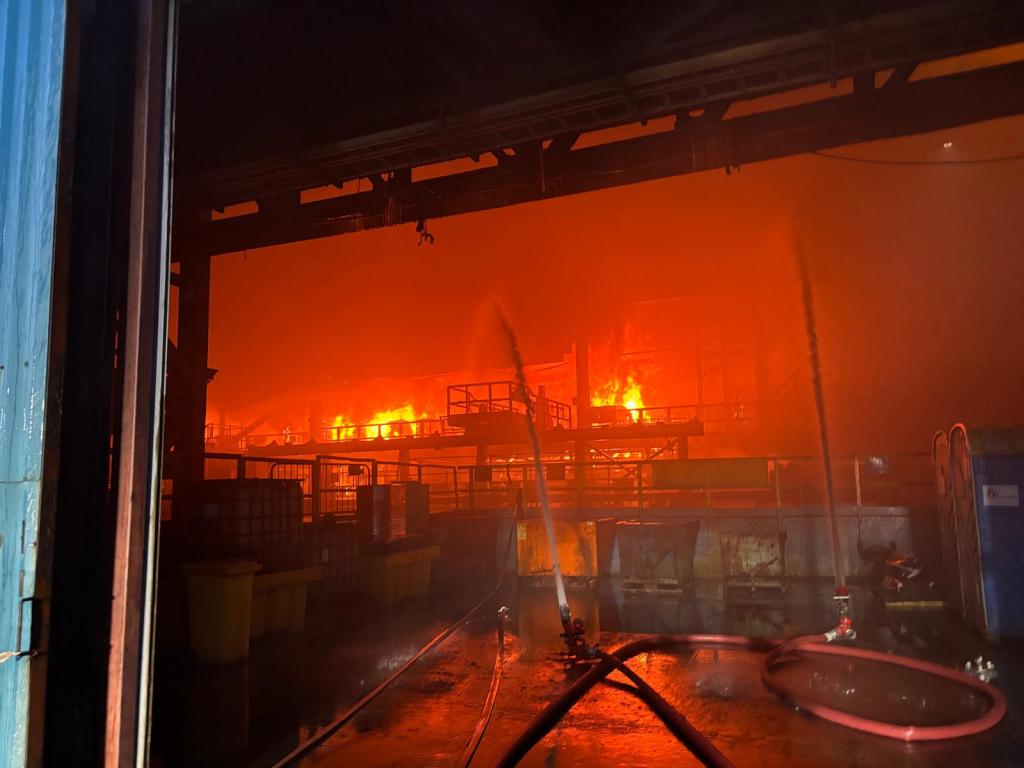
Photographs released by the fire service showed flames glowing through the cladding of one of the vast sheds, with firefighters training hoses on the building as smoke rolled overhead.
Kellie Evans, who drove past as the blaze took hold, told the BBC the scene was “very apocalyptic,” saying the sky was so black she couldn’t see the flames — and that drivers were pulling over to look.

South Wales Police told residents to keep their windows and doors shut and urged people to stay away. Large plumes of smoke were visible across the area, the force said, and drivers were asked to find alternative routes.
It was a brutal night for the crews. The Rapid Relief Team, which feeds the emergency services at major incidents, said around 100 responders faced an “incredibly demanding and hazardous” shift.
The charity said eight fire appliances, two foam units, two high-reach turntable platforms and a high-volume pump were thrown at the fire, and that its volunteers turned out 125 hot meals through the night to keep crews going.
By Thursday morning the worst was over. Heavy overnight rain helped beat the flames back, leaving only small wisps of smoke drifting from the rolling mill end of the plant.
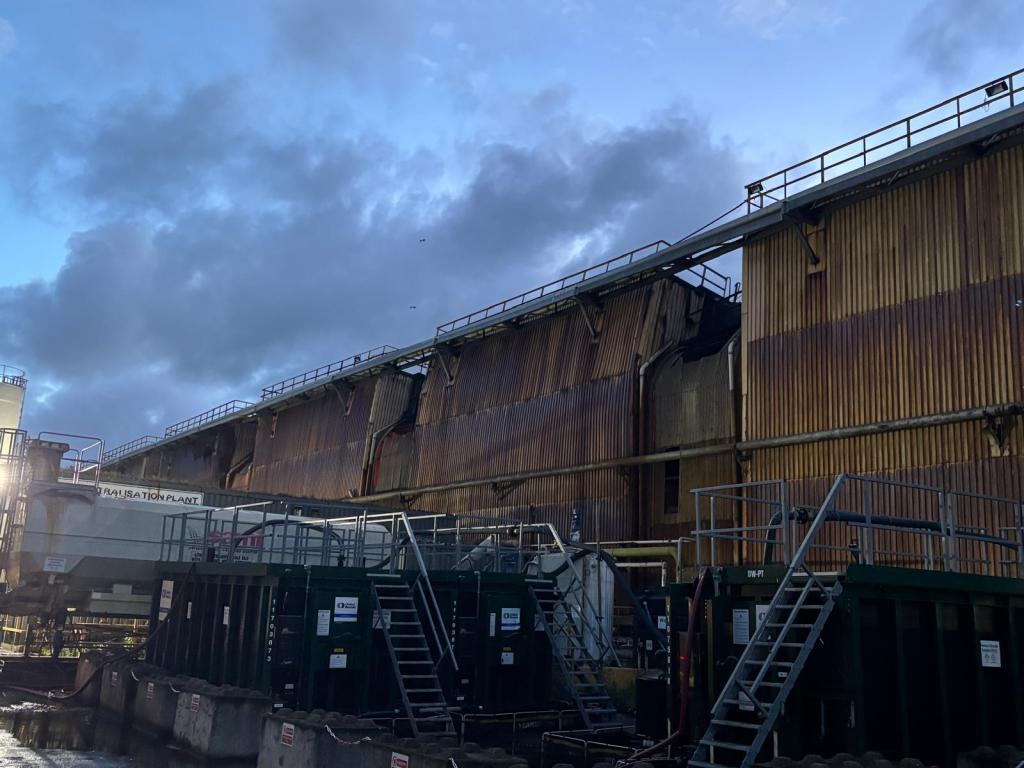
Traffic on the M4, slowed by the smoke overnight, was flowing freely again, and from the outside the works looked much as normal — though crews remained busy inside.
Tata Steel moved quickly to head off speculation about the cause, stressing the fire was not connected to the controlled demolition of an empty, redundant gas holder carried out at the site earlier that evening, which it called safe and successful.
That demolition is part of a sweeping clear-out of the old works. In January, Tata released footage from deep inside the plant showing the scale of the demolition and reconstruction now under way as it clears redundant structures to make way for its new electric arc furnace.
The cause of the fire has not been established, and the company said it could not yet assess the damage.
In a statement, Tata thanked its site teams and the emergency services for their “prompt and professional action,” and said further updates would follow.
It is the second major fire to grip Port Talbot in barely five weeks. At the end of April, a huge blaze involving around 200 tonnes of commercial waste sent black smoke billowing over the town from an industrial site on Dock Road, tying up eight fire stations for days.
The Port Talbot works is one of the largest steel sites in the world and the region’s biggest industrial employer. Tata closed its two blast furnaces in 2024 with thousands of job losses, and is in the middle of a £1.25bn transformation of the site — switching from coal-fired blast furnaces to a greener electric arc furnace that will melt scrap steel.
The transition has meant huge upheaval in and around the works, from the demolition now reshaping the site to a major expansion of the local electricity network needed to power the new furnace. Steel processing — turning imported slabs into finished products — has continued throughout in the absence of the furnaces.
This is a developing story and we will bring you more as we get it. Anyone affected by smoke is advised to keep windows and doors closed.

Discover more from Swansea Bay News
Subscribe to get the latest posts sent to your email.