


The principle is fine. Planners have accepted that a covered fan zone capable of holding more than 1,700 supporters behind the South Stand at the Swansea.com Stadium — with self-pour beer taps, a big screen and bierkeller bench seating — is an appropriate use of the site. The site is in the right location, it serves an identified need, and the planning history supports it.
But the response is detailed, and AFL Architects have a fair bit of work to do before a formal application can go in.
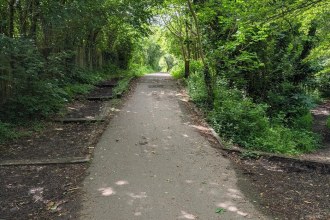
The most immediate problem is trees. The plans appear to show the building line coming right up to the row of trees along the southern edge of the active travel path — the walking and cycling route that runs along the northern edge of the site. Planners say those trees must stay, and the building will need to pull back to accommodate them.
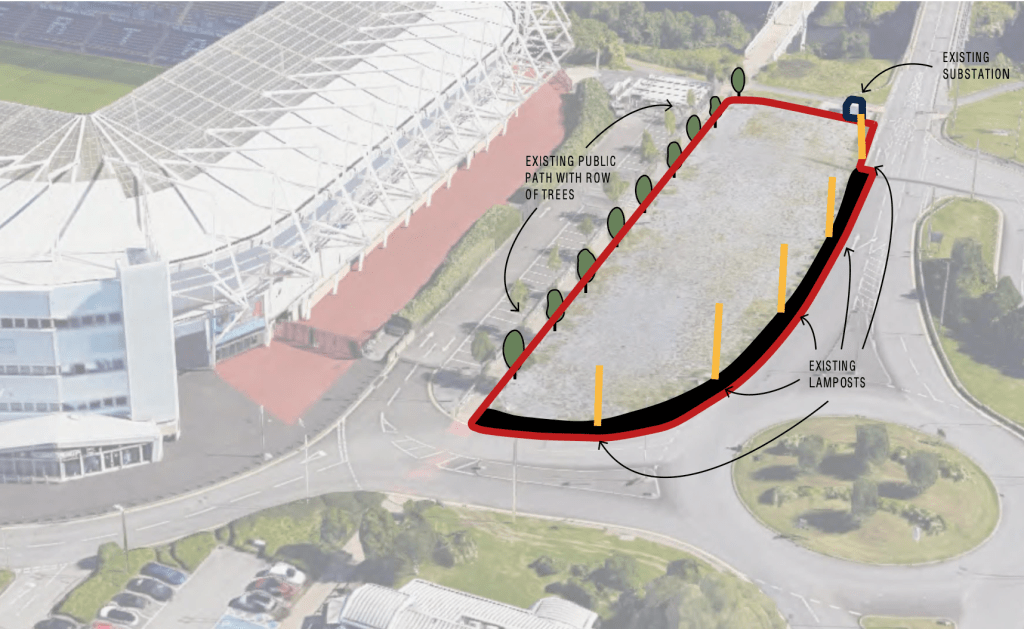
That active travel route — which connects the Swansea City FC stadium area to the city centre and railway station — is a recurring theme throughout the response. Planners want a clearer design solution for how fans arriving at the fan zone will safely coexist with cyclists and pedestrians using the path.
The fan zone site sits in the same rapidly developing part of Swansea as the proposed new home for the Landore Park and Ride, which is being studied for relocation to Alamein Road just across from the stadium — a sign of just how much development pressure is building up in this corner of the city.
The area is moving fast in all directions — and construction on the £49m Skyline Swansea cable car and luge attraction began today, with earthworks starting on Kilvey Hill and groundworks under way at the Landore Park and Ride basecamp.
On design, the architects are told to go further. Planners want vibrant colours on the exposed steel framing, clerestory windows, a butterfly truss to bring in natural light, and an entrance canopy that takes design cues from the triangular structures of the stadium and the adjacent footbridge. The view toward Kilvey Hill — where the Skyline cable car could one day be visible — is flagged as an opportunity to exploit from the mezzanine level.
Accessibility is a gap in the current submission. The plans include a mezzanine level — which planners support — but say nothing about how wheelchair users and people with mobility needs will reach it. External lifts are recommended, and planners suggest making them a visual feature rather than something bolted on as an afterthought.
South Wales Police have also had their say, and their concerns are serious. They want physical hostile vehicle mitigation — barriers meeting security standard ISO 22343-1 — to prevent vehicles being used as weapons against crowds arriving at the fan zone. CCTV coverage, appropriate lighting, and measures to lock down the structure when not in use are also required.
And then there’s Martyn’s Law. The club will need to demonstrate how the fan zone complies with the Protected Duty under the legislation introduced following the Manchester Arena bombing. Given the venue’s capacity of more than 1,700, it falls within the enhanced tier — meaning formal security planning is not optional.
Noise is another issue. Residential properties in the Copper Quarter, including seven-storey apartment blocks with river-facing balconies, lie to the east. A designated Quiet Area sits around 70 metres away. A Noise Impact Assessment will likely be required, and the club needs to set out clearly what hours it proposes to operate — including for non-matchday events.
On the question of location — the site is outside a defined retail and leisure centre, which requires justification under planning policy — planners are broadly satisfied. They accept the fan zone serves a specific need linked to the stadium and couldn’t simply be relocated to a nearby retail park.
But they want the formal application backed up by stronger evidence: Championship fan zone comparisons, supporter experience data and the club’s own fan engagement plan would all help make the case.
There’s also a drainage note worth flagging for the architects. A sewer pipe runs beneath the active travel path to the north of the site, which could constrain construction.
The architects now have the full response and will be working on revised proposals. The club has publicly said it wants the fan zone ready for the 2026/27 season — a timeline that is looking tight but not impossible if a revised application moves quickly through the system.

Discover more from Swansea Bay News
Subscribe to get the latest posts sent to your email.