

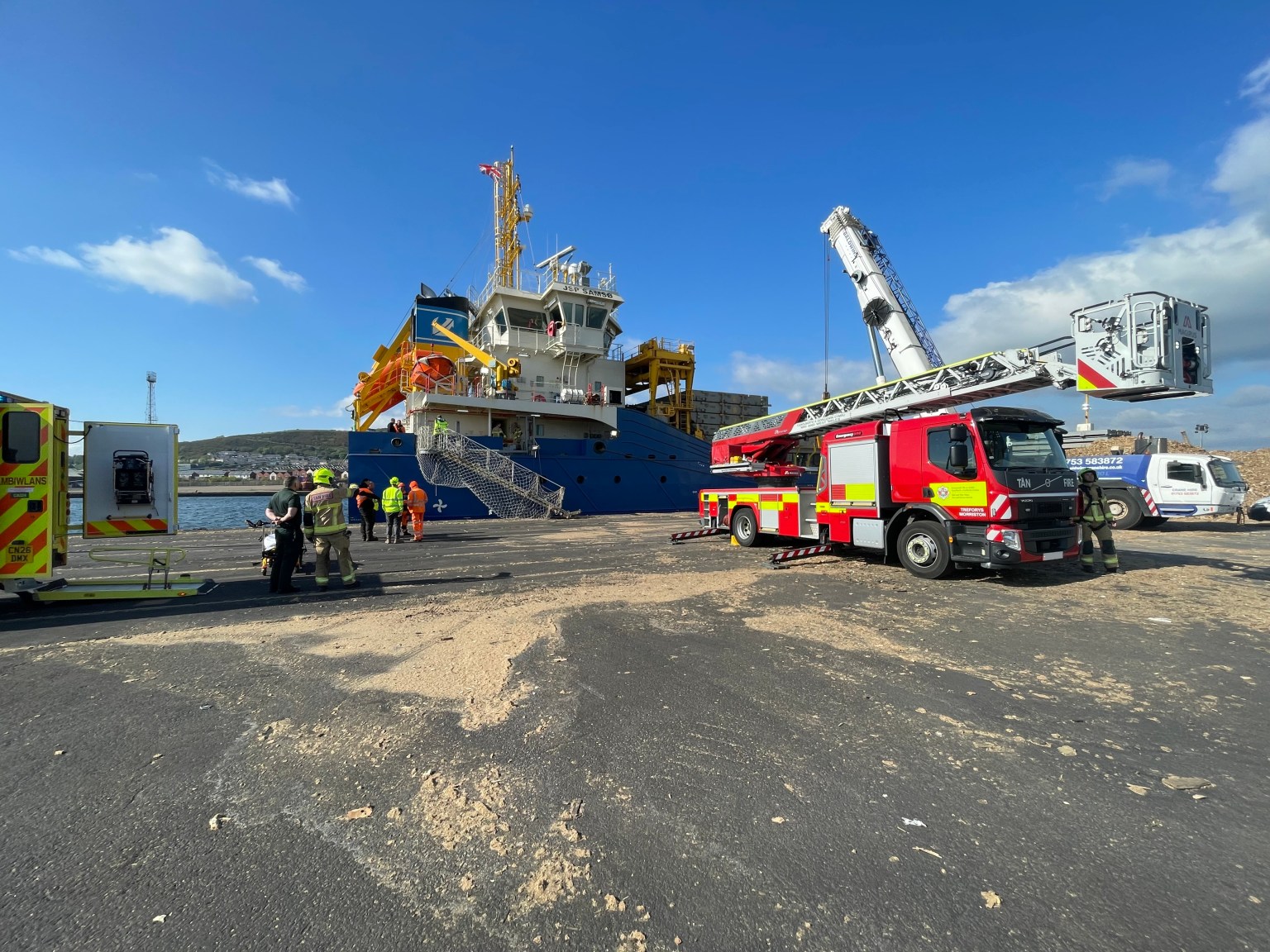
When the call came in at 4.14pm on Tuesday 28 April, crews from Swansea Central and Morriston fire stations knew straight away this wasn’t going to be a straightforward job.
The Welsh Ambulance Service had requested the fire service’s help with a casualty aboard a large cargo vessel at King’s Dock — and one look at the ship told them why.
The JSP Samsø, a multi-purpose cargo ship registered in Madeira, stretches roughly 90 metres from bow to stern — almost the length of a full football pitch — and weighs in at approximately 4,000 gross tonnes.
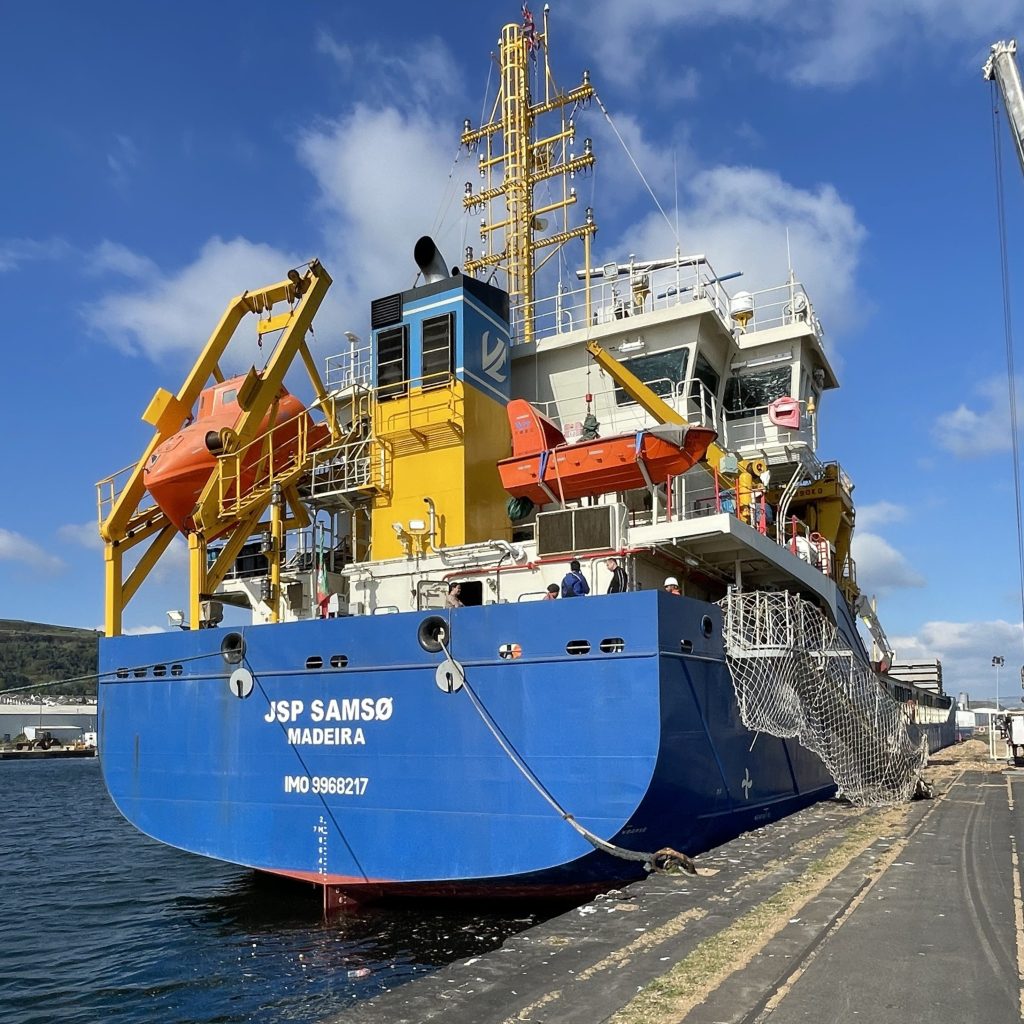
Standing at the dockside, the ship towers above you like a four-storey building. Getting someone off safely from a vessel that size was going to take planning, specialist equipment and tight coordination between agencies.
Ships like the JSP Samsø present a particular challenge for emergency responders. The sheer height of the vessel above the dockside, combined with the complex layout of walkways, ladders and decking, means a standard stretcher carry simply isn’t an option for a seriously injured or immobile casualty.
That’s where the turntable ladder from Morriston Fire Station came in — a specialist piece of kit that can reach significant heights and be used as a platform to lower a casualty safely to the ground.
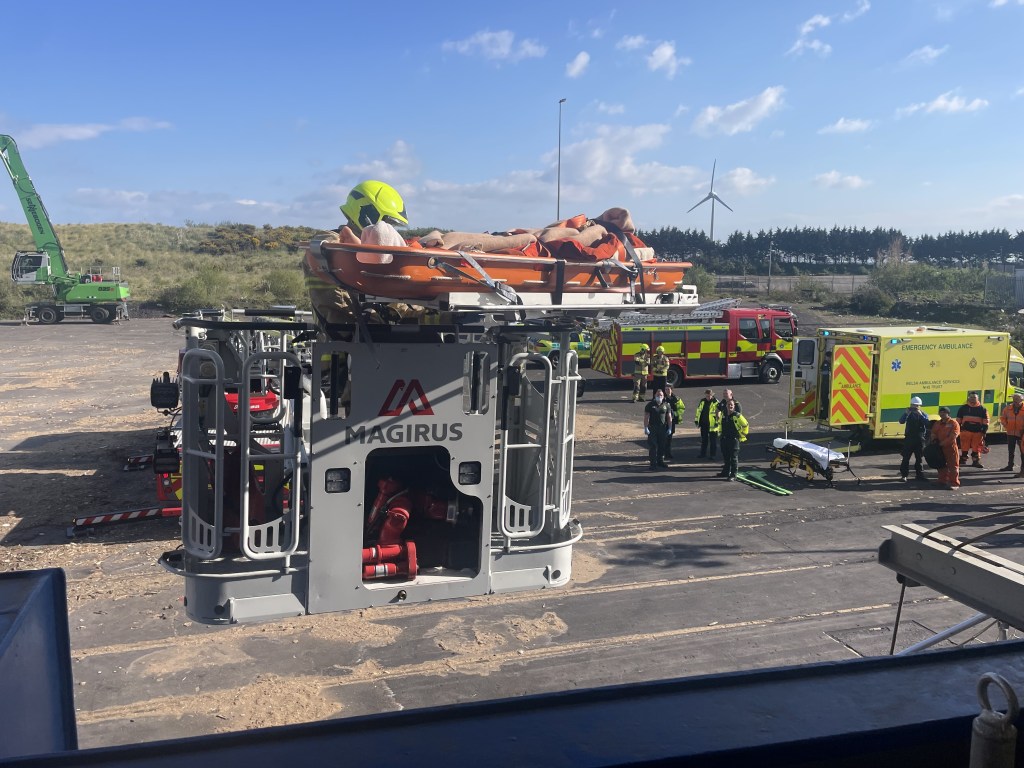
Before any of that could happen, the crews first had to carefully immobilise and package the casualty to make sure they could be moved safely. Working alongside Welsh Ambulance Service paramedics, firefighters went through the painstaking process of securing the patient on a stretcher before the extraction could begin.
It was detailed, careful work — exactly the kind of thing that looks unremarkable from the outside but requires significant skill and training to get right.
Once the casualty was ready, the turntable ladder was brought into position and the extraction got under way. The patient was brought down from the vessel and transferred directly into the care of the ambulance crew waiting on the dockside.
The casualty was then conveyed to hospital. Mid and West Wales Fire and Rescue Service have not provided details of the patient’s condition, as is standard practice.
The crews were stood down and left the scene at 5.21pm — just over an hour after they had first arrived.
Mid and West Wales Fire and Rescue Service said the incident demonstrated the ability of their crews to adapt quickly and deliver effective casualty care under pressure, as well as what they described as seamless coordination with partner agencies.
The docks have long been a challenging environment for emergency services, with the combination of heavy industrial machinery, large vessels and confined spaces creating risks that require specialist training and equipment to manage safely.
King’s Dock is operated by Associated British Ports (ABP), which has run the Port of Swansea since 1982 and manages the harbour offices on site. As the principal commercial area of the port, it handles cargo vessels from across Europe and beyond — and the combination of heavy industrial machinery, large vessels and confined spaces means emergency services require specialist training to operate safely there.
The port’s working docks are separate from the nearby SA1 waterfront development and the marina, which occupy former dock areas that have been redeveloped over recent decades. King’s Dock remains an active commercial facility, and incidents involving vessels or dockside workers are handled by a multi-agency response drawing on fire, ambulance and coastguard resources depending on the nature of the emergency.
The JSP Samsø — registered under a Madeira flag and operated as a multi-purpose cargo vessel — is typical of the commercial shipping that calls at Swansea’s port facilities.
Discover more from Swansea Bay News
Subscribe to get the latest posts sent to your email.