A local name joins a global group
South Wales Transport, the Neath‑based family bus and coach operator founded in 2005 by David Fowles — not to be confused with the historic South Wales Transport Ltd that was absorbed into Badgerline and later First Bus — has announced it is now part of Tower Transit, a subsidiary of the Australian transport giant Kelsian Group.
In a statement shared on social media, the company told passengers:
“After many months of negotiations we are delighted to announce that South Wales Transport is now part of Tower Transit and the worldwide transportation group Kelsian, based in Australia. We would like to reassure all of our fabulous clients that it is very much business as usual with absolutely no change to any staff, brand, company name or entity. It’s business as usual!”
Managing Director David Fowles Jr will remain in post, continuing the family’s leadership of the business.
From Neath roots to franchising future
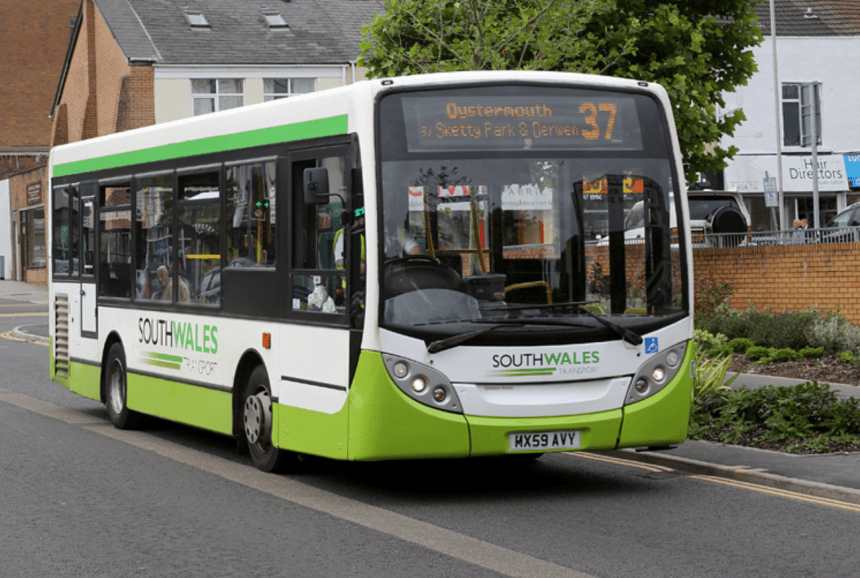
Since its establishment in 2005, South Wales Transport has carved out a role as a trusted local operator, running school contracts and community bus services across Neath Port Talbot and Swansea. Its green and white buses became a familiar sight in the valleys and towns, while its patriotic‑liveried coaches carried the company’s name further afield.
The sale transfers 47 vehicles and the existing management team to Tower Transit. For the Fowles family, the deal represents continuity and growth, but it also marks a turning point: the business is now aligned with a global operator that has its eyes firmly on the future of franchised bus services in Wales.
Tower Transit’s franchising pedigree
Tower Transit is no stranger to regulated transport systems. In Liverpool, its subsidiary Huyton Travel operates services under contract to the Liverpool City Region Combined Authority. In Jersey, its LibertyBus arm runs the island’s entire bus network, serving commuters and tourists alike.
The company also has a long history in London, where it operated franchised services for Transport for London between 2013 and 2023. In 2021, it formed a joint venture with RATP Dev London, managing one of the capital’s largest bus operations with more than 1,200 vehicles and 250 million passenger journeys annually.
This experience means Tower Transit is well‑placed to adapt to the franchising model now being introduced in Wales.
Franchising comes to South West Wales
The Welsh Government has confirmed that South West Wales will be the first region to move to franchised bus services in 2027, covering Swansea, Neath Port Talbot, Carmarthenshire and Pembrokeshire. Under the new system, Transport for Wales will plan routes centrally and tender them to operators, replacing the deregulated model where companies register services commercially.
Tower Transit’s arrival signals its intent to compete for those contracts, joining First Bus (operating locally as First Cymru) and ComfortDelGro of Singapore (operating as Adventure Travel) as the major players in the region.
Continuity now, change ahead
For passengers, the message is clear: there is no immediate change. South Wales Transport buses will continue to run as normal, with the same drivers, timetables and brand. But the acquisition positions the company for the future.
Managing Director David Fowles Jr said:
“It was important to us to find a partner that shares our values and our commitment to the people of Swansea. With Tower Transit, we know our workforce and customers are in safe hands, and the business has every opportunity to flourish in a changing market.”
Tower Transit Managing Director Samuel Ribeiro added:
“The team’s deep local knowledge, strong brand and decades of service in the area provide a strong foundation. When combined with our Kelsian‑backed expertise in large‑scale franchised and regulated bus operations around the world, we are confident that we will deliver enhanced services for passengers and a bright future for the business.”
What this means for South West Wales
The deal is more than a change of ownership. It is a sign that the bus market in South West Wales is entering a period of transition. For now, passengers will see no difference, but as franchising rolls out, the buses they rely on every day will become part of a new, planned network. Operators will compete for contracts, councils may seek a direct role, and the shape of local services could look very different by the end of the decade.