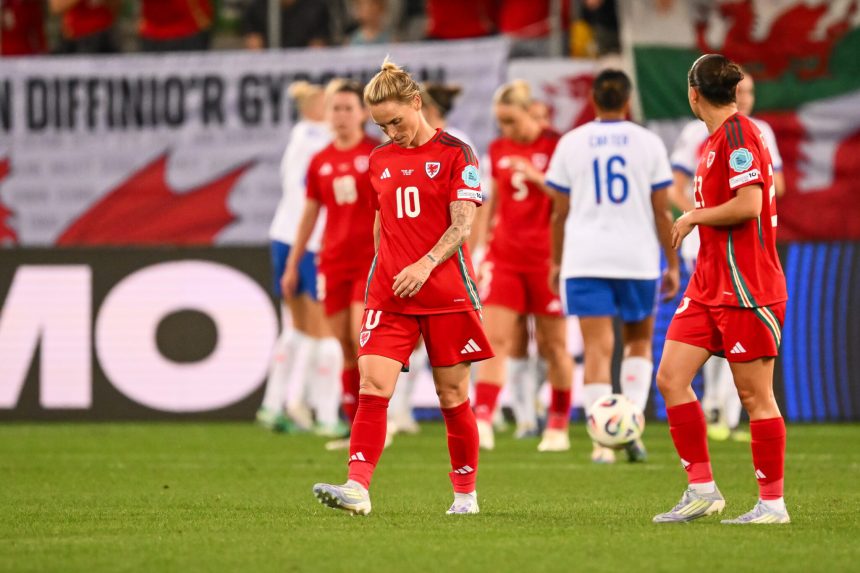
Wales entered the final group match needing a four-goal win to keep their tournament hopes alive, but England’s ruthless first-half performance quickly extinguished any chance of progression. Georgia Stanway opened the scoring with a 13th-minute penalty, followed by goals from Ella Toone, Lauren Hemp and Alessia Russo before the break. Beth Mead and Aggie Beever-Jones added two more in the second half, while Hannah Cain’s stylish strike gave Wales a moment to celebrate.
The result confirmed Wales’ exit from Group D, having previously lost 3-0 to the Netherlands and 4-1 to France. But for a team making its debut at a major tournament, the campaign has been hailed as a landmark moment for Welsh football.
A tough night on the pitch
Rhian Wilkinson, who made three changes to her starting XI, including handing Carrie Jones her first tournament start, acknowledged the challenge of facing the defending champions.
“These women have fought so hard for so long to have this opportunity,” she said. “I will not allow us to feel like we’re just here to participate.”
Wales started brightly, with Jess Fishlock and Angharad James testing England’s defence early on. But a VAR-reviewed foul by Jones led to Stanway’s opener, and England’s momentum never waned. Toone doubled the lead after a blocked shot rebounded kindly, Hemp headed in a third, and Russo finished calmly for the fourth.
Despite trailing, Wales continued to push. Rowe and Fishlock both had chances before the break, and goalkeeper Olivia Clark made several key saves to keep the scoreline from worsening.
In the second half, England’s substitutes added fresh energy. Mead turned away from Josie Green to score the fifth, and Beever-Jones headed in the sixth. But Wales had their moment when Fishlock threaded a perfect pass to Cain, who hammered a first-time finish into the roof of the net—Wales’ second-ever goal at a major tournament, and their first against England in 45 years.
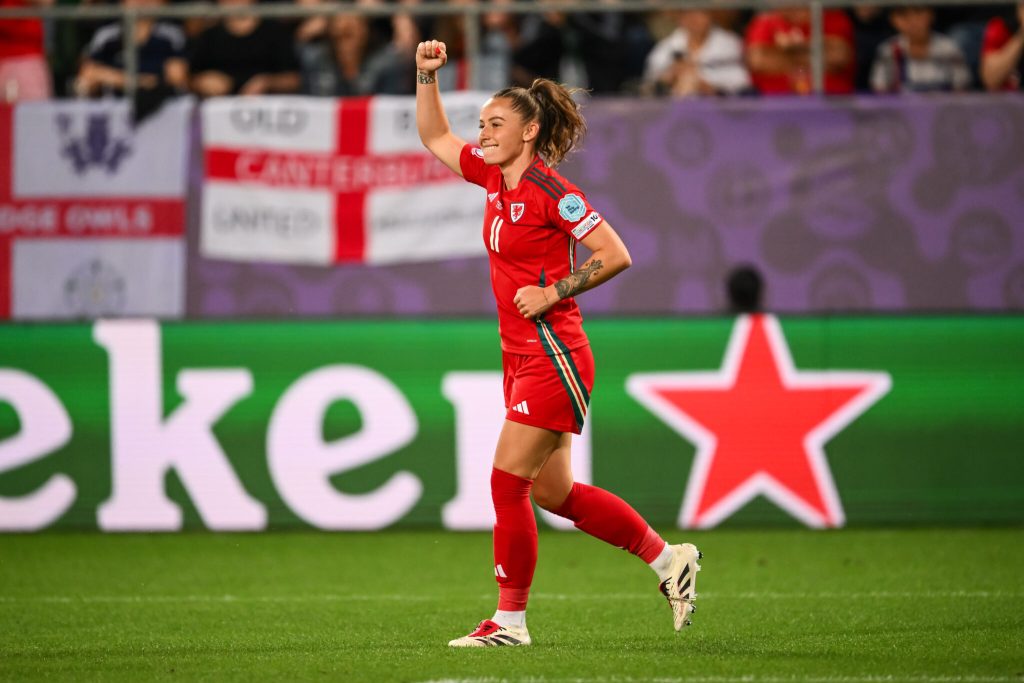
(Image: Ashley Crowden / FAW)
Fans and players reflect on a historic campaign
While the final score was sobering, the atmosphere in Switzerland and back home remained one of pride and optimism. Thousands of Welsh fans filled the Arena St Gallen and the city’s fanzone, with many staying long after the final whistle to salute the team.
Helen Ward, Wales’ record goalscorer, said:
“It’s not how we wanted it to end, but the Red Wall is still behind them.”
Katie Sherwood, former international, added:
“This was the first step—but we don’t want it to be the last time we qualify.”
Supporters echoed those sentiments. Angela Roberts, from Llanystumdwy, said:
“They’ve done us proud. We had a tough group and gave it our best.”
Phoebe Williams, watching from Cardiff, said:
“It’s a huge achievement just getting into the Euros. It’s going to inspire the younger generation.”
Gwion Jones, from Llanelli, added:
“We don’t have much expertise in major tournaments, but it will be good to build on this and do better in the future.”
Building a legacy beyond the tournament
As Wales exits Euro 2025, attention now turns to what comes next. UEFA vice-president and former Wales captain Laura McAllister said the priority is to build on the momentum.
“Qualifying brings not just more funding but also more opportunity to capitalise on the energy around the game,” she said. “We need to create a stronger pathway for all players—whether they’re the next Jess Fishlock or just playing for fun.”
Jack Sargeant, Wales’ Minister for Sport, added:
“The best way to celebrate this historic achievement is by helping inspire even more young women to play football.”
The FAW has already set a target of 20,000 registered female players by 2026, with current figures nearing 18,000. Officials say the visibility of the tournament, combined with grassroots investment, could push those numbers even higher.
A nation transformed
From the summit of Yr Wyddfa, where Wilkinson named her squad, to the packed stands in Switzerland, the symbolism of Wales’ journey has resonated deeply. Players like Fishlock, James and Cain have become role models for a new generation, and the campaign has sparked conversations about facilities, coaching and equality.
As McAllister put it:
“We’re not starting from a low base. We already have a strategy—but now we must act.”
The FAW’s women and girls strategy includes investment in facilities, community engagement and cultural visibility. Programmes like Ein Dathliad: For Her have already brought hundreds of girls into contact with the national team, and clubs across Wales are reporting increased interest.
Looking ahead
Wales may have finished bottom of Group D, but their impact on the tournament—and on Welsh football—has been profound. From Cain’s goal to Fishlock’s historic assist, from the Red Wall’s unwavering support to the political pledges for future investment, Euro 2025 has marked a turning point.
As Wilkinson said before the final match:
“We’re not just here to participate. We’re here to make an impact.”
And they have. The mountain has been climbed. Now, the path forward begins.