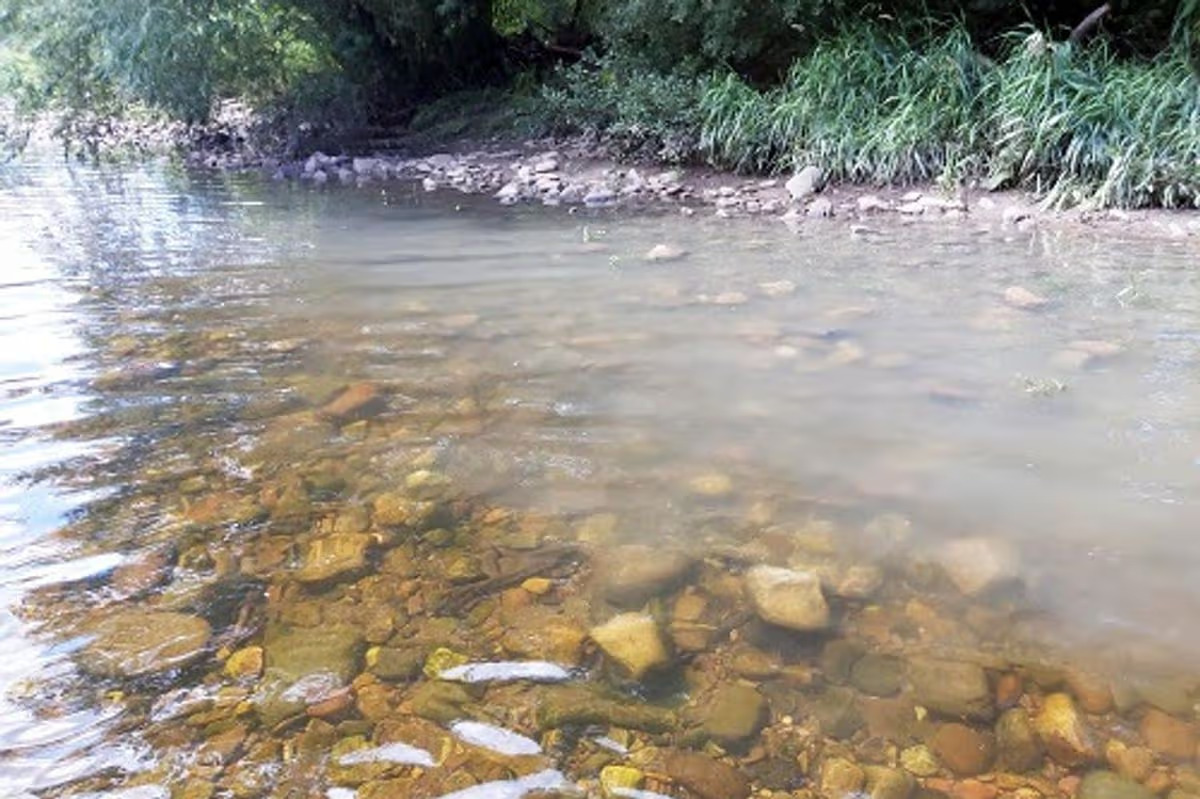
Children were reported ill after swimming in the Tawe.
The reports reached the Senedd in June. Rebeca Phillips told First Minister’s Questions that residents in the Swansea valley had seen a number of people, many of them children, fall ill after going in the water.
Rhun ap Iorwerth said he was concerned and asked Natural Resources Wales to investigate.
That investigation has since reported. In a written statement on 2 September, Llyr Gruffydd, the Cabinet Minister for Rural Resilience and Sustainability, said NRW had reviewed incident reports, water quality data and storm overflow records and had not identified evidence of pollution, permit breaches or any other environmental incident that would explain the reported illnesses or warrant enforcement action.
Routine monitoring on the Tawe tests the river’s environmental condition, not whether it is safe to swim in, the statement said.
Mike Hedges told the chamber the problem sits upstream at Trebanos. The treatment works there cannot separate rainwater from sewage, so when it fills up there are two options.
“The two choices are to let it back up and flood the houses with sewage or release it into the river,” he said.
He told the Senedd that NRW had confirmed the work to stop those regular discharges was not likely to be finished until 2030. He did not think that was acceptable.
Four years is a long time to keep children out of a river.
Torsten Bell wants people in a room about it before then.
The Swansea West MP is holding a public meeting called Turning the Tides on Thursday 8 October, with environmental experts and anti-pollution campaigners speaking about the state of the water and what has worked elsewhere.
Bell said the rivers and beaches were the reason the city exists. “We’re incredibly lucky to have Swansea Bay and the Tawe right on our doorstep,” he said.
“But no-one thinks the state of our water ways is good enough, after decades of underinvestment.”
He said he wanted residents and experts together to share ideas and hear about work already under way, much of it driven by local campaigners.
Sewage, protests and a court fine: Swansea’s year on the water
There has been plenty of it. Campaigners rallied at Caswell Bay in May, one of more than 50 Surfers Against Sewage protests across the UK that day, after figures showed Welsh Water’s worst decade for pollution.
A year earlier, Gower residents held a “Pooped Off” demonstration outside Welsh Water’s Bishopston treatment works over repeated discharges near Caswell and Brandy Cove.
Nobody officially tests the sea here in winter. NRW’s budget covers May to October, so volunteers have been doing it themselves, a project started by Gower MP Tonia Antoniazzi with the Gower Society and scientist Dawn Thomas.
Their second season ran 77 tests at five beaches. Ninety per cent came back good or excellent. Eight found sewage, half of them at Knab Rock in Mumbles after heavy rain.
This winter they could not start until January, because the money ran out. A Swansea manufacturer paid for the test kits.
Welsh Water has been in court over its permits. The company was fined £1.35m, with more than £70,000 in costs, in May 2025 after pleading guilty to breaches covering over 800 non-compliances at around 300 sites in 2020 and 2021. On appeal in October 2025 the fine was reduced to £120,000. The conviction stands.
NRW’s head of operations said at the time that the company’s performance had been declining for years and called the prosecution a stark warning.
The regulator has separately ordered it to spend £44.7m fixing its sewage failures, which campaigners called too little, too late.
And of the local beaches graded in the last bathing water classifications, Swansea Bay was the only one not rated excellent. Langland, Caswell, Bracelet Bay, Rhossili and Aberafan all took the top mark. Swansea Bay came in a rung below, at good.
What Welsh Water says
Welsh Water was not approached for comment before this article was published. A spokesperson for the company said: “Our storm overflows in the Clydach and Pontardawe areas did not spill for more than a week, during the dry and warm period, before the children reportedly fell ill.
“The matter was investigated by NRW who did not identify ‘evidence of pollution, permit non-compliance or another environmental incident that would explain the reported illnesses or warrant regulatory enforcement action’.
“Water quality is not just an issue for water companies. We will only succeed in improving it through multi-sector cooperation as industry, urban runoff, soil erosion, rural land use, illegal misconnections and septic tanks all contribute to the issue.
“We know though how important water quality is to our customers, which is why we are investing £4bn, including £2.5bn on environmental projects, in our investment period for 2025-30. This includes £889m on storm overflows and a further £42m on eight schemes to target improving bathing and shellfish waters.”
Thursday 8 October, and you need to email first
The meeting is at a level-access venue in Swansea city centre.
Seats have to be booked in advance, by emailing torsten.bell.mp@parliament.uk with a full name and postcode.
Related stories from Swansea Bay News
RIVER TAWE: First Minister orders investigation after sewage and sickness concerns raised in Senedd
What the Senedd was told about Trebanos, and the 2030 date.
GOWER: Volunteers find sewage at beaches after heavy rain
A second winter of testing the sea, and what the samples showed.
GOWER: Protesters rally at Caswell Bay as data reveals Welsh Water’s worst decade for pollution
Part of a national day of action at more than 50 sites.
Welsh Water fined £1.35m for over 800 breaches to sewage discharge permits
The May 2025 prosecution NRW called a stark warning. The fine was later cut on appeal to £120,000.
More on sewage and water quality
Our coverage of the rivers and beaches across Swansea Bay.
Correction, 15 September 2026: an earlier version of this article said Welsh Water had been fined £1.35m. The fine was reduced on appeal to £120,000 in October 2025. The article has also been amended to say children were reported ill rather than were ill, to include NRW’s findings published on 2 September, and to add a statement from Welsh Water.

Discover more from Swansea Bay News
Subscribe to get the latest posts sent to your email.