


If a burger box flies out of your car window on the M4 and a council officer sees it, you could be the one who pays: whether you threw it, your passenger did, or you were not in the car at all. That is the change the Welsh Government is asking about, and it wants answers by 14 October.
The same consultation asks whether the maximum on-the-spot fine for fly-tipping should rise from £400 to £5,000, and whether the fine for handing your rubbish to an unlicensed man with a van should go from £300 to £400.
Why councils say their hands are tied
Throwing litter from a car is already a crime, with a fine of up to £2,500 in court. The problem, the government’s own paper says, is proving who did it: with two or more people in a moving car an officer often cannot tell, and the registered keeper does not have to say.
England already fines the keeper directly and Scotland is about to, as a civil penalty rather than a criminal one, so no court and no record. The paper admits Wales consulted on doing the same in 2017, found “strong support”, and then dropped the Bill that would have brought it in.
Llyr Gruffydd, the cabinet minister for rural resilience and sustainability, said: “It’s often impossible to prove who in a car threw litter out, so councils’ hands are tied even when they know it’s happened.”
Keep Wales Tidy surveys last year, quoted in the paper, found litter on nearly every main road in Wales: sweet wrappers on 81% of roads surveyed, drinks containers on 72% and fast-food packaging on 67%.
6,915 dumps, 103 fines
Councils in Swansea, Neath Port Talbot and Carmarthenshire recorded 6,915 fly-tipping incidents in 2024/25, according to Welsh Government figures, and issued 103 fixed penalty notices between them. That is one fine for every 67 dumps.
Swansea’s 2,860 incidents were up 15% on the year and 61% on four years ago, and 2,308 of them were on the roadside. The council issued 25 fixed penalties and, for the second year running, recorded no prosecutions in the official statistics; in March it told councillors it had dealt with 2,579 incidents and brought five prosecutions, a different count of the same year.
Neath Port Talbot’s 884 incidents were up 40% on 633 the year before, though still below the 1,102 of 2021/22. It issued 39 fixed penalties and prosecuted twice, and it is the council that crushes fly-tippers’ vans. In July a Morriston man who admitted dumping oil-covered car parts along two miles of road between Crynant and Cilfrew was fined £200, the same figure as the standard fixed penalty, plus costs.
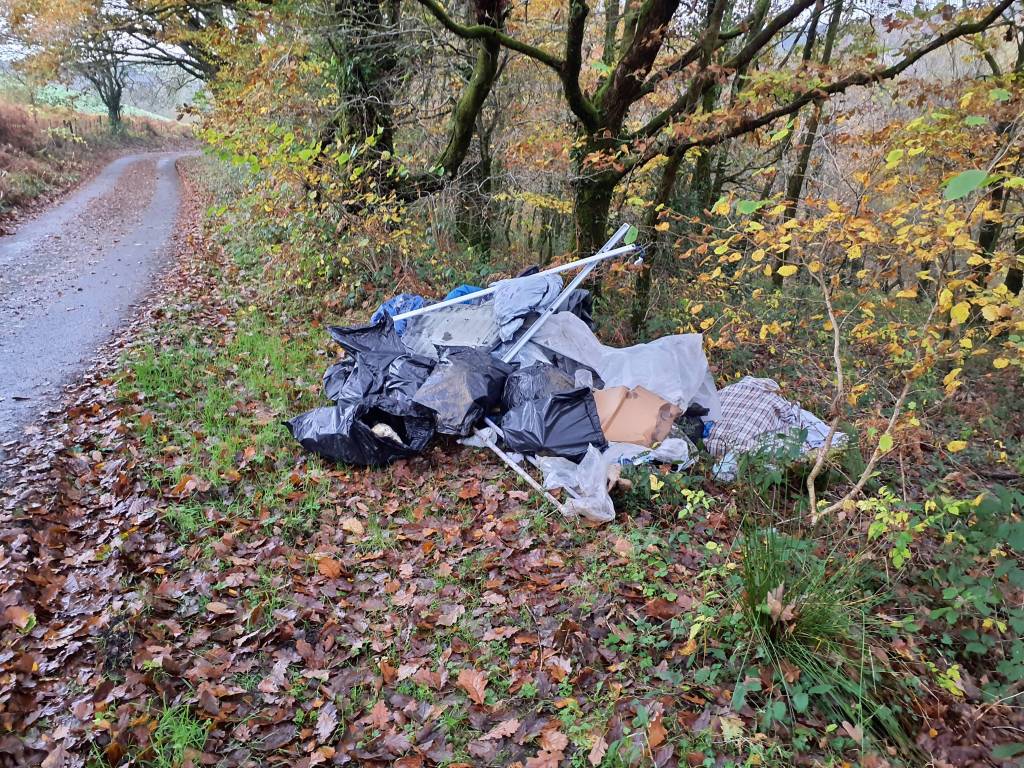
Carmarthenshire recorded 3,171 incidents, up 3% but well down from 4,803 four years ago, and prosecuted nine people, all of whom were fined, the third highest tally in Wales. Its fixed penalties fell from 149 to 39 in a year. Its new bin rulebook, signed off on Monday, sets out the ladder of letter, warden, notice and fine before anyone reaches court.
What a £5,000 fine would mean
Councils have told the government the £400 ceiling is no longer a deterrent, and in some cases costs less than getting rid of the rubbish legally. English councils can already fine up to £5,000, and Welsh councils have said the gap invites people to cross the border to dump. The £200 default would stay, the ceiling would rise, and councils would not have to use it.
Seven in ten fly-tips in Wales are household waste, black bags and the like, and in Swansea it is 72%. That is why the duty-of-care fine is going up too: if you pay someone to take your rubbish away and it ends up in a lane, the law says it is your problem.
Also in the paper
The proposals sit inside a wider white paper that would give ministers a legal duty to “rural proof” their policies. It names Carmarthenshire as one of nine rural councils in Wales; Swansea and Neath Port Talbot are not on the list. There are also tougher powers on illegal tree felling and civil fines for Natural Resources Wales to use.
The government says no decision has been made and no Bill has been drafted; it is asking for views and evidence first. The consultation is open until 14 October on the Welsh Government website.
“No-one likes litter,” Mr Gruffydd said. “Roadside rubbish makes an area unsightly, impacts our local economies and communities, and poses risks to the environment and to wildlife. I’d encourage everyone to give us their views and help us clean up our roadsides.”

Discover more from Swansea Bay News
Subscribe to get the latest posts sent to your email.