

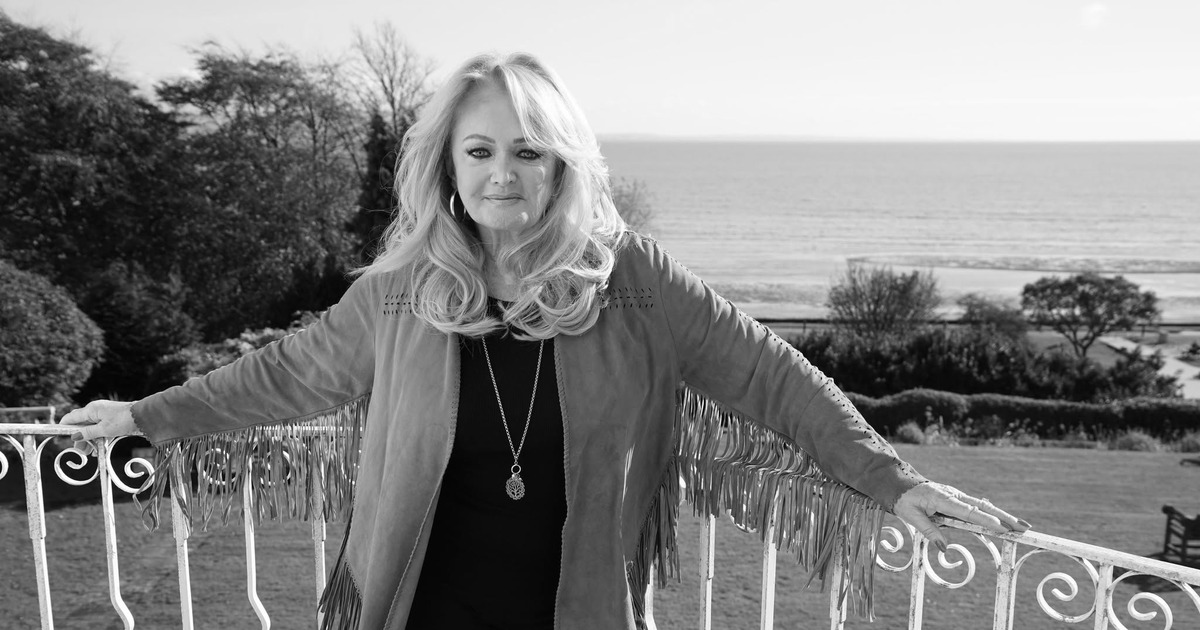
Bonnie Tyler — the girl from Skewen who became one of the biggest-selling singers in the world — has died aged 75.
In a statement on Thursday morning, her family and team said they were “heartbroken” to announce that she had “unexpectedly passed away last night in hospital in Portugal” as a result of the illness she was being treated for.
They said a further statement would be issued shortly, but asked for privacy “to deal with this tragedy”.
Tyler died two months after being admitted to hospital in Faro for emergency surgery in early May, close to her home in the Algarve.
Her condition worsened in the days after the operation and she was placed in an induced coma as doctors fought a serious infection. By mid-June she had come out of the coma but remained “very unwell” in intensive care, and her summer shows were cancelled.
She had been due back on stage this autumn, with a Cardiff arena date booked for December.
Born Gaynor Hopkins on 8 June 1951, Tyler was a coal miner’s daughter who grew up in a council house in Skewen, one of six children.
She sang first in chapel — and her career was decided in 1969, when her aunt entered her into a local talent contest. She came second, to an accordionist, and won £1.
She was born Gaynor, a name she never liked. Signed to RCA and told her chosen stage name Sherene “sounded like a belly dancer”, she bought a broadsheet newspaper, listed every first name and every surname she came across, and worked through both until she found Bonnie Tyler.
After leaving school at 16 she worked in a grocery shop and sang in clubs across Swansea, where in 1975 a London talent scout spotted her performing at the Townsman Club.
Her first hit, Lost in France, arrived in 1976 — and so, soon after, did the voice that made her. Surgery to remove nodules from her vocal cords left her under orders of complete vocal rest. Then, driving to visit her brother in hospital, she realised she had forgotten the punnet of strawberries she was taking him, and let out a scream of frustration. Her consultant told her the damage was permanent. It left her with the husky rasp she came to love — and which she joked made her sound like a female Rod Stewart.
It’s a Heartache followed in 1977, reaching the top five in both Britain and America and selling more than six million copies.
Then came Total Eclipse of the Heart. After a run of flop singles, Tyler had watched Meat Loaf perform Bat Out of Hell on television and set her sights on the man who wrote it, Jim Steinman. He played her the song at his piano in New York, and the 1983 power ballad went on to top the charts on both sides of the Atlantic, sell more than 13 million copies and pass a billion streams on Spotify this year — carrying her album Faster Than the Speed of Night to number one in the UK.
For all that, she said she earned “just about nothing” from it. The song was written entirely by Steinman, so the publishing royalties go to his estate — while her share of the recording dates from a 1980s contract signed long before streaming existed.
Holding Out for a Hero, from the 1984 film Footloose, gave her another anthem that has found new audiences with every generation since.
She represented the UK at Eurovision in 2013, released 18 studio albums — the last, The Best Is Yet to Come, in 2021 — and published her autobiography, Straight From the Heart, in 2023.
Appointed MBE for services to music in 2022, she said at the ceremony that her mother and father “would be so proud”. She was also made a Freeman of Neath Port Talbot.
For all the global success, she never really left. Tyler split her time between Mumbles and the Algarve, and remained fiercely proud of where she came from. She married Robert Sullivan in 1973, and he survives her.
Tributes began pouring in within minutes of the announcement.
From a Skewen chapel to a billion streams — the girl who once came second to an accordionist leaves as one of the best-selling singers Wales has ever produced.

Discover more from Swansea Bay News
Subscribe to get the latest posts sent to your email.