


Latest figures for January 2026 reveal that the number of employees on payroll in the city stood at 101,804, marking a -1.3% drop compared to the same month last year. This significant decline places Swansea at the bottom of a league table of 12 Welsh regions, highlighting a challenging period for the local job market.
The data, compiled by employment and pay app WageSight, paints a concerning picture for the region, even as some signs of employer confidence begin to emerge.
A Year of Decline: 1,349 Jobs Vanish
Over the past year, Swansea has seen a net loss of 1,349 jobs, a 1.3% reduction in its payroll headcount. This sustained downturn contrasts with a more mixed employment landscape across the rest of Wales. While Gwynedd topped the table with a 0.3% increase, Swansea languishes at the very bottom.
Alarmingly, the wider region is also feeling the pinch, with Bridgend and Neath Port Talbot ranking 10th with a -0.8% drop, and Cardiff and the Vale of Glamorgan also struggling at 11th with a -0.9% decline.
Can New Office Space Reverse the Trend?
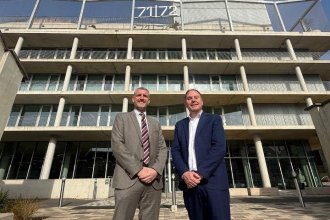
Despite the challenging figures, city leaders are banking on major new developments to spark a jobs revival. Central to this strategy is the recently completed £33 million 71/72 Kingsway development.
The high-tech office scheme, built on the site of the former Oceana nightclub, is designed to house up to 600 jobs in the digital and tech sectors. It is a cornerstone of the council’s plan to bring high-quality employment back into the heart of the city centre.
Further investment is also being felt at Y Storfa, the council’s new community hub on Oxford Street. The hub is already seeing “record demand” for its services, acting as a catalyst for footfall and supporting the city’s wider economic recovery.

(Image: Swansea Council)
‘Failing to get a grip’ – Political Row Ignites
The figures have sparked a fierce political row, with the Welsh Conservatives claiming the data proves the Welsh Government is “failing to get a grip” on the economy.
National statistics show that Wales currently has the lowest employment rate of all UK nations and the highest economic inactivity rate in Great Britain.
Samuel Kurtz MS, Welsh Conservative Shadow Cabinet Secretary for Economy and Energy, said:
“Labour and Plaid Cymru are failing to get a grip on the economy in Wales. Their stitch-up budget and Rachel Reeves’ tax raises have hit businesses hard and yet again employment remains lower here in Wales than elsewhere.”
The Welsh Conservatives are calling for a “bold tax-cutting agenda,” including cuts to business rates, to jumpstart the flagging job market.
Is a Turning Point on the Horizon?
Paul Hebden, Director at WageSight, commented on the findings, acknowledging the recent month-on-month stabilisation.
“Although employment in Swansea remains lower than a year ago, recent month-on-month figures suggest some stabilisation in recent months. Whether this marks a genuine turning point or a temporary pause in job losses will become clearer over the next few months.”
The Full Welsh Employment League Table
The following table shows how Swansea compares to the rest of Wales for employment change over the last 12 months:
| Rank | Region | Employees on Payroll | % Annual Change |
| 1 | Gwynedd | 49,182 | +0.3% |
| 2 | Flintshire and Wrexham | 133,457 | 0.0% |
| 3 | Conwy and Denbighshire | 84,670 | 0.0% |
| 4 | South West Wales | 148,599 | -0.2% |
| 5 | Powys | 50,147 | -0.3% |
| 6 | Central Valleys | 124,064 | -0.3% |
| 7 | Monmouthshire and Newport | 111,880 | -0.4% |
| 8 | Isle of Anglesey | 26,285 | -0.4% |
| 9 | Gwent Valleys | 142,689 | -0.8% |
| 10 | Bridgend and Neath Port Talbot | 118,908 | -0.8% |
| 11 | Cardiff and Vale of Glamorgan | 219,738 | -0.9% |
| 12 | Swansea | 101,804 | -1.3% |
Source: WageSight analysis of Office for National Statistics payroll data (January 2026).
Swansea 2028 Vision Under Scrutiny
The employment figures will undoubtedly spark debate regarding the effectiveness of ongoing regeneration efforts and the ambitious Swansea 2028 vision. With the city aiming for significant economic growth and improved access to skills, the current employment data presents a formidable challenge.
As residents and businesses grapple with the implications of these figures, all eyes will be on future reports to see if Swansea can climb out of the bottom spot and secure a more robust economic future.

Discover more from Swansea Bay News
Subscribe to get the latest posts sent to your email.