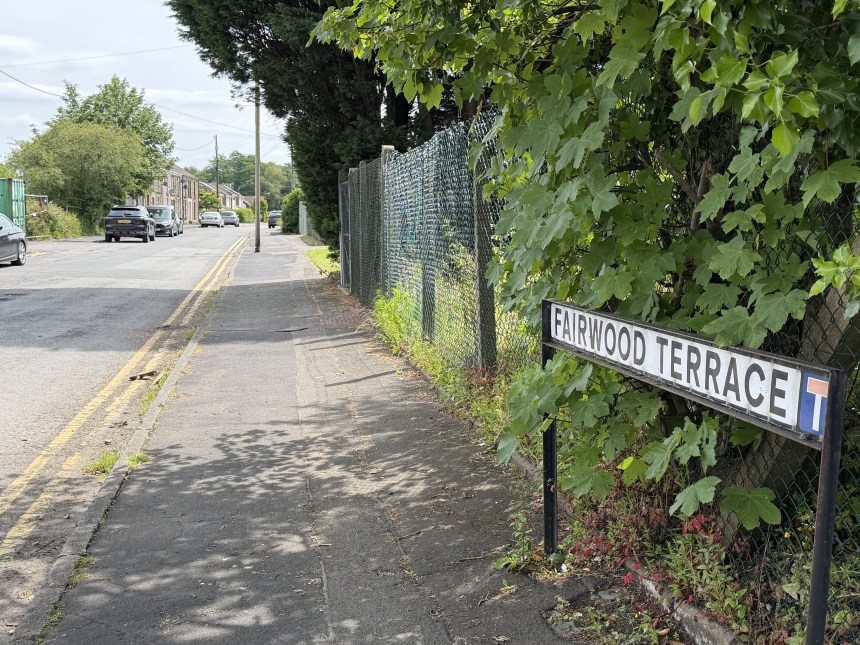
Swansea Council says claims about the Fairwood Terrace development are “misleading and inaccurate”. Campaigners say a village that maintains a memorial to its mining past is being asked to believe the mines came as a £10m surprise. The documents tell a story a decade in the making.
A bitter dispute over one of Swansea’s biggest housing schemes has erupted into the open — with the council accusing campaigners of spreading “misleading and inaccurate claims”, and campaigners accusing the council of hiding the numbers behind proposed cuts to affordable housing and school funding.
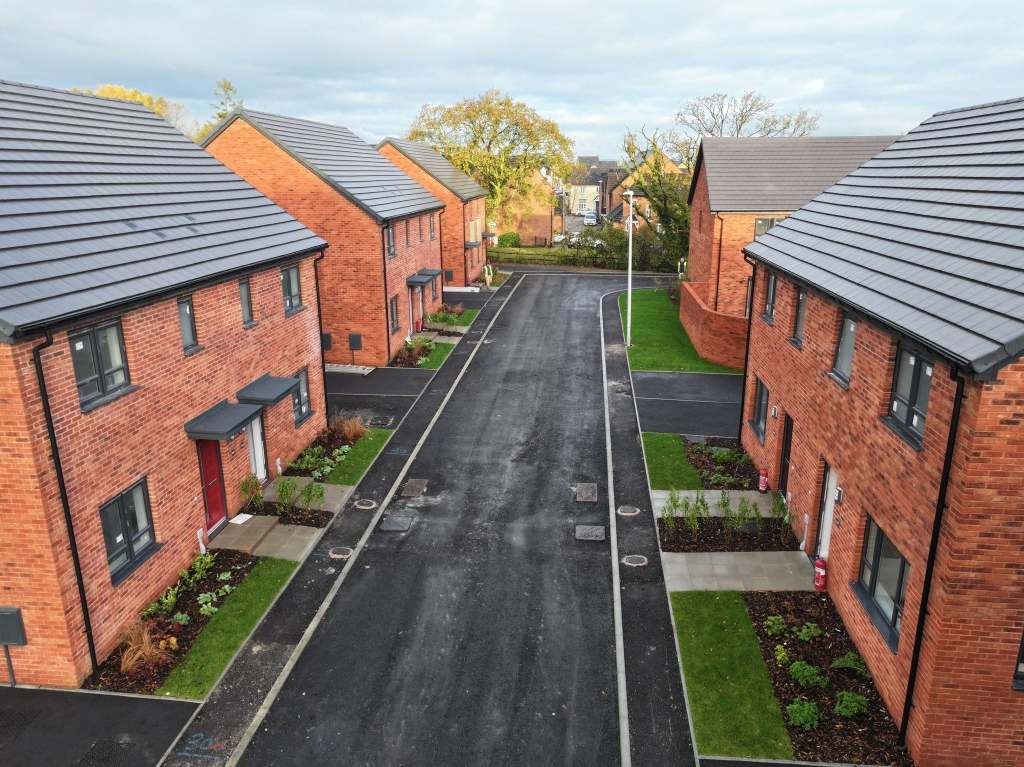
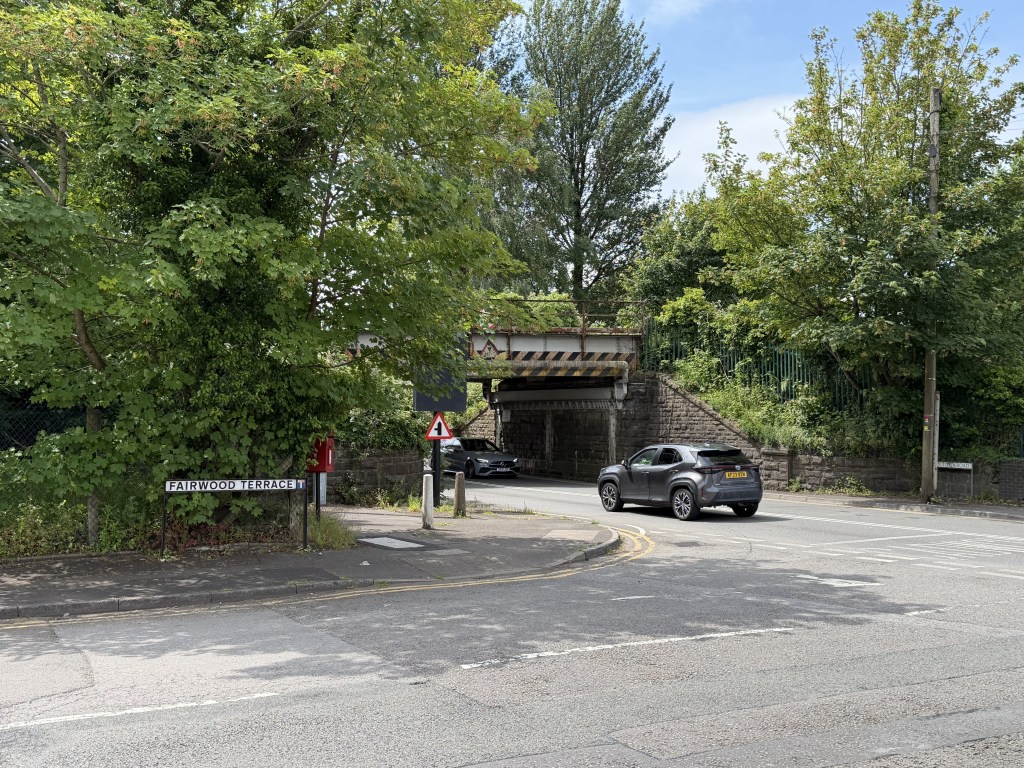
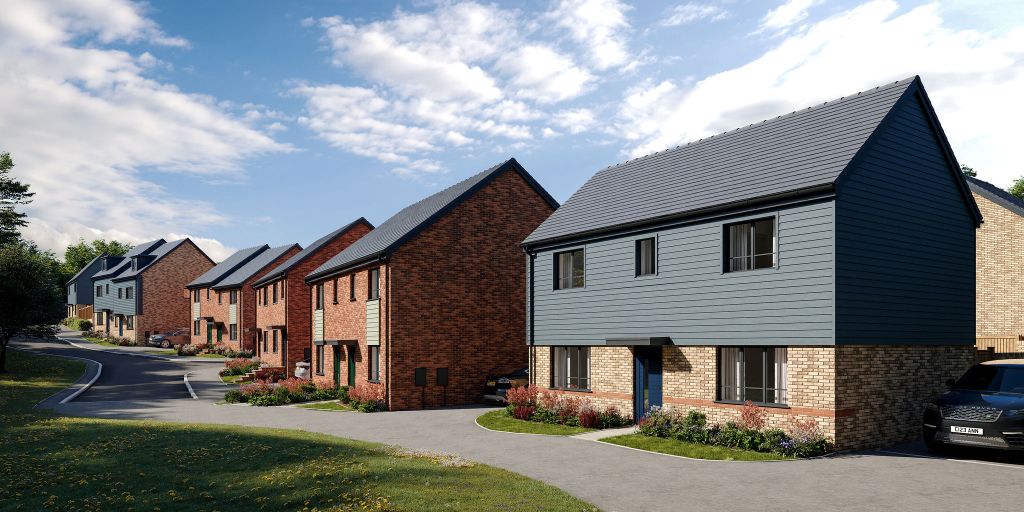
At its centre is the plan for 216 homes at Fairwood Terrace in Gowerton — refused by the council’s own planning committee, and now in the hands of a Welsh Government inspector.
Persimmon Homes is proposing 10.2% affordable housing on the site, against the 20% the council’s development plan seeks for the wider area — and no money towards schools.
Those are the developer’s proposals, set out in a legal undertaking offered as part of its appeal to the Welsh Government — not terms the council has accepted, and nothing is yet decided. It will fall to the inspector to determine whether the scheme, and what it would offer Gowerton, is acceptable.

The justification is around £10m in “abnormal” site costs: stabilising old mine workings, dealing with contamination, and other ground problems — costs the appraisal puts at roughly £47,000 for every home built.
Campaign group Save Gowerton From Gridlock, which says it represents some 1,400 residents, believes those costs were foreseeable — and should have been reflected in what was paid for the land, not in lost contributions to the community.
The council and the developer’s appraisal say the costs went beyond what could reasonably have been allowed for when the site was earmarked for housing.
Who is right would help decide what Gowerton gets from the biggest development in its history. And it is a question with a very long tail.

A village built on coal
The land in this corner of Gowerton was worked for coal for most of the Victorian age — Gorwydd Colliery opened in 1855 and closed in 1890.
The village has never forgotten it. In the centre of Gowerton, schoolchildren spent last year tiling mosaics for the refreshed Mining Disaster Memorial Garden.
And when the former colliery land was first proposed for housing a decade ago, nobody pretended the pits weren’t there.
The site promoter’s own submission to the council’s development plan acknowledged uncapped mine shafts, a structurally unsound colliery chimney, and more than four hectares of colliery waste.
Residents, petitioning alongside their ward councillor, went further — warning the council in formal representations that remediating the land would be so expensive it “raises the question whether the site would be commercially viable to develop”.
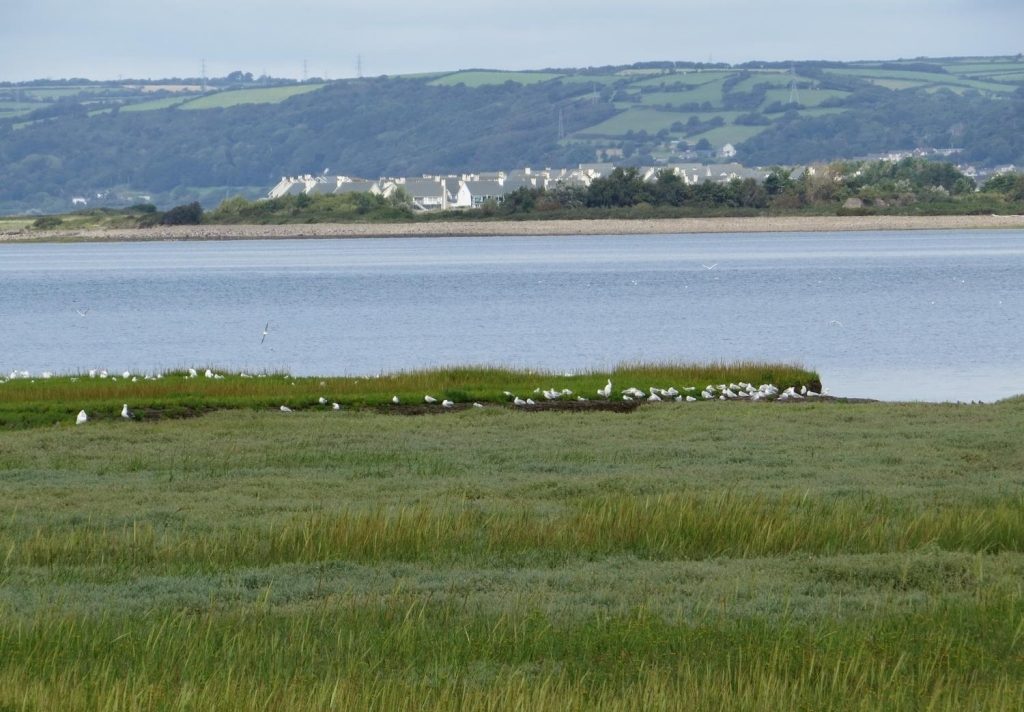
They also warned, citing Welsh Water’s own assessment, that the public sewers were unlikely to cope — and that the foul water would end up in the protected Burry Inlet. The site’s promoters said at the time that Welsh Water had confirmed capacity was available.
A decade on, both warnings sit at the heart of the row.

‘Gold bars’: the first time around
Because this is not the first time a developer on this coalfield has come back after winning permission to say the ground was worse than expected.
Across the railway line from the Fairwood Terrace site, housing association Pobl won consent in 2018 to build 99 homes on the former colliery itself — agreeing to pay £369,076 towards local schools, £35,000 for a crossing, and to make 30% of the homes affordable.
Then the trees came down — lawfully, under the terms of the permission — and the ground was investigated. Pobl told the council the costs were “far greater than was originally anticipated”, and asked to strip most of the school money out.
Swansea’s planning committee refused the first attempt in March 2021, in the face of 342 objections.
“The difficulties that Pobl have found were very clearly highlighted,” Cllr Peter Black told that meeting, citing a previous planning report. Cllr Mary Jones agreed: “We all knew this site would be difficult.”
Cllr Richard Lewis put it more bluntly: “We are giving gold bars away.”
Others argued for pragmatism. Cllr Des Thomas said that if members wanted homes for people in need, “we need to think of where we are today and look for a way forward” — and a second, revised application succeeded a month later.
The contribution to Gowerton Primary School — £272,659 — was removed, with the council’s education department recording it had “no option but to agree”. Welsh-medium school contributions were kept.
Gowerton Community Council objected in terms that read differently five years on: “The promise of the investment was made to secure the application and now Pobl are trying to get out of it due to increased costs. Surely they should have foreseen this?”
And the village’s then sole ward councillor, Susan Jones, issued a warning in her formal objection: “There may be developers looking at this decision and I am sure will be applying to do the same.”
The contractor’s records show mine remediation on that site — drilling and grouting across half the development and the capping of several shafts — was finished by the end of October 2021.
The estate built on the cleared woodland was named Woodland Grove.
Fairwood Terrace: refusal, appeal and a major blow
By then, Persimmon was already at work across the railway line. According to information later released by the council under environmental information laws, its detailed site investigations at Fairwood Terrace were completed in March 2022 — months before the 230-home plans went to public consultation that December.
The viability appraisal that now underpins the 10.2% affordable offer was commissioned in March 2023 and concluded in January 2024.
It found the scheme could support a blended profit of 19% — at the top of the Welsh Government’s accepted 15–20% range — on homes expected to sell for between £220,000 and £365,000.
In September 2024, the council’s planning committee refused the application on traffic grounds, against officers’ advice — and Persimmon appealed.
In April, the inspector dealt the scheme a major blow, ordering a full environmental impact assessment expected to take six months to a year — accepting the campaigners’ argument that the site cannot be judged in isolation from the development planned around it.
That wider picture includes a 600-home scheme that could create a continuous ribbon of housing from Penllergaer to Gowerton — on a strategic site where the council’s housing blueprint has so far delivered a fraction of what it promised.

(Image: Litchfields)
Where did the school money go?
The sharpest dispute is over schools.
When the Fairwood Terrace application was assessed in 2024, the council’s own education department set out that the development would generate around 90 pupils, with a total education value of more than £1.7m across all age groups.
It requested full developer contributions for Welsh-medium primary, and for English and Welsh-medium secondary and post-16 places — and warned that rejecting such requests “risks Education being in a position that it is unable to accommodate catchment area pupils in their local school”.
It did not request a contribution for English-medium primary places, because Gowerton Primary was forecast to have spare capacity.
Yet the council’s published summary of the viability appraisal records simply that no education contribution was requested “since there was sufficient capacity identified by the Education Department”.
Asked by Swansea Bay News to explain the gap between the department’s detailed requests and warnings and that summary, the council said children from the development “were assessed as being likely to attend schools in Gowerton where capacity was identified, rather than in existing or proposed schools elsewhere”.
The campaign group also points to the council’s own 2017 evidence for its development plan, which stated the western part of the strategic site would contribute £1.34m towards a new primary school.
The council says it “does not recognise” that figure, adding “it would be wrong to suggest that future contributions towards education provision have been erased” — and that future applications on the wider site may still be required to contribute.

The £10m nobody has seen
Nobody outside the council and the developer has seen what makes up the £10m of abnormal costs.
The group asked for the full appraisal under environmental information laws. The council answered that first request but withheld the appraisal itself, citing commercial confidentiality — then published a summary with Persimmon’s agreement in May, before refusing a 12-question follow-up as “manifestly unreasonable”. The group says it has now complained to the Information Commissioner’s Office, and a separate complaint remains in the council’s own system.
Asked whether it would publish a breakdown of the £10m, the council said an itemised breakdown “would have included some commercially sensitive information” — covering contractual confidentiality, supplier pricing schedules, and “information that could materially affect competitive positions in land transactions”.
Persimmon defended the process robustly. The viability position “is not new”, it said — it was tested during the application through an open-book assessment, “independently scrutinised by viability consultants acting on behalf of Swansea Council”.
Before the committee’s refusal, the developer pointed out, the council’s own planning officers had recommended approval — having “reviewed the viability evidence in detail and negotiated the proposed obligations accordingly”.
Persimmon also points to a safeguard written into the undertaking. Under Schedule 5, a fresh viability appraisal must be submitted with the detailed designs if the appeal succeeds — a review that could see the affordable housing rise above 10.2% should the scheme’s finances improve.
The review can only push the proportion upwards: the resolution underpinning it sets a floor of 10% affordable housing, against the 20% the council’s plan seeks for the wider site.
Asked whether the council will argue against the developer’s viability case at the appeal — or accept it — the council explained how its policy works but did not say. The question is pointed: the package now offered at appeal reflects obligations the council’s own officers reviewed and negotiated before the committee refused the scheme on traffic grounds.
The Welsh Government confirmed the viability evidence will be examined either way. “All relevant matters will be before the Inspector for consideration, including financial viability if this has been raised as an issue in the case,” a spokesperson said — adding that campaigners and other interested parties can submit their own documents to the inquiry. The appeal papers are public on the planning casework portal.
(Image: Swansea Bay News)
What’s actually on offer
The legal undertaking sets out what the 216-home scheme would provide for the community: £60,000 towards a bike hire scheme, £60,000 towards the Elba multi-use games area, £40,000 towards traffic signal upgrades, and £15,000 for a solar-powered air quality sensor.
That £175,000 total, the campaigners say, stands against the millions the council’s own infrastructure plan envisaged for the wider site. The affordable homes that would be built — just over one in ten — would be 82% social rent and 18% intermediate.
The group raises a further question about what the wider site was meant to deliver. It says the infrastructure plan supporting the council’s development plan required a relief road for the strategic site, costed at close to £3m — and that when Fairwood Terrace came forward as the first of the site’s three parcels, it was able to point to the later schemes to provide the road. None of the applications now submitted across the site includes it, the group says. That claim has not been independently verified by Swansea Bay News.

(Image: Swansea Bay News)
Seller and judge: the council’s own land
There is one more thread: the council is not just the planning authority here. It is also a landowner within the strategic site.
Barratt Redrow confirmed it is in talks with the council. A spokesperson said the company was “engaged in positive discussions with Swansea Council regarding the delivery of a mix of private and affordable homes, alongside new community facilities, at the allocated strategic site in Gowerton/Waunarlwydd to help meet local housing needs”.
Persimmon, asked about similar discussions, did not deny them. “Persimmon routinely engages with a range of stakeholders, including local authorities and landowners, in relation to strategic development opportunities,” it said. “However, we do not comment on commercially sensitive discussions.”
So the council is in discussions to sell land to housebuilders whose applications it will itself determine. The campaign group calls that a conflict of interest.
The council says the allegation is “unfounded”. It “regularly determines planning applications for development on land under its own ownership”, a spokesperson said; decisions rest on planning grounds alone, “entirely, independently of issues of land ownership”, and any decision driven by its financial interests “would leave the decision open to challenge and quashing of the decision by the courts”.

(Image: Swansea Bay News)
The developers’ case
Urban Style Land, the site’s promoter, set out the developers’ case in robust terms. The company has an agreement with the landowners to appoint a housebuilder and bring it in as joint applicant, director Tim Holder explained — Persimmon having been chosen through a tender process — with targets for housing, density and access all drawn from the council’s adopted development plan.
The application was “totally compliant with the LDP”, Mr Holder said, had addressed every technical issue, and won the support of council officers — who declined to act for the authority at appeal. Despite that, it was refused “by one vote and based on one unrelated reason for refusal”.
“As investors who would go on to become involved in high expenditure and time commitment, Urban Style Land Ltd and the whole team deserved to rely on the policies set out and adopted by the Council,” he said — warning that the refusal left the council facing its own costs and the developers’ costs if the appeal succeeds, and that “future investment in Swansea will no doubt be on a more cautious basis”.
Of the neighbouring Gorwydd Road site, Mr Holder confirmed land remediation had formed part of the project, which he described as “a successful development of Affordable units by Pobl Housing Association”.
The warning that came true
Meanwhile, the warning residents made about sewerage a decade ago has resurfaced — this time from the regulator.
Natural Resources Wales told the council last month that another application on the strategic site — a hybrid scheme including a new school — had not demonstrated sufficient sewer capacity or shown it would avoid adding nutrients to the protected Burry Inlet, and noted parts of the school site sit in flood zones.
Barratt Redrow said it was “working closely with Swansea Council, Dŵr Cymru Welsh Water and industry experts to address the concerns raised by Natural Resources Wales regarding the Burry Inlet catchment, to ensure the development has no detrimental impact on water quality”.
What happens next
Campaign group Save Gowerton From Gridlock dismissed the council’s statement as “a classic exercise in bureaucratic spin, designed to deflect from a profound lack of transparency”.
“The community is not ‘misunderstanding’ the planning process,” its spokesman Carl Jones said. “We are actively exposing it.”
He returned to the withheld appraisal: “If the developer’s financial excuses are robust, why hide the mathematics from the very tax-paying residents who will have to live with the consequences? This is a community fighting to ensure Gowerton is not treated as a cash cow.”
For now, the scheme is in limbo. The Welsh Government confirmed the appeal “cannot progress further” until Persimmon submits its environmental impact assessment, and that there is no timetable yet for a decision.
When it comes, the inspector will report to the minister with a recommendation — the final word resting with the Welsh Government, not the council that refused the scheme. It will determine more than one field on the edge of one village: it will signal whether, on Swansea’s coalfield sites, the cost of history is carried by the developer who buys the land, or by the communities who live on it.
And in Gowerton, where the children are still tiling the memorial to the men who worked these seams, nobody needed a viability appraisal to know the mines were there.