


Weeks before Westminster made its move, Swansea had already made up its mind.
When the local MP asked, eight in 10 people who answered his survey backed some kind of limit on children using social media. A packed public meeting at the Guildhall said much the same.
On Monday, the UK Government caught up with them.
Children under 16 will be banned from social media apps including TikTok, Snapchat, Instagram, YouTube, Facebook and X, Prime Minister Sir Keir Starmer announced.
The rules should become law before Christmas and take effect in spring 2027. Messaging apps like WhatsApp won’t be included.
It is one of the biggest changes to childhood in a generation — and for families across Swansea, Carmarthenshire and Neath Port Talbot, it has been a long time coming.
A debate that started here months ago
This has been a live issue across the area since the spring.
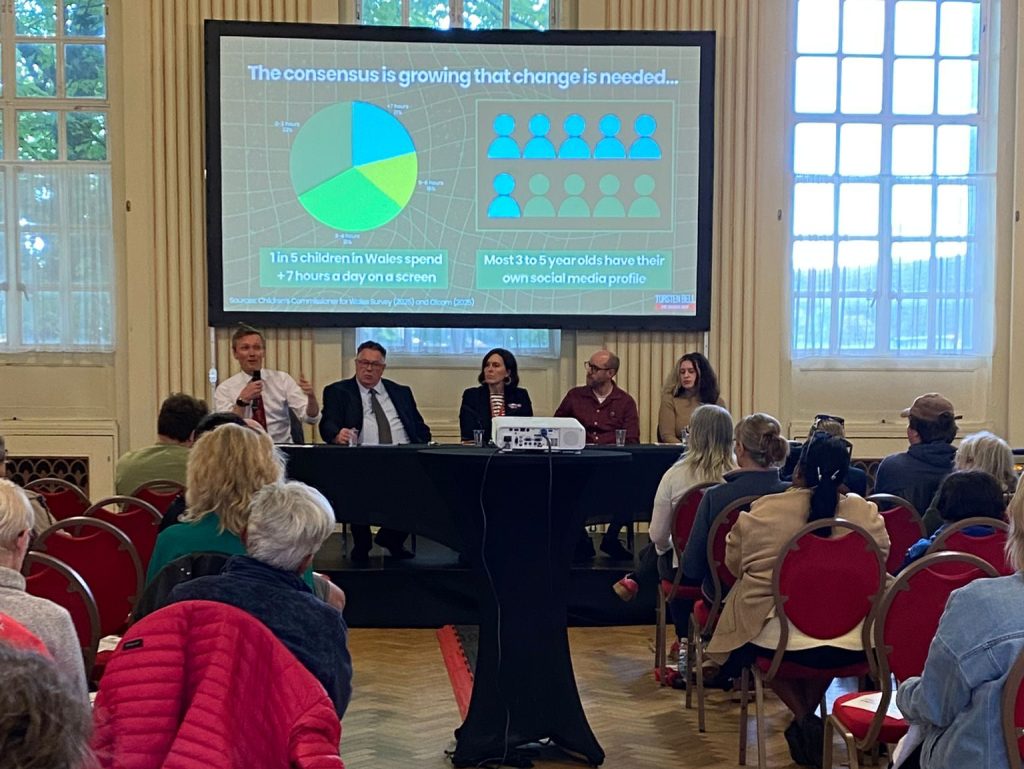
Back in May, Swansea West MP Torsten Bell held an “emergency” public meeting at the Guildhall after the subject filled his postbag more than any other this year.
The room was standing-room only. Parents spoke of children glued to screens for hours. Teachers described what they see in the classroom every day. Charity workers laid out the growing evidence on children’s mental health.
Afterwards, Bell surveyed his constituents and found 80% backed some form of age limit. “Swansea’s voice has been heard loud and clear,” he said, “and Swansea backs a ban.”
Local MPs had already been pushing in the same direction. Tonia Antoniazzi and Henry Tufnell were among more than 60 Labour MPs who had called for a ban before the government acted.
What actually changes
So what does the ban mean in practice?
From spring 2027, social media companies won’t be allowed to let under-16s use their apps at all. Accounts already held by younger teenagers will be switched off or paused.
A child won’t be able to get around it with a parent’s permission — the ban applies either way.
There’s a second part to it. On gaming sites and other services, under-16s will be stopped from livestreaming themselves — broadcasting live video — and from being contacted by strangers. The government says these are the features that put children most at risk.
For 16 and 17-year-olds, those same restrictions will be switched on automatically, though they can choose to turn them off.
And so-called AI “companion” chatbots — apps designed to act like a virtual boyfriend or girlfriend — will be locked to over-18s.
What stays the same
This is not a ban on being online.
Children will still be able to message friends and family on apps like WhatsApp. They’ll still watch videos, play games, read the news and use school and learning sites.
The government has promised a short list of exceptions covering things like educational tools, shopping and music apps.
What teenagers themselves think
The young people who’ll actually be affected aren’t all convinced.
When BBC Wales visited Morriston Comprehensive in Swansea last month, pupils pushed back.
Ruby, 14, said it was easy for older people to want rid of social media because they grew up without it — but her generation hadn’t.
Indy, 13, said that growing up now, social media felt “vital”. Their classmate Alex, also 13, thought a ban was too harsh, arguing the responsibility should be shared between children, parents and the apps themselves.
It’s a feeling the government’s own research backed up. Across the UK, children were far more likely to want certain features restricted than to want apps banned outright — and only around three in 10 supported a full ban.
A city that’s already worried — but not united
Back at that Guildhall meeting, the mood in the room captured the national split in miniature.
There were parents who wanted action now, certain that social media was harming their children. There were others who doubted a ban could ever really be enforced — and worried it might just push young people somewhere worse.
The worries aren’t hard to understand. According to the Children’s Commissioner for Wales and the regulator Ofcom, one in five children in Wales spends more than seven hours a day looking at a screen. Most children aged three to five already have their own social media profile.
And the harm isn’t abstract. In March, a school warned pupils they could face expulsion over abusive TikTok posts that caused real distress.
Will it actually work?
That’s the question hanging over everything — and it’s the one the Swansea meeting kept coming back to.
To make the ban work, apps will have to get much better at checking how old their users really are. That could mean scanning a face to estimate someone’s age, asking for ID, or working it out from how an account behaves. The regulator Ofcom has been told to report back on the best way to do it by October.
Most adults shouldn’t have to do anything, the government says — but some will be asked to prove they’re over 16.
The doubters point to Australia, which brought in an almost identical ban in December. Six months on, 70% of parents there told officials their children were still on the banned apps, and not a single fine has been issued.
The experts are cautious too. Prof Amy Orben, of the University of Cambridge, said a ban was unlikely to make a big difference to children’s wellbeing in the short term, pointing to Australia, where most young people are still online.
A ban could still change attitudes over time, she said — but called it an admission that efforts to make social media safe had failed, adding that she felt “a deep sense of disappointment” about it.
Others were blunter. Prof David Ellis, of the University of Bath, said the ban was “based on worry, not evidence” and risked pushing teenagers towards less safe corners of the internet while letting the social media firms “off the hook”.
The numbers behind the headline
The government’s big claim is that nine in 10 parents support a ban. That figure is worth a second look.
It comes from parents who chose to respond to the consultation — people already motivated enough to take part. In the government’s own representative survey, the figure was lower, at around three-quarters.
And children, as the Morriston pupils showed, are far more divided. The point worth holding onto is that the people the ban is built to protect are often the least sure about it.
The Welsh questions
Closer to home, the ban throws up a few knots that don’t quite apply across the border.
In Wales, 16 and 17-year-olds can already vote in Senedd and council elections — old enough, in other words, to help pick a government. Yet under these plans they’d have spent their younger teens shut out of the very apps where a lot of that debate now happens.
There’s a question of who’s in charge, too. The internet is governed from Westminster, so the ban itself isn’t a decision for Cardiff. But schools and children’s services are run by the Welsh Government — and that’s where a ban actually plays out, day to day.
Wales has already gone its own way once. When England moved to make schools phone-free, First Minister Rhun ap Iorwerth ruled out a Wales-wide ban and left it to each school to decide.
The Welsh Government said it was “committed to doing all we can to protect children and young people from the harmful impacts of social media”, and would wait to see the outcome of the consultation.
The thing the apps give that’s easy to forget
There’s one more Welsh wrinkle, and it came from children themselves.
When researchers asked young people across the UK what they’d miss, Welsh children pointed to two things in particular: keeping in touch with friends in the countryside, where everyone lives far apart, and having somewhere to practise the Welsh language.
For a teenager in a village in rural Carmarthenshire, an app isn’t just a time-sink. It can be the difference between feeling part of things and feeling cut off — exactly the balance the government says it’s trying to get right.
What happens now
For families, the short answer is: nothing yet.
The government says parents and children don’t need to do anything before the changes land in 2027. More detail is promised in July, including possible overnight “curfews” on apps and limits on the endless scrolling that keeps children glued to their phones.
There may be an upside to all the uncertainty. Dr Catherine Sebastian, of the health charity Wellcome, said nobody yet knew how the ban would affect teenagers’ mental health — so Wellcome will fund studies across the country to find out, working with young people themselves to design them.
Whether the ban protects children or simply pushes the determined ones somewhere harder to see is the question now hanging over all of it. It’s the same question a Swansea Guildhall full of parents and teachers was asking back in May — and the answer still isn’t in.
If you’re worried about a child in your life, support is available through Childline on 0800 1111.

Discover more from Swansea Bay News
Subscribe to get the latest posts sent to your email.