


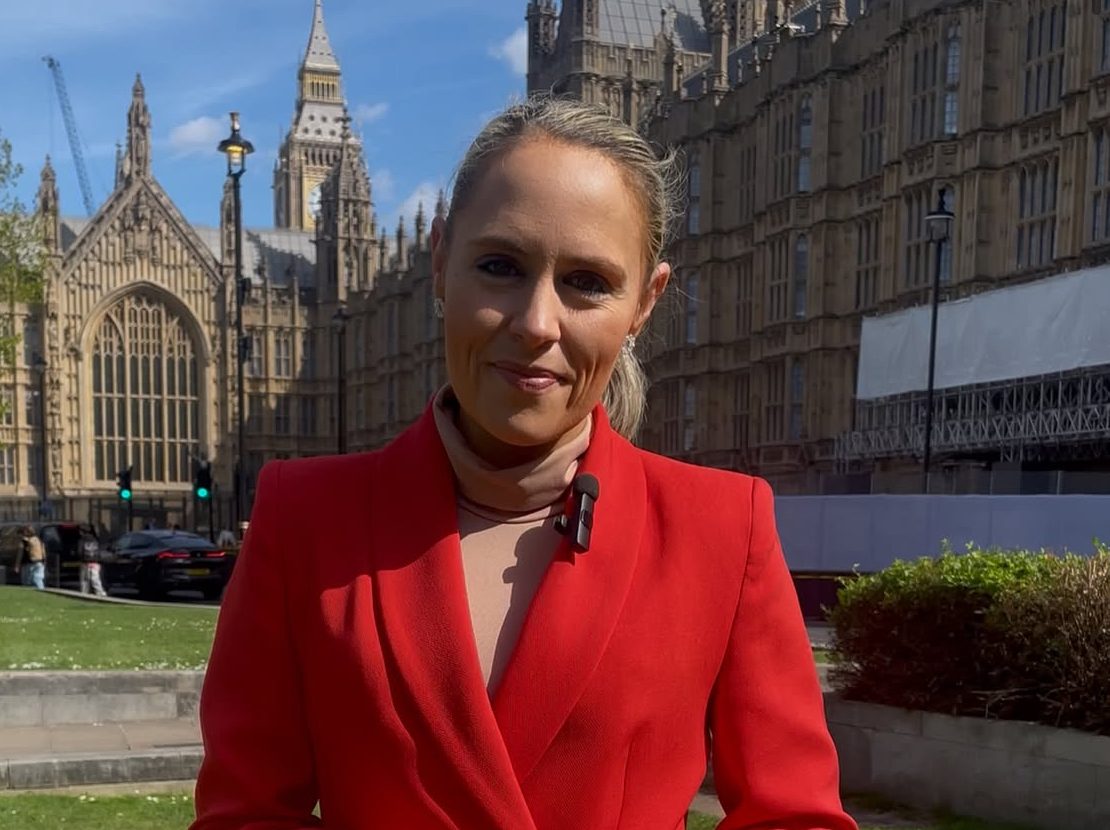
The following is an opinion piece by Kirstie Logan-Townshend, founder of Kirstie Logan Communications and a Swansea-based strategic communications consultant. She previously worked on AI at the Department for Science, Innovation and Technology and holds a Masters degree in Terrorism, Organised Crime and Global Security. The views expressed are her own and do not represent the editorial position of Swansea Bay News. Swansea Bay News publishes OpEds from politicians and public figures across the political spectrum.
I am on the GWR from Swansea to Paddington, the Welsh countryside rolling by, en route to an APPG meeting at Westminster on Rhetoric, Disorder, and Crisis of Democracy. That is a column of its own. I will come back to it.
The news this morning has overtaken the day. The government has announced a ban on social media platforms for under-16s. Modelled on Australia’s. Wider restrictions on the functionalities doing the most concrete damage to children online: livestreaming, stranger contact across gaming platforms, AI “romantic companion” chatbots that have no business being aimed at minors. Legislation in Parliament before Christmas. First regulations in force by Spring 2027. By the standards of the Online Safety Act’s wander through the last parliament, this is a sprint.
I back it. I welcome it. Today is a first step on a trajectory, and we can go further. Here is what should come next.
The ban focuses on platforms where children view content; the messaging services where they communicate are not in scope. The Com networks the National Crime Agency flagged, the ones I wrote about for Swansea Bay News last month, organise primarily on Discord and Telegram. Today’s announcement names them neither as social media nor as messaging, and they therefore sit, for now, in a regulatory grey zone. They will, in time, need to be named and addressed for what the NCA already calls them: a national security threat. The Ofcom enforcement review commissioned today must come back with a clear answer on powers, not only on resource. The encryption conversation must be reopened on terms that do not let Silicon Valley write the agenda.
None of those will be easy. When tech companies are investing, or not investing, billions in your market, regulating them costs political capital, and this government has shown it is willing to spend it. I want to see it keep spending.
What does this mean for the children I wrote about for Swansea Bay News last month? For the boy at the top of Townhill, his Snapchat, his TikTok, his Instagram, his YouTube, the public-facing apps where children view content and which my column tied to the radicalisation pathways the National Crime Agency has been warning about, are all to be blocked to under-16s. The livestreaming so prominent in the most coercive online spaces will be restricted. The stranger contact built into the gaming voice chats and Discord servers his caregivers had assumed were just games will, for under-16s, be ring-fenced. The AI “romantic companion” chatbots that have crept quietly into the lives of teenage boys this past year are locked behind an age-18 floor. None of that is small.
For the girl in West Cross, the change is real in different ways. The TikTok scroll that fills her evenings is gone. The predator whose first move depends on the stranger-contact functions the ban now restricts will find that move harder to make. The algorithmic feeds implicated in preventable teenage tragedies will no longer operate on under-16s at all.
Swansea has engaged with this. Torsten Bell MP’s public meeting during the consultation period drew a room from every quarter of the political conversation. As Torsten said on the night, “we’re not all going to agree, and we shouldn’t either.” But one thing we in the room agreed on, instinctively, was that the safety of children comes first.
Since the news landed, my WhatsApp has been lighting up. Some technology-sector contacts have been weighing in unprompted; others I have been asking. Most sent a clapping emoji and a few words either way. One, who has worked in government, sent “dying government’s response,” which pained me. A dying government does not legislate for regulations that land after the next election. That is a bet on a future you expect to be holding.
Another said “this is a start. We go.” A cyber security expert wrote back at length, with a thought I have been turning over since:
A good move. Social media has significant impacts on mental health and personal resilience. These changes will deliver real benefits, and they will help with extremism: less exposure to extremist views online, less risk of getting caught in a self-perpetuating algorithm of them.
That last phrase, self-perpetuating algorithm, is one I want to come back to before Paddington.
The follow-through is visible in the choices already made. A choice to legislate via the Children’s Wellbeing and Schools Act rather than wait for primary slots that may never arrive. A binding timetable written into the process: a progress report due within three months of Royal Assent, regulations laid within a year of that. And a consultation, Growing Up in the Online World, that closed in May with ninety per cent of parents behind the change. None of that is the work of a government simply chasing a headline.
Which brings me back, as the train approaches Paddington, to the session ahead of me, titled, perhaps not coincidentally, Rhetoric, Disorder, and Crisis of Democracy. This is the week for it. As I travel, the National Security (State Threats) Bill is moving through the Commons: counter-terrorism-style powers to confront the foreign states and their proxies who do this country harm, a Bill I welcome without reservation. It is a different national security from the one I have spent this column on, and a welcome one. The foreign-power threat and the threat to a child in West Cross are not the same danger, but they are answered by the same instinct, that the state has a duty to act, and that the bodies built to handle these things should be given the tools to handle them.
The self-perpetuating algorithm my cyber security friend identified is not only the mechanism by which children are radicalised into Com networks or fed extremist content. It is the same mechanism that hollows out democratic discourse, delivers disinformation, and turns reasonable disagreement into the kind of online aggression we have all become too used to. The boy at the top of Townhill and the girl in West Cross are not a separate conversation from the one I am going to spend the afternoon having in Westminster. They are the same conversation at different ages.
Online harm carries consequences for democracy. In acting decisively to protect children from these feeds, this government has, whether it has fully articulated this yet or not, taken a step to protect democracy itself. After a decade in which the previous government pretended the problem belonged to parents, this one has decided the problem belongs where it has always belonged, with the bodies built to handle it. That is the line in the sand. The work now is on the lines that follow.
If you have been affected by any of the issues in this article, the Samaritans can be contacted free at any time on 116 123.
Kirstie Logan-Townshend is the founder of Kirstie Logan Communications, a Swansea-based strategic communications consultancy. If you would like to submit an OpEd for consideration by Swansea Bay News, please email editor@swanseabaynews.com.

Discover more from Swansea Bay News
Subscribe to get the latest posts sent to your email.