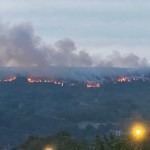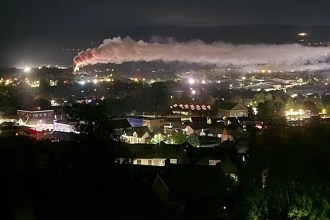

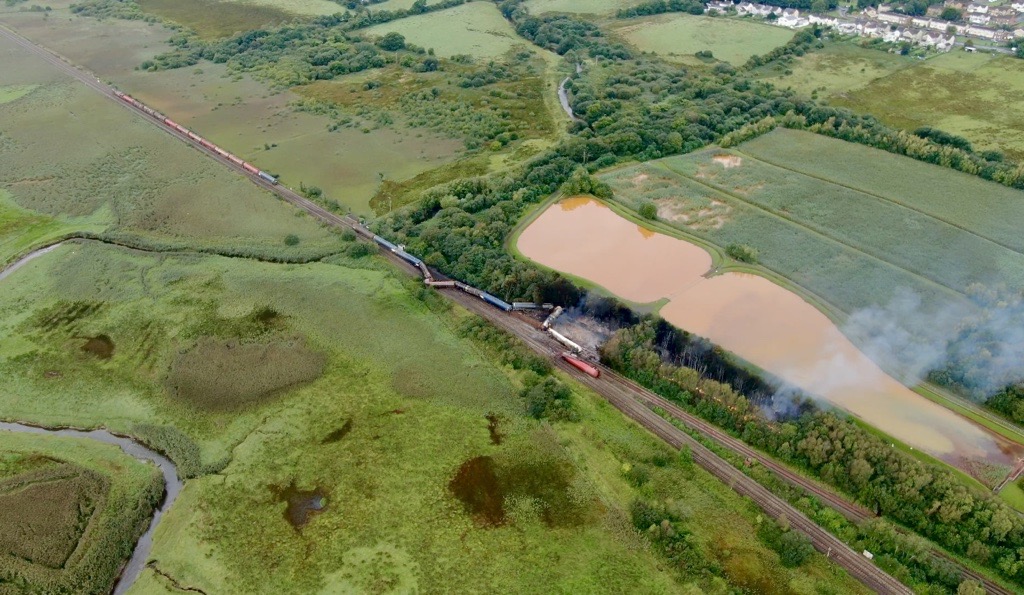
Network Rail is suing two companies for more than £5m over the Llangennech derailment, the crash that emptied nearly half a million litres of fuel into the Loughor estuary and burned for the best part of two days.
The claim, filed at the High Court earlier this month, names DB Cargo UK, which ran the train, and Touax Rail, which owned the wagon that came off the rails.
Court documents seen by the Press Association show Network Rail arguing that the wagon had not been maintained with reasonable care by Touax, and it is claiming damages for negligence.
Against DB Cargo, it argues the operator broke a contractual duty to make sure reasonable care was taken over that maintenance.
Its lawyers say the body expects to recover more than £5m.
Neither company has filed a defence yet and no hearing has been held. Network Rail and DB Cargo have both declined to comment, and Touax has not commented publicly.
The derailment happened at 11.04pm on 26 August 2020, six years ago on Wednesday, when a freight train carrying 25 fuel tankers from Milford Haven to Theale near Reading came off the track at Morlais Junction.
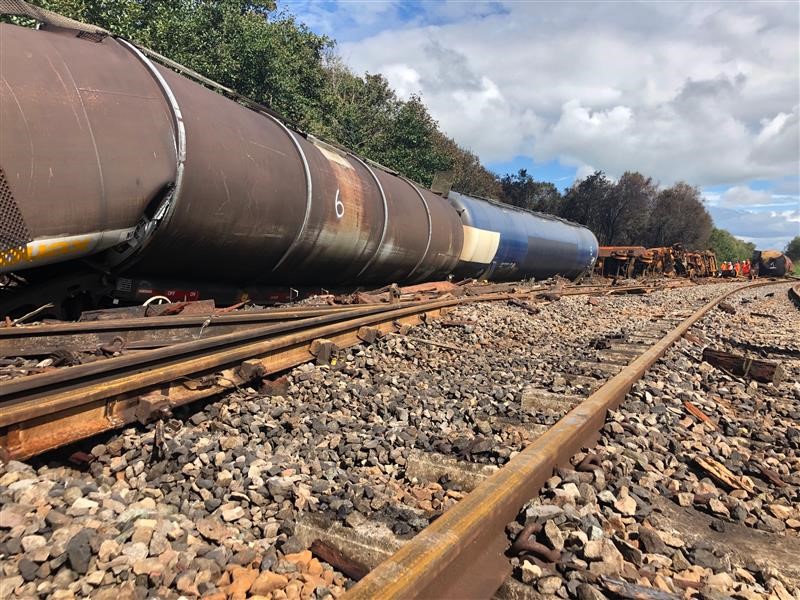
Ten wagons derailed. Some ruptured, the fuel caught, and around 300 people were taken out of their homes as the fire took hold. Firefighters were there for nearly two days.
The RAIB found that around 446,000 litres of fuel escaped, and that the crash began with a single set of wheels on the third wagon locking up, most likely because of a brake defect it traced to deficiencies in the design and maintenance of components.
The fuel went into wetlands, mudflats and cockle beds that are both a site of special scientific interest and a special area of conservation. Shellfisheries were shut for seven weeks on Food Standards Agency advice.
Getting it out took 30,000 tonnes of fuel-soaked soil away from beneath more than 150 metres of track, in what the recovery team called the most challenging operation since the Sea Empress.
The line stayed shut for more than six months and reopened in March 2021, with Network Rail’s then Wales route director saying afterwards that a total environmental disaster had been avoided.
Nobody has been held responsible in the six years since. The RAIB investigation made nine recommendations but does not assign blame or liability, and in February 2023 Natural Resources Wales dropped its criminal investigation, saying there was not enough evidence for a realistic prospect of conviction against any company or individual.
Its head of south west operations said at the time that it had not been possible to determine beyond reasonable doubt who was ultimately responsible.
That is the bar in a criminal case. A civil claim is decided on the balance of probabilities, a lower test, which is why a case that could not be prosecuted can still be argued in the High Court.
The claim is the first time either company has been formally accused of responsibility for what happened at Morlais Junction.
Related stories from Swansea Bay News
Report into Llangennech train crash critical of rail industry’s approach to maintenance of freight wagons
The RAIB’s findings on why the wagon derailed, and its nine recommendations.
Llangennech freight train derailment investigation ends with no further action to be taken
Natural Resources Wales explains why nobody was prosecuted.
‘Environmental disaster averted’ as railway reopens at site of diesel freight derailment
The line back in use after six months and 30,000 tonnes of soil.
Llangennech one year on: Agencies come together to thank local community
A plaque unveiled at the village station twelve months after the fire.

Discover more from Swansea Bay News
Subscribe to get the latest posts sent to your email.