


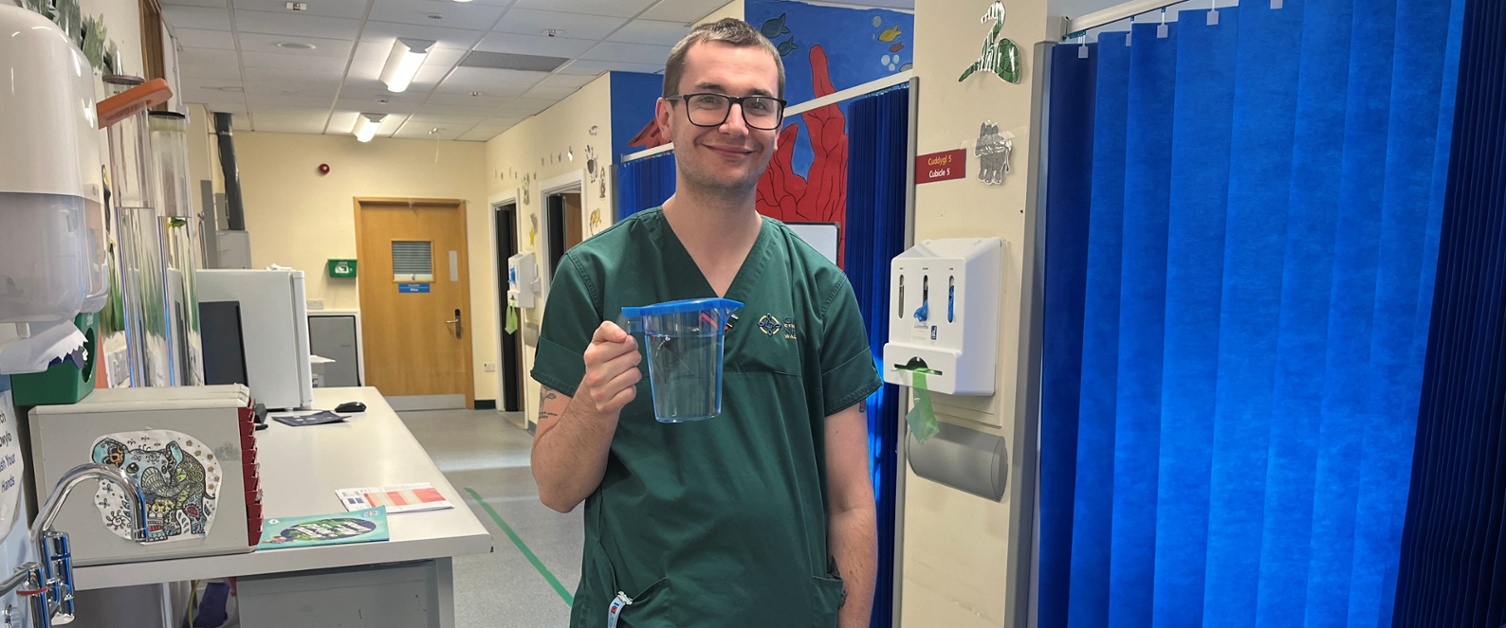
Patients in the emergency department at Morriston Hospital are now being offered water in jugs rather than single-use plastic bottles, in a change the health board says will save more than £13,500 a year.
Bottled water is now kept for special circumstances only, such as barrier nursing or cases involving high-consequence infectious diseases.
A new tap supplying chilled water has been installed so patients can be given fresh, cold water in the jugs provided.
Those who would still prefer a bottle can buy one from vending machines in the waiting area, where jugs with lids have also been placed so visitors can help themselves.
Health care support worker Ian Booth, one of the staff who led the change, said patients had noticed the difference.
“This has been a really positive change within ED, because it’s not only helping our patients but staff too,” he said.
“Patients have told us that they felt better looked after, and of course there’s major benefits to us in terms of cutting down our waste.”
He said the new tap meant patients had easy access to fresh, cold water, while staff benefited too.
The project was also driven by emergency department consultant Dr Sue West-Jones, one of three sustainable clinical leads within Swansea Bay and someone who has long combined her job with a passion for greener healthcare.
“This has been a really beneficial project as it means we are now supplying fresh water for our patients and staff, while at the same time looking after our environment and finances,” she said.
“In ED we are passionate about looking after our patients, planet and health board purse, and positive changes like this highlight the efforts that staff and the service are making.”
The health board thanked the British Red Cross and its hospital voluntary team for helping to make the change happen.
Part of a wider green drive
The switch is the latest in a string of money-saving environmental changes at the hospital.
The emergency department has form here: two years ago the same service was highlighted for its efforts to cut waste and work more sustainably alongside its day job of saving lives.
The biggest savings have come from energy. Last year the health board reported that Morriston’s pioneering solar farm had saved more than £4m in energy costs, as ministers launched a plan to cut the carbon footprint of the Welsh NHS.
Elsewhere across the health board, staff have found inventive ways to squeeze value from waste. In May, it emerged that thousands of old X-ray films from the cancer centre at Singleton Hospital were being destroyed — with the silver inside them extracted and sent to the Royal Mint, with the potential to end up in Welsh jewellery.
Taken together, the schemes point to a hospital increasingly mindful of both its environmental footprint and its budget — with even a change as simple as a jug of water adding to the savings.

Discover more from Swansea Bay News
Subscribe to get the latest posts sent to your email.




What about cross contamination with patients having to share a jug what do they drink out of baskets cups glasses or disposable cups.
Not being awkward just No mention made of how patients would drink the water.
Can a patient refill their own bottle with water as i carry mine everywhere