

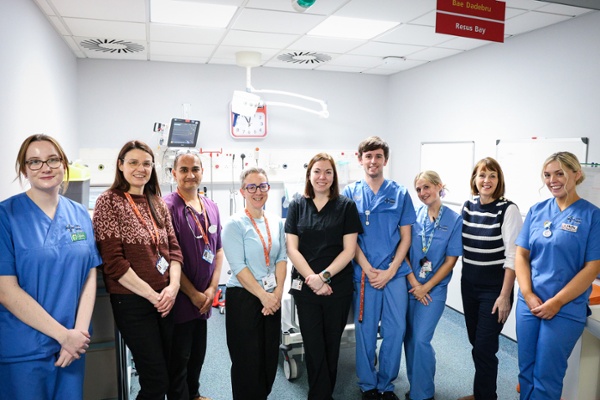
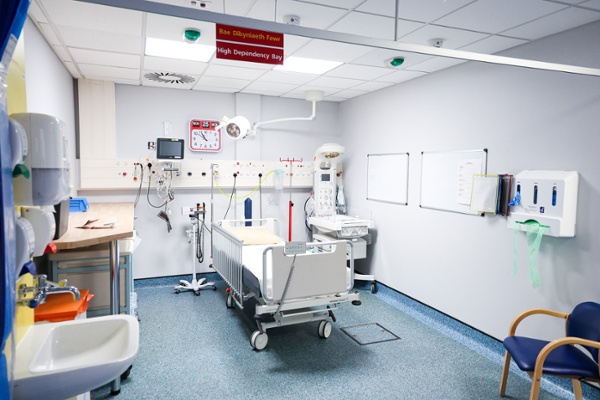
Work has been ongoing to reconfigure the space neighbouring the unit to provide a new main entrance, a more appropriate and friendly waiting area, an upgraded children’s and adolescent mental health support room, and crucially, two new treatment bays. One of which being a resuscitation bay and the second, a high dependency bay.
The work, which has taken around 14 weeks to complete, means that very unwell children, from almost new-born up to 17 years old, will now not need to share facilities with adult patients in the main Emergency Department.
In addition to the new bays and mental health support room, the health board’s medical electronics team has provided nine new monitors which will replace existing equipment.
The redesign of existing space has also not led to the loss of any of the unit’s non-specialist treatment bays, with eight now available. New sofas for the mental health room are also on the way.
A company called Freeway Medical has also donated some new storage equipment free of charge.
“This will make such a difference and to be honest is overdue,” said consultant emergency paediatrician, Dr Clare Dieppe.
“The project was really accelerated because of concerns over patient safety, so it’s important to be clear that this is more than a need to enhance the environment, patient safety is our biggest concern.
“Until now, children were being taken to one of the main resuscitation bays.
“This really isn’t great from any perspective. It’s really traumatising for older people to be in the same spaces as children who are very sick and it’s not ideal for the children or their families to be placed in an environment shared with adults. So our new reconfiguration is much better for kids and adults alike.
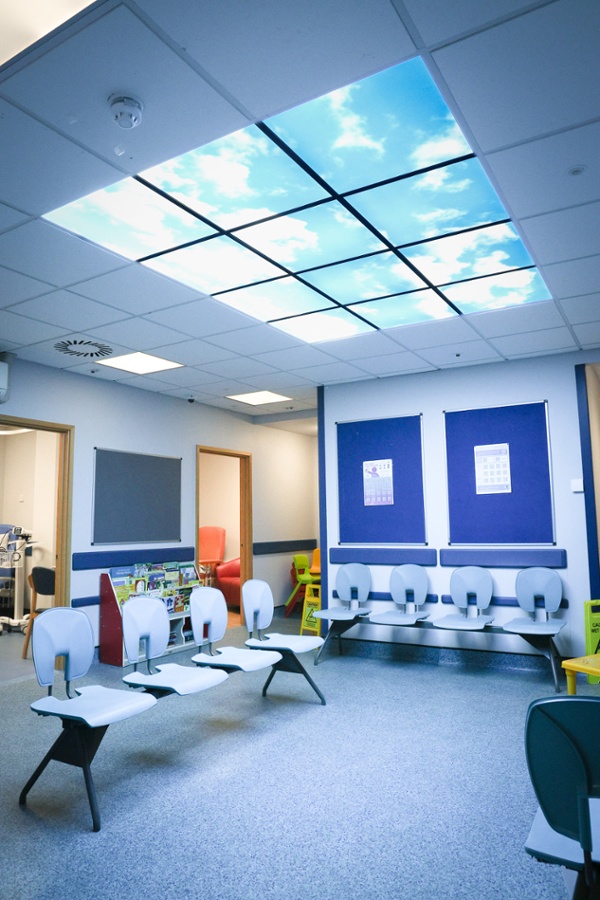
“Equally, having an upgraded waiting area just for children is really important. It can be frightening for children to be sharing the same space as adults.
“From a safeguarding perspective, it’s less than ideal. We are also now better able to see how children who come into the new waiting area are doing and how they are interacting.
“The redesigned space means we can keep a closer eye on what is happening, whereas before it wasn’t so easy to do so.
“So, the work means we now have a new, dedicated paediatric space with a corridor and a set of double doors separating us from the adult area. It is still very close to the ambulance bays and is going to make a really significant difference to the experience patients and their families have at Morriston.
“It also makes life a bit less complicated for us as staff. We now have a resus bay and a high dependency bay with everything set up for children.
“Much of the equipment is the same as in the adult bays but there are some things which may not have always been immediately to hand when the bays were shared with adult areas.”
The work means an area of the hospital which had been reallocated has now returned to paediatrics.
“The space was up until recently being used by our Older Persons Assessment Service (OPAS), but they have a new home,” added Dr Dieppe.
“The revamp means we now have the fit-for-purpose facilities we need in one dedicated place and that’s really great news for everyone.”
[Lead image: Swansea Bay University Health Board]

Discover more from Swansea Bay News
Subscribe to get the latest posts sent to your email.