Great Western Railway (GWR), which runs services between London Paddington and south and south-west England and south Wales, will be nationalised on 13 December, the Department for Transport has announced.
It will become the eleventh operator to be brought into public ownership under the Government’s programme to reform the rail network, with the transfer forming part of the wider move towards a unified Great British Railways structure.
Three operators will remain in private hands after the change — Avanti West Coast, CrossCountry and East Midlands Railway, though CrossCountry is expected to follow into public ownership on 17 October next year.
A Department for Transport spokesperson said the move was “another significant moment” for the Government’s public ownership programme, adding that it brought “a simpler, more reliable network under Great British Railways a step closer.”
“The Government is delivering on its commitment to bring services back into public ownership and put passengers, not shareholders, at the heart of our railways,” the spokesperson added.

The process does not involve the Government buying GWR outright. Instead, FirstGroup’s management contract is being allowed to expire, with the operation folding into a separate Government-owned entity known as DfT Operator — the same vehicle already used for LNER, Northern, Southeastern, TransPennine Express, South Western Railway and others.
GWR will be the twelfth company to join it once Govia Thameslink Railway transfers at the end of this month and Chiltern Railways follows in September. Great British Railways, which will ultimately replace the separate operator brands, is headquartered in Derby and expected to launch in 2027.
GWR said its priority throughout the transition would be “maintaining a punctual, reliable service for customers while continuing to support regional growth and connectivity across our network.” Transport Secretary Heidi Alexander has previously warned that renationalisation will not necessarily result in lower fares, with the focus instead on improving services and infrastructure.
The GWR nationalisation is the latest step in the creation of Great British Railways — though the Union Flag branding unveiled for the new national operator last December will not appear on local trains serving south-west Wales until later in the decade.
The announcement carries a particular twist for FirstGroup, which currently operates GWR and is set to lose the franchise to the state in December — while simultaneously building a new commercial foothold on the same Paddington corridor through its open access brand, Lumo.
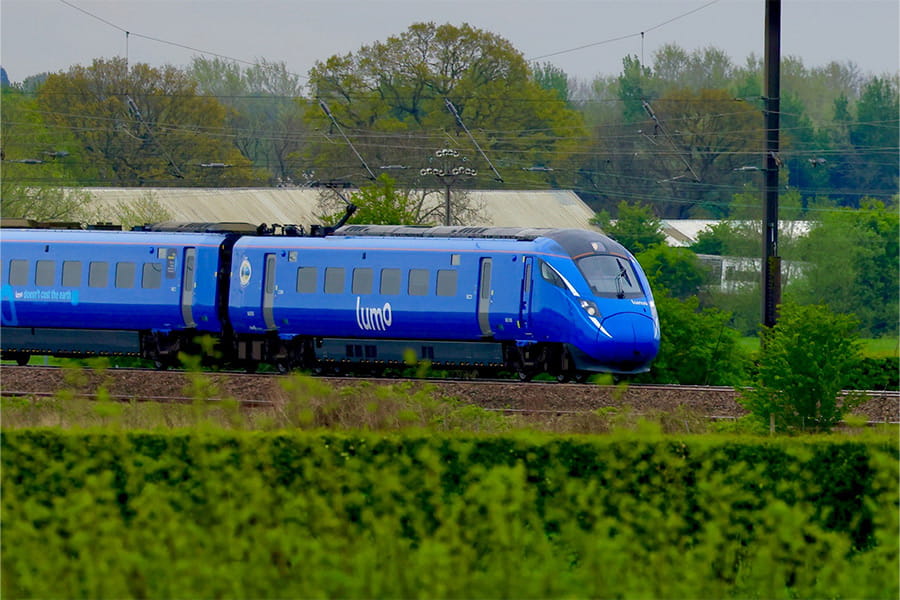
Lumo has confirmed a December 2027 launch for a new direct Carmarthen to London Paddington service, calling at Llanelli, Gowerton, Cardiff, Newport, Severn Tunnel Junction and Bristol Parkway, running five return journeys a day using five new Hitachi trains on order.
Because Lumo operates as an open access operator rather than a franchised one, it falls outside the nationalisation programme — meaning FirstGroup stands to lose GWR to the state while retaining a commercial presence on the very same route through a different vehicle, effectively competing with a publicly-owned operator it previously ran itself.
The route has a long history. The original proposals were submitted by Grand Union Trains, which secured regulatory approval in 2022 following a battle with GWR, which had opposed the application. Grand Union subsequently sold its rights to the route to FirstGroup in 2024.
GWR cautioned that new services should not be detrimental to existing services or to future services already agreed, and said it would continue working with industry partners to develop services in the best interests of passengers and taxpayers. Carmarthenshire County Council had thrown its support behind the original Grand Union proposals, arguing a direct London connection would bring significant economic benefits to west Wales.
The Lumo service will give passengers at Carmarthen, Llanelli and Gowerton a genuine alternative to GWR on the London route for the first time — though it will not serve Milford Haven or Pembroke Dock directly.
Rail campaigners have also been pressing for funding clarity from the Welsh Government over a direct Milford Haven to London service, a commitment made by Welsh Labour ahead of this week’s Senedd election alongside a pledge of £50 million for Pembrokeshire rail upgrades. Transport for Wales is separately pursuing direct services between west Wales and Bristol Temple Meads, potentially serving Milford Haven, Swansea, Neath, Carmarthen and Bridgend from September 2026.
The broader question of what public ownership means for the region’s longer-term rail ambitions — including the £14 billion metro vision for Swansea and west Wales — remains to be seen as Great British Railways takes shape.

Discover more from Swansea Bay News
Subscribe to get the latest posts sent to your email.