

A floodlight long said to be the tallest of its kind at any sports ground in Europe is being taken down in Swansea today.
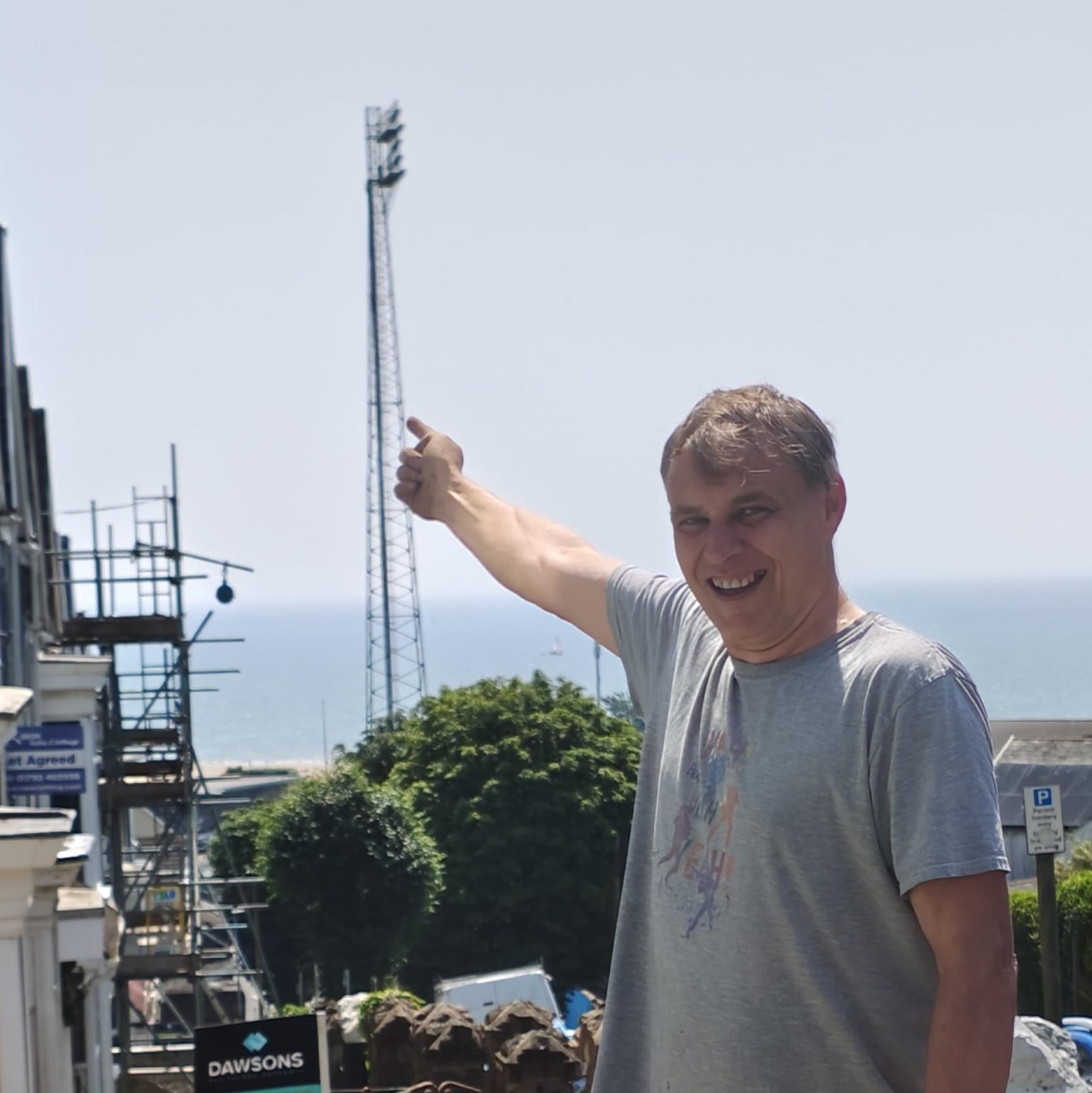
The 150ft column has stood over St Helen’s, beside the Cricketers crossroads in Brynmill, since 1964.
Its removal marks the final and most dramatic stage of the work to clear the ground’s old floodlights, after the other towers came down last week in footage captured by drone.
For more than six decades, the floodlight has been a fixture of the Swansea skyline — visible for miles, and from the seafront below.
Uplands Party councillor Peter May, who has lived in nearby Finsbury Terrace for 30 years, said he had mixed feelings about seeing it go.
“It will be missing from the view from my front garden, but is part of the new era for our beloved St Helen’s to continue as a sporting venue,” he said.
The floodlight’s loss closes another chapter for one of Welsh sport’s most storied grounds.
St Helen’s hosted the first home match in the history of the Wales rugby team, against England, back in 1882.
It was where New Zealand suffered their first defeat to Wales in 1924, and where Swansea beat the touring All Blacks in 1935 to become the first club side to do so.
The ground also has a place in cricket history. It was here, in 1968, that Sir Garfield Sobers struck the first six sixes in a single over in first-class cricket.
And in a quirk of local lore, a teenage Dylan Thomas won a mile race on the ground at his school sports day in 1928 — carrying the newspaper photograph of his victory for the rest of his life.
The floodlights themselves went up in 1964, part of efforts to keep evening fixtures and big matches at the venue.
Cllr May said the previous record-holders had been the 260ft pylons at Leeds United’s Elland Road ground, until they were taken down in 1993.

Now the ground is being cleared for a new era. The turf has already been lifted and handed to grassroots clubs across the region, and with the floodlights gone the site is ready for a new playing surface.
The redevelopment plans, unveiled in May, centre on a new South Stand, a redeveloped West Stand and terrace, a fan zone and expanded hospitality.
The work is being carried out in phases, so the Ospreys can still play at St Helen’s throughout the coming season as construction goes on around them.
It marks a remarkable turnaround for a club that only months ago was fighting for survival, before Swansea Council committed £5.1m to secure the ground as a community stadium and the region’s home.
The Ospreys will leave the Swansea.com Stadium and return to St Helen’s after two decades away, playing their first season at the redeveloped ground in 2026/27.
Councillor Stuart Rice said work would continue to involve the local community in the plans.
“We are looking forward to continue engaging with Uplands and city-wide residents on the community aspect of the plans,” he said.
For now, though, eyes are on the Brynmill skyline — where a 150ft landmark that has watched over Swansea sport for two generations is finally coming down.

Discover more from Swansea Bay News
Subscribe to get the latest posts sent to your email.