The floodlights that have stood over St Helen’s for decades are being taken down — and the Ospreys have captured the moment from the air.
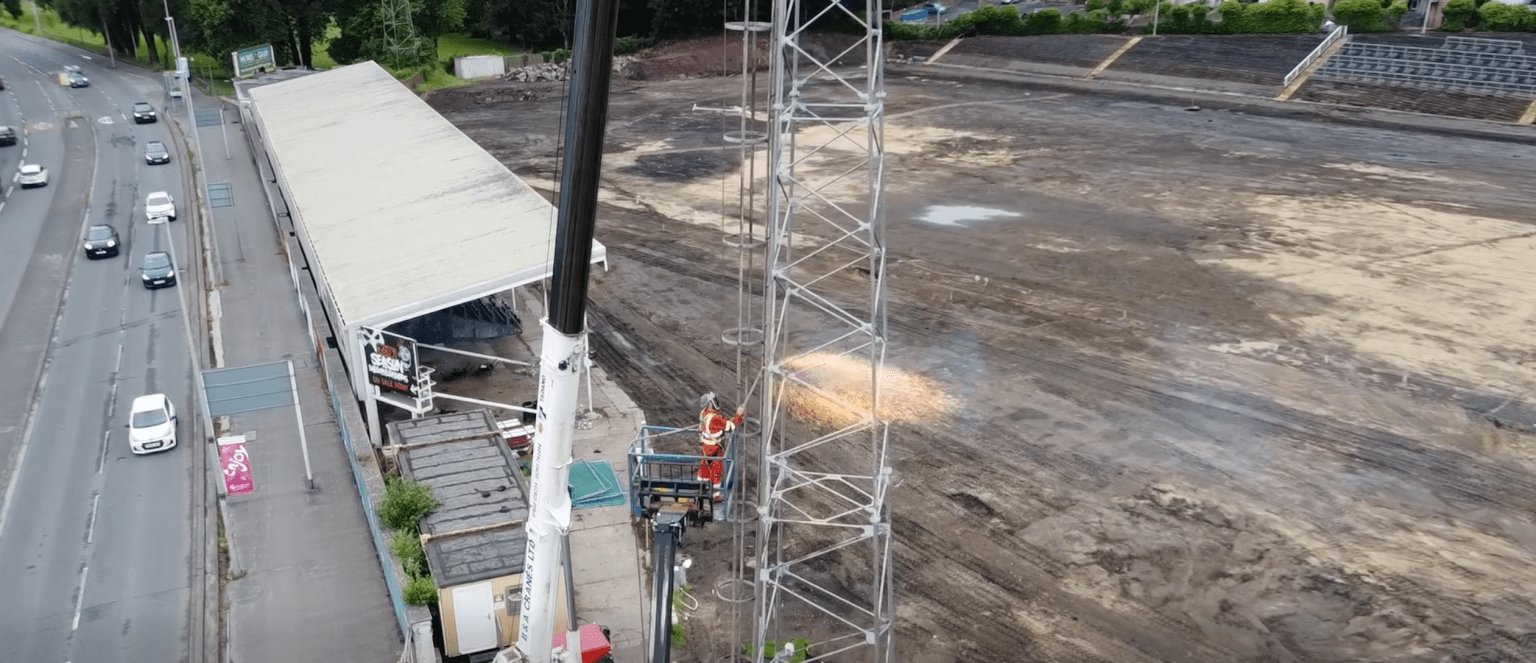
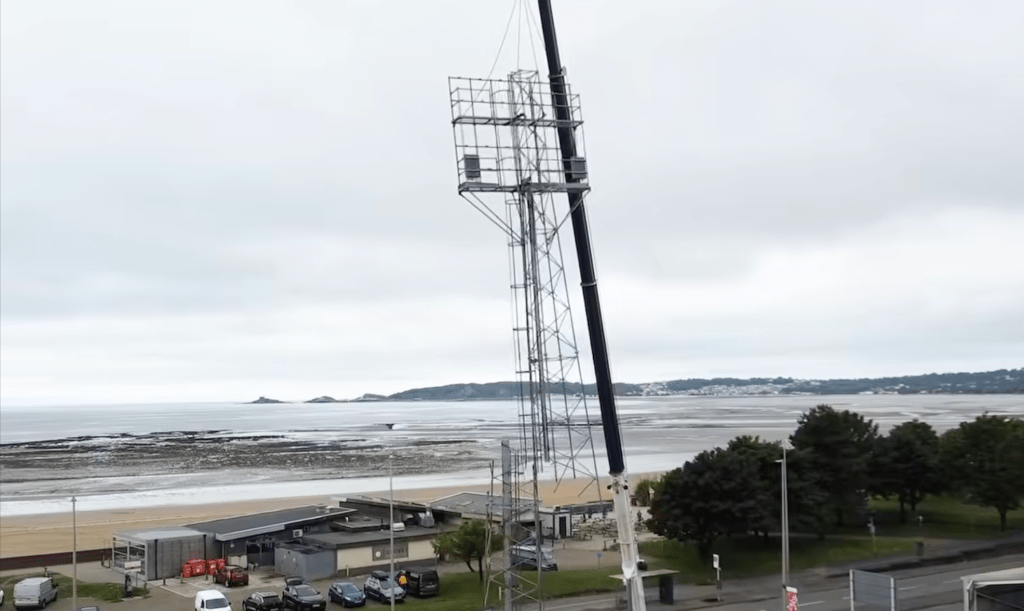
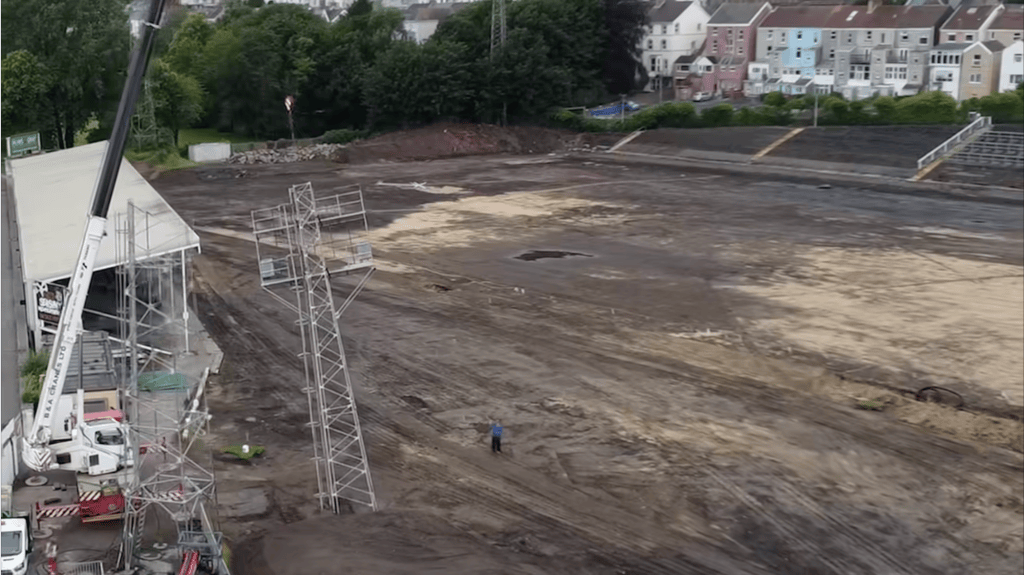
The region has released striking drone footage showing a crane lifting away the floodlight pylons at the historic Swansea ground, with the pitch below stripped completely bare of turf.
In the video, workers can be seen high up the floodlight structures, using blowtorches to cut them apart as they are dismantled section by section.

The club said the lights were coming down this week as it prepares to lay the new pitch.
“The St Helen’s floodlights are coming down this week as we prepare the new pitch,” the Ospreys said, posting the message in both English and Welsh.
It is the latest visible stage in the transformation of St Helen’s into the Ospreys‘ new home — and follows the lifting of the ground’s famous turf earlier this month.

That historic soil was handed to grassroots rugby and sports clubs across the region, giving a piece of the old ground new life before the rebuild.
With the turf gone and now the floodlights, the site is being cleared for the new playing surface to be laid.
The redevelopment plans, unveiled in May, centre on a new South Stand and a redeveloped West Stand and terrace, along with a dedicated fan zone and expanded hospitality.
The work is being carried out in phases, so the club can still play at St Helen’s throughout the 2026/27 season while construction goes on around them.
It marks a remarkable turnaround for a club that, only months ago, was fighting for its very survival.
Swansea Council went to the High Court earlier this year to seek an injunction against a WRU restructuring it said would end the Ospreys, before the union performed a U-turn and the club’s future was secured.
The council has since committed its full £5.1m to redevelop St Helen’s as a community stadium and the Ospreys’ home.
St Helen’s is one of the most historic sports grounds in Wales, having hosted rugby and cricket at the highest level for well over a century — the stage for Gareth Edwards, Barry John and the great Wales sides of the 1970s.
The Ospreys will play their first season at the redeveloped ground in 2026/27.

Discover more from Swansea Bay News
Subscribe to get the latest posts sent to your email.