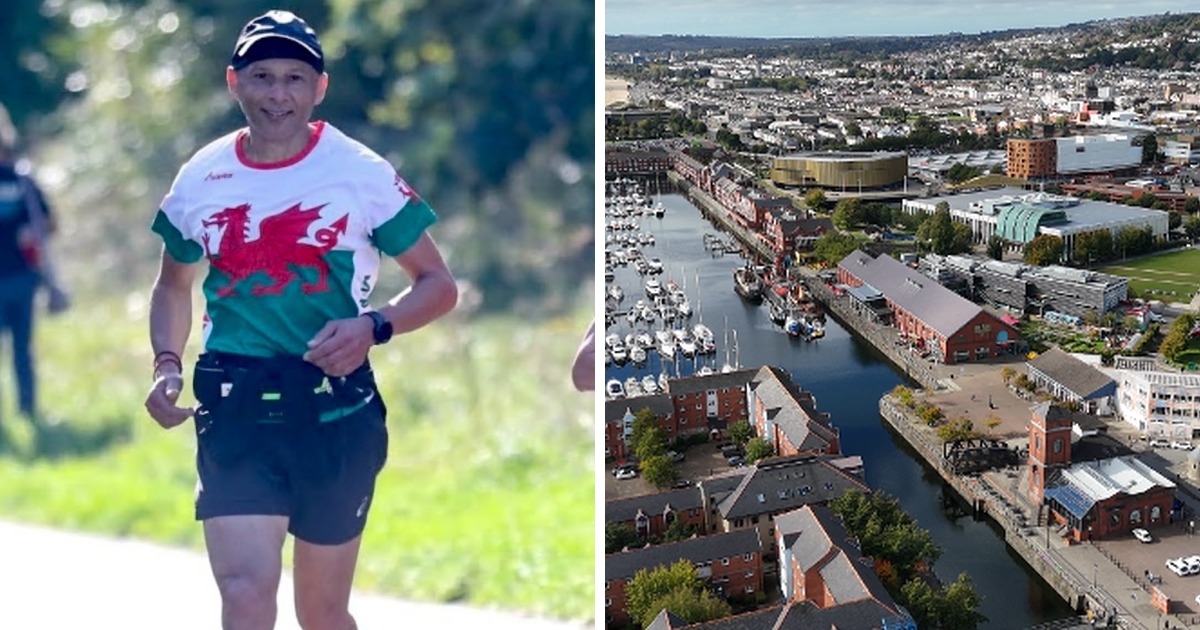
He arrived in Swansea as a teenager to “strong accents, bitter cold, and very unfamiliar toilets”. More than forty years later, he calls Wales home.
The story of Tahir, who left Baghdad for Swansea at 18, has been told as part of a new collection of migration stories gathered by the Welsh Refugee Council.
His account, titled “From the Tigris to Tawe”, features in the Shaping Nations: Migration Stories in Wales collection, shared through People’s Collection Wales.
From Baghdad to the Bay
Tahir was born in 1961, he says, “just a stone’s throw from the River Tigris in Baghdad”, the fifth of seven children in a comfortable, middle-class family.
His father, a glass trader, died when Tahir was six — leaving his mother to fight to keep the family business going in a society where, he recalls, women did not work.
But the young Tahir dreamed of studying abroad. “Even as a child, my horizons stretched further than the Euphrates and Tigris,” he says. A cousin already studying in Swansea helped him win a place at the city’s Gregg High School, and at 18 he left Iraq.
Learning to belong
The early days were bewildering. Language was the hardest part, he recalls — he would rehearse a sentence over and over just to buy a bus ticket, only to freeze when the driver asked, “Single or return?”
While some students embraced the nightlife, Tahir says he chose discipline, budgeting and studying until he could speak English with confidence. “It was my first real victory,” he says.
Knocking on doors
After A-levels and a construction course in Southampton, he returned to Swansea in the early 1980s to find work scarce and rejection letters piling up.
When one construction firm told him they were not hiring, he offered to work for nothing. “For ten months, I worked unpaid during the day and earned tips in an Indian restaurant at night,” he says. The persistence paid off, and they eventually gave him a job.
Recession, a divorce and financial strain followed. A friend’s request to help out at a kebab shop opened a new path, and before long Tahir was running his own restaurants — eventually returning to Swansea, and to construction, to be closer to his daughters.
A city of sanctuary
Tahir’s story lands in a city that has made welcoming newcomers part of its identity. In 2010, Swansea became the first City of Sanctuary in Wales — and only the second in the UK — a status its councillors voted to reaffirm last year.
His own arrival in 1979, as an international student rather than someone fleeing war, predates that movement. But his closing reflections speak directly to it. He says he does not understand why a country in need of workers would stop those seeking refuge from contributing. “Let them stand on their own feet,” he says. “It’s not only moral, it’s practical.”
Planting roots
Wales, he says, “slowly became home. Not all at once, but gently and firmly.” He describes the emotion he feels every time he sings the national anthem.
There were harder moments too. Tahir says both he and his British-born children have faced racism over the years — abuse he says has grown more open with time. He chose, he says, to respond with “work, love, and quiet defiance”.
Now a grandfather, he has organised community events, volunteered at parkruns, and helped raise money for children’s cancer charities and the mental health charity MIND. “You plant roots by giving, not taking,” he says.
For Tahir, it comes down to three words — respect, integrity and humility. “I came to Wales as a guest,” he says. “I stayed as a citizen.”