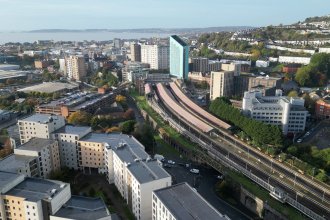
Swansea’s city centre, where it came from and what it could become, is the subject of a public meeting on the evening of Thursday 19 November.
Swansea West MP Torsten Bell has called it, from 7pm to 8.30pm, with three speakers. They are council leader Rob Stewart, Andrew Carter, the Swansea-born chief executive of the Centre for Cities think tank, and Andrew Dulley, the county archivist.
The running order, according to the MP’s office, is past, present and future: the archivist on how the centre got to where it is, the think tank on how it compares with other UK cities, the council leader on what is planned, and time for residents’ own memories and experiences.
Seats have to be reserved by emailing torsten.bell.mp@parliament.uk. The venue has not been named; the MP’s office says it is in the city centre and wheelchair-accessible, and that details will go to everyone who has booked.
The present: the Kingsway units the council says it cannot stop
Whoever turns up will not be short of material. In September, Stewart and ten other Labour councillors signed a motion saying planning rules had left “too many” units in “persistent vacancy, decline, or an unmanaged proliferation of single-type outlets”, and asking Welsh ministers for the power to refuse more vape shops, barbers and nail bars.
A week ago the former TSB at 29 Kingsway, empty since 2015 and carrying Gower College branding on its boards, was still waiting for a use, with the college saying only that a city centre move was “being explored”.
Residents who answered the council’s culture consultation this autumn said the city’s offer was short of investment, and the council’s own five-year plan agreed there was “huge, untapped potential” without attaching money to it.
The future: a £1bn programme, two schemes under way
The council describes its regeneration work as a £1bn programme across the centre. The most visible piece is Castle Square, where the council is looking for café operators for the two pavilions going up in the gardens, due to open in summer 2027, a year later than first promised.
North of the centre, the UK Government’s £20m Pride in Place money for North Gate is in the hands of a resident-led board that is hiring its first staff and looking at small grants for community groups.
Bell lists both among the reasons for optimism, alongside the Swansea Arena and the council’s Y Storfa hub on Oxford Street. He said: “There’s no doubt that Swansea city centre has faced real challenges over the years, from years of underinvestment to the pressures facing high streets everywhere, but our city has far more going for it than just a rich history.”
He says the state of the centre is one of the issues constituents raise with him most often, which is why he picked it.
Carter, Dulley and the Turning the Tides precedent
Carter runs the Centre for Cities, which describes itself as focused on action to improve the economies of the UK’s largest cities and towns, and his appearance puts a national yardstick in front of a local audience.
Dulley, of the West Glamorgan Archive Service, is there for the “past” part of the evening, and the MP’s office says residents will be invited to add their own memories of the centre to his.
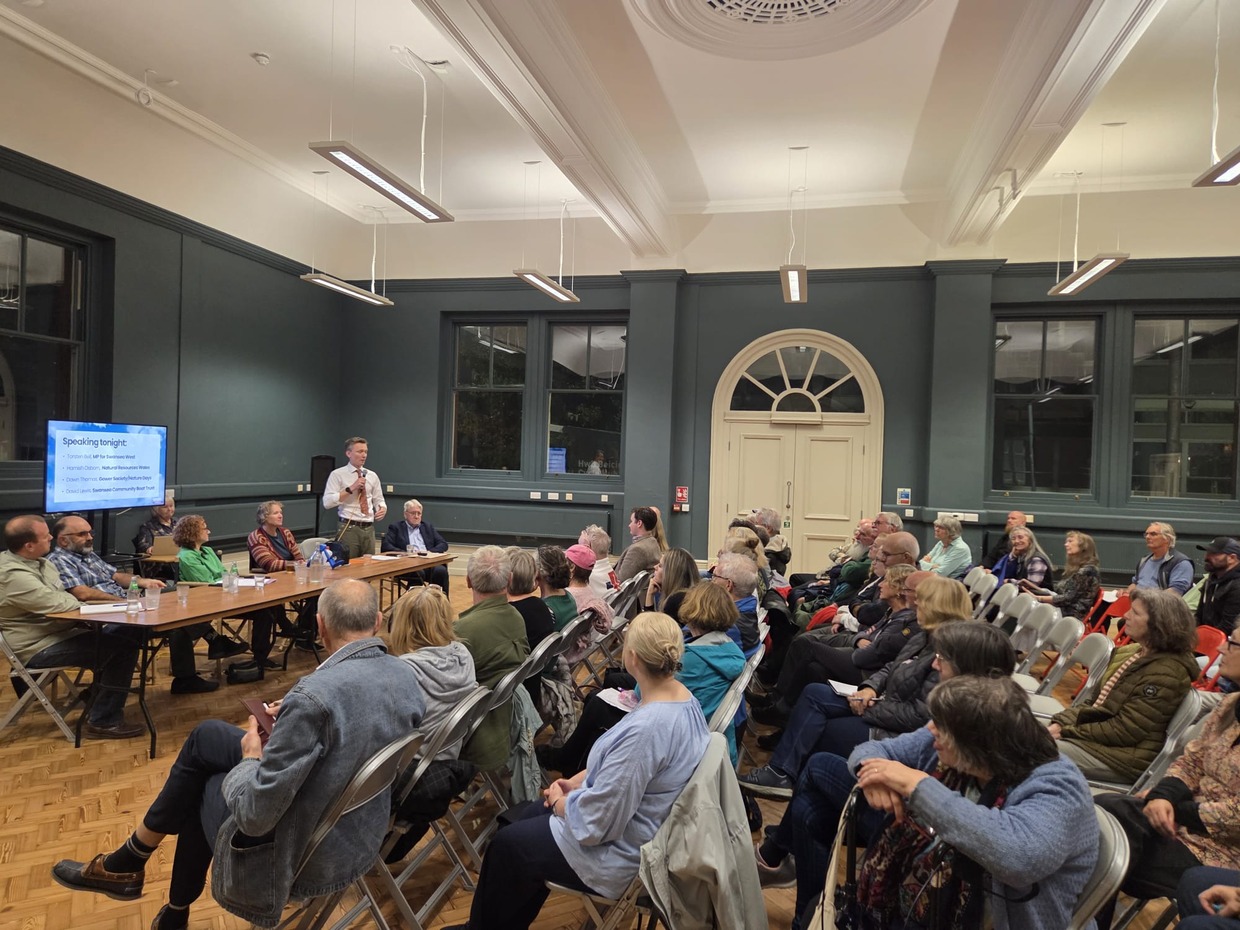
It is Bell’s second public meeting of the autumn, after Turning the Tides in October, when more than 60 people came to talk about the city’s rivers and beaches and what they said was taken to Welsh Water.

Discover more from Swansea Bay News
Subscribe to get the latest posts sent to your email.