

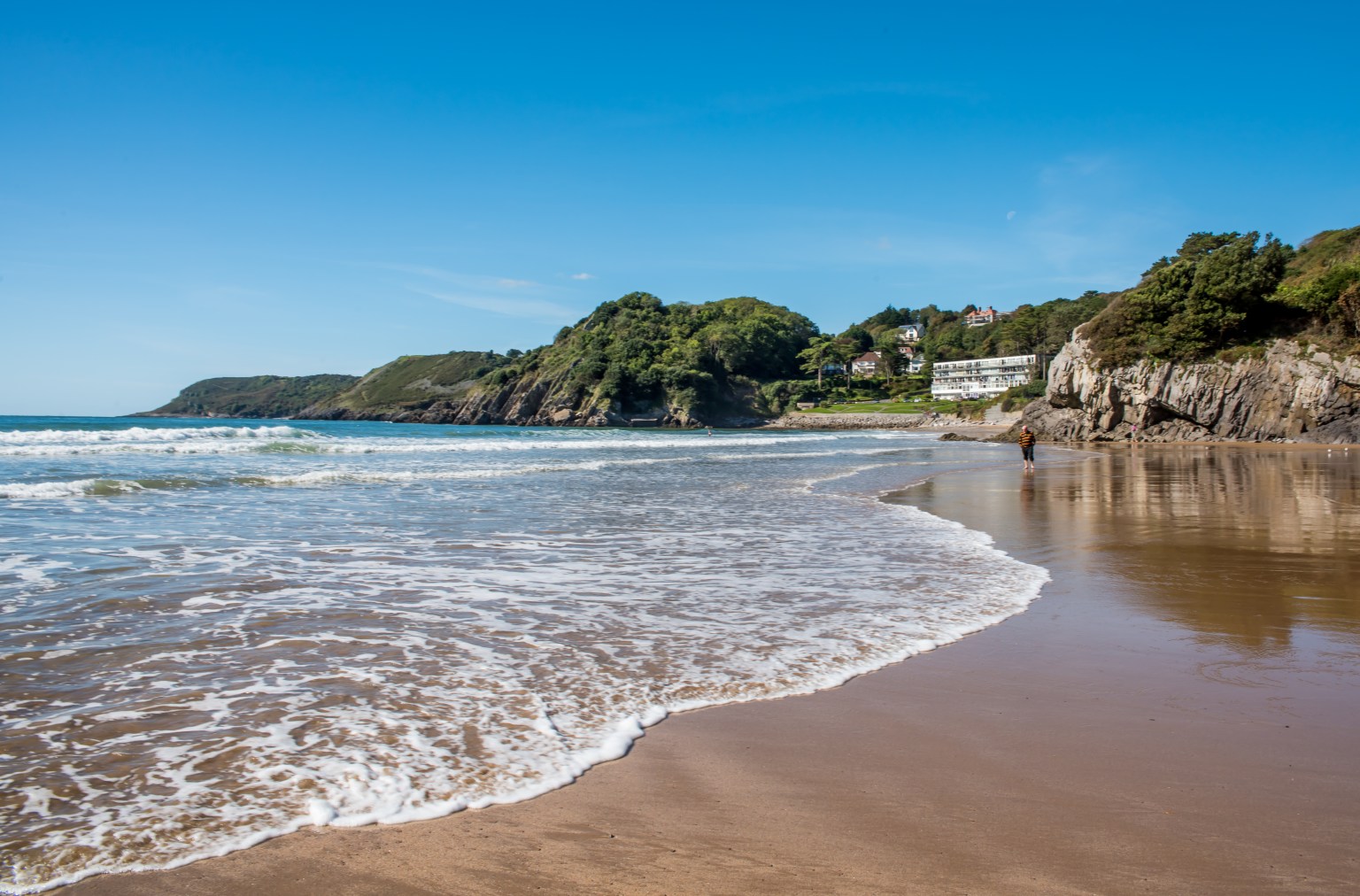
If you’re heading for Langland, Caswell or Port Eynon this summer, you’re swimming at one of only 20 Blue Flag sites in the whole of Wales.
Three of the 20 sit within a few miles of each other on Gower, and a fourth flag flies over Swansea Marina. Bracelet Bay, round the headland at Mumbles, holds a Green Coast Award for its scenery and water quality.
The flags were confirmed by Keep Wales Tidy in May and fly through the bathing season.
What the flag on the pole actually means
The Blue Flag is not a tourism sticker. Sites are assessed by UK and international juries every year and must show excellent water quality, clean and litter-free surroundings, safety cover and facilities, and environmental education.
Water quality is the core of it. A Blue Flag means the bathing water is independently tested and rated at the highest standard.
The fuller picture on Gower’s water is worth knowing too. A second winter of volunteer testing rated 90% of samples good or excellent, but found sewage at several beaches after heavy rain, with the results passed to Welsh Water and the regulators.
Lifeguards on the sand
The council works with the RNLI to put lifeguard cover on the Blue Flag beaches throughout the bathing season.
Tom John, the RNLI’s lifeguard supervisor, said the flag mattered to his crews as much as to swimmers. “It reflects not only safe bathing conditions, but also the commitment of Swansea Council to maintaining these high standards year after year.”
He said the arrangement let each side do its job. “That partnership is essential. When the council protects the coastline, we can focus on protecting the people who enjoy it.”
‘Absolutely vital to our business’

(Image: Swansea Council)
For the traders around the bays, the flag is commercial infrastructure.
Camelia Fragiacomo, director at Langland’s Brasserie, overlooking the bay from the seafront, said the status underpinned the trade. “It reassures visitors that they’re coming to a beach that’s clean, safe and cared for, and that confidence directly supports the local economy.”
She said the effect ran wider than one bay. “Swansea Council’s ongoing work to maintain those high standards doesn’t just protect the bay; it sustains the livelihoods of the businesses that depend on it.”
The council’s own visitor surveys back the point, consistently finding the coast and beaches are the main reason people visit. On the council’s figures, Swansea drew more than 4.6 million visitors last year, worth £696m to the local economy.
The work nobody sees
Keeping the flags takes a year-round effort across half a dozen council departments, from cleansing crews to the countryside team, alongside the RNLI.
Cllr Andrew Williams, Swansea Council‘s cabinet member for development, said the awards were hard-earned. “What people don’t always see is the huge amount of work that goes on throughout the year to make that possible.”
“These awards aren’t easily achieved. They require consistent hard work, investment and commitment, and they show the quality of Swansea’s coastline for residents, visitors and businesses alike.”
Discover more from Swansea Bay News
Subscribe to get the latest posts sent to your email.