

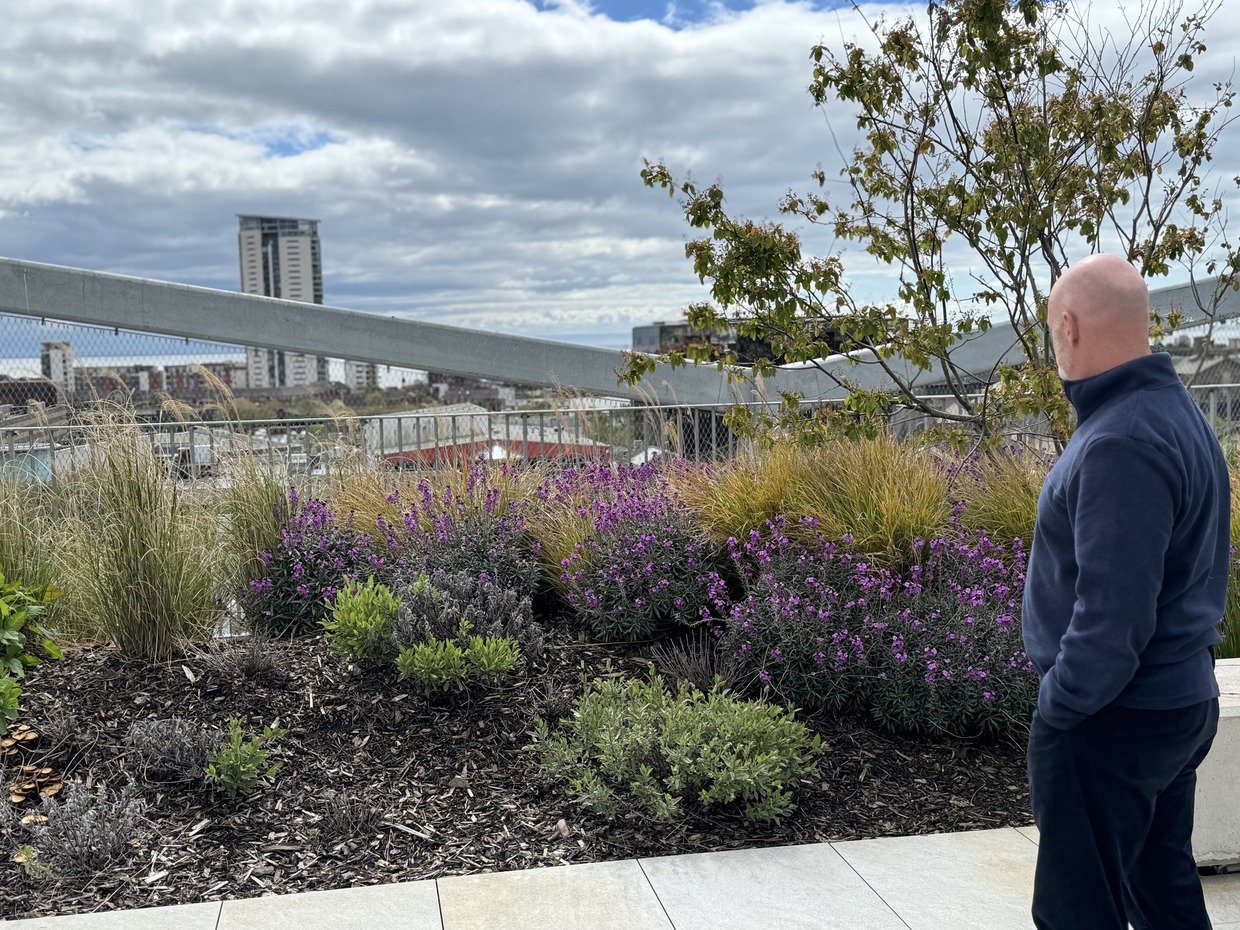
High above the Kingsway, grasses, purple flowers and young trees now grow on the roof of the 71/72 Kingsway offices.
It is one of 16 green roofs and living walls across Swansea city centre, according to a new report.
That count, from the Swansea Public Services Board, is up from just over 10 when the city marked World Green Roof Day last June.
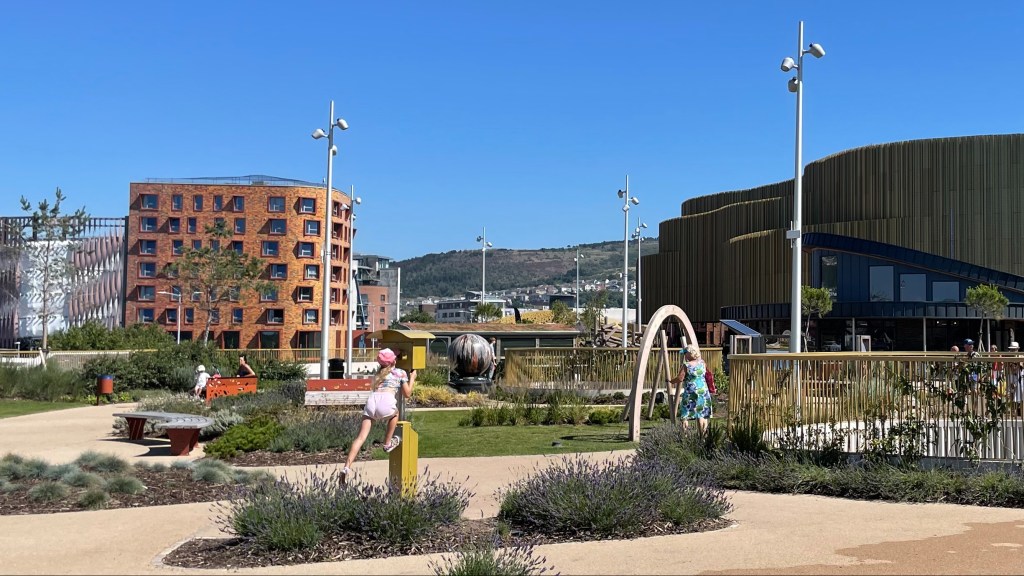
Some are easier to spot from the ground. The green roof at Amy Dillwyn Park, by the Arena, is billed as Wales’ largest.
On Oxford Street, a living wall now greets visitors at Y Storfa, the old BHS store turned library and public services hub.

Swansea Council says the planting soaks up rain that would otherwise flood the streets. It says the roofs also keep buildings cooler in summer and warmer in winter.
Bees and other pollinators get food and shelter along what the council calls “buzz highways” running across the city.
That web of planting won Swansea a place in the Biophilic Cities Network in May, alongside San Francisco, Singapore, Vancouver and Oslo.
The Oxford Street tower with its own four-storey greenhouse
The biggest addition is still rising a short walk from Y Storfa, above the old Woolworths site. The Biophilic Living Biome was designed with a four-storey urban greenhouse, rooftop gardens and wildflower borders.
When drone footage was released in December, the 13-storey tower was up but the planting had yet to go in.
Professor Geoff Proffitt of Swansea University, which backed the city’s bid alongside the council and Natural Resources Wales, said the Biome “demonstrates how biophilic design can work in practice”.
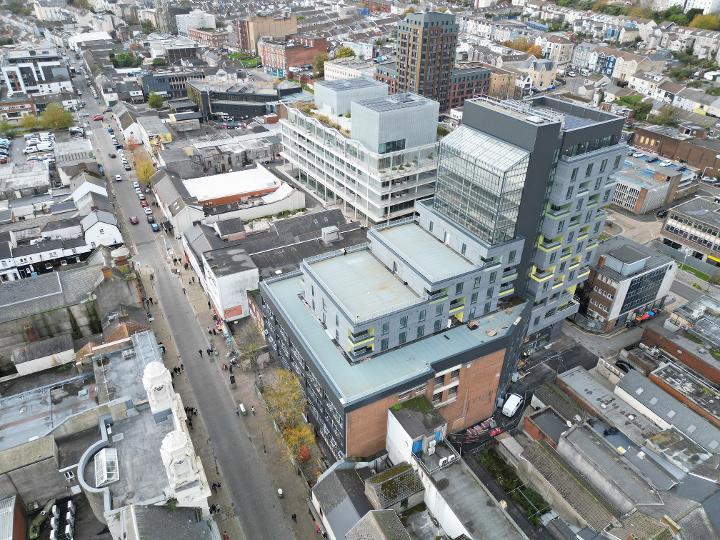
(Image: Swansea Council / Powell Dobson)

Council says letting nature guard the coast has saved £800,000
The same idea runs along the seafront. The board says nature-based coastal projects have protected the shoreline while saving more than £800,000 in maintenance over the past decade.
The figure comes without a breakdown of which schemes or which stretches of coast it covers.
A city-wide plan to help communities prepare for flooding, heatwaves and other effects of climate change has also been completed, according to the board.
Two measures of the city’s green space that are hard to square
The report says the 16 roofs and walls add up to the equivalent of two and a half football pitches of new green space.
When the Biophilic status was announced in May, the council put the total at around a hectare since 2020. A full-size pitch is roughly three-quarters of a hectare, so the newer figure is almost double the older one, a big jump in four months if both are right.
‘Nature at the centre’ of how the city grows
Cllr Andrew Stevens, the council’s cabinet member for environment and infrastructure, said in May that the recognition reflected “the progress already being made in Swansea to put nature at the centre of how the city grows and regenerates”.
The report itself comes from the Public Services Board, which brings together the council, the health board, the police, Natural Resources Wales, the fire service and Swansea Council for Voluntary Service.
Its chair, Cllr Andrea Harrington, said: “This report shows what can be achieved when organisations work together with a shared purpose.”
As a member of the network, the council says, Swansea will now swap ideas with cities around the world on bringing more nature into urban life.
Related stories from Swansea Bay News
Major Swansea office scheme officially opens with further tenant announced
The 71/72 Kingsway opening, green rooftop terrace and all.
Thousands flock to new city centre hub as Y Storfa officially opens
The old BHS store reborn on Oxford Street.
Drone video shows Swansea’s ‘living building’ rising above city skyline
The Biophilic Living Biome tower under construction.
Swansea celebrates being Wales’ green roof pioneer on World Green Roof Day
Where the city’s green roof count stood last June.

Discover more from Swansea Bay News
Subscribe to get the latest posts sent to your email.