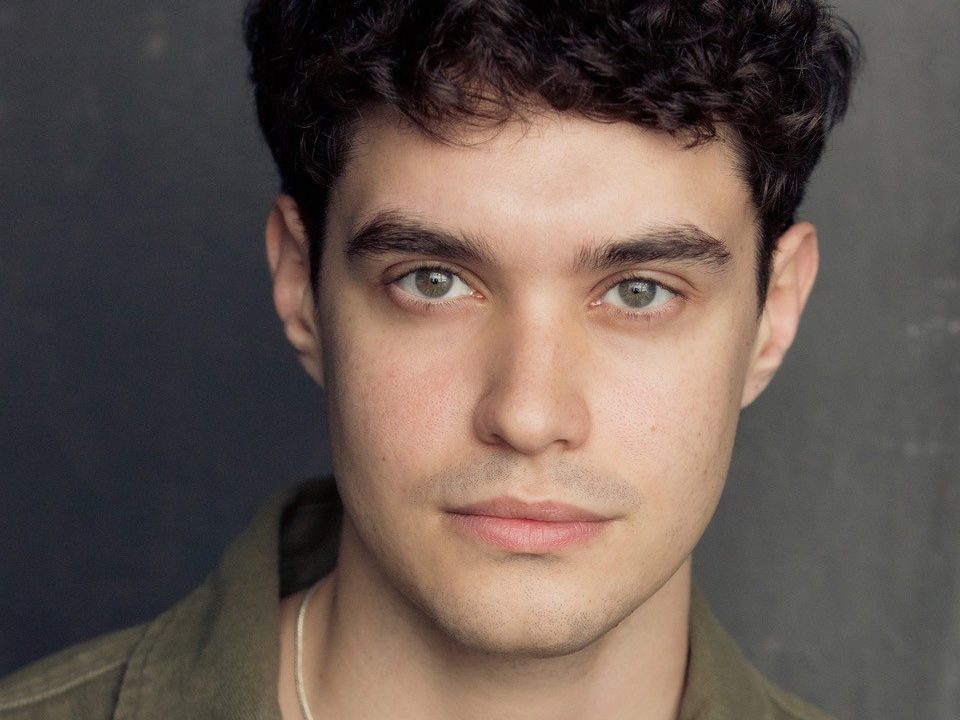
When Grand Ambition’s Physical Education finished its run at the Swansea Grand earlier this month, it left behind exactly the kind of conversation its writer set out to start. I reviewed the play as quite simply phenomenal, and I wanted to hear from the man who wrote it — and who also appeared in it. Jonathan Houlston grew up in Gorseinon, trained in Birmingham, and is now building a career that runs from a Norfolk rep season to an ITV drama alongside Luke Evans. We talked about masculinity, the long road from first draft to opening night, and what Swansea’s stage scene needs next.
Jonathan, thank you for talking to Swansea Bay News, and congratulations on the run. Are you pleased with how audiences received the show?
Absolutely. I don’t think any of us expected the response we received. We knew we believed in the play; we wanted to start conversations — but to see audiences connect with the characters and the story night after night was just incredible. The reviews were lovely, of course, but to see people stay behind to talk about the characters, their decisions, and even share their own experiences was beautiful. As a writer, that’s all I ever wanted.
The play is anchored by its exploration of masculinity. Is that a subject you’d been keen to write about for a while?
Subconsciously, I think yes. I never set out to write a play about masculinity. My ambition was to write about the young men I grew up around with authenticity. The more I explored, the more I began to understand its complexities. It’s also ever-changing. Like a lot of people my age, I grew up around the idea that being vulnerable or different somehow made you weak. I wasn’t interested in writing a play that tells people whether their definition of masculinity is good or bad. I wanted to explore why so many young men find it difficult to say they’re struggling, and what can happen when everything is left unsaid. Writing the play forced me to look inwards. At times it made me feel incredibly vulnerable, but it was also very cathartic.
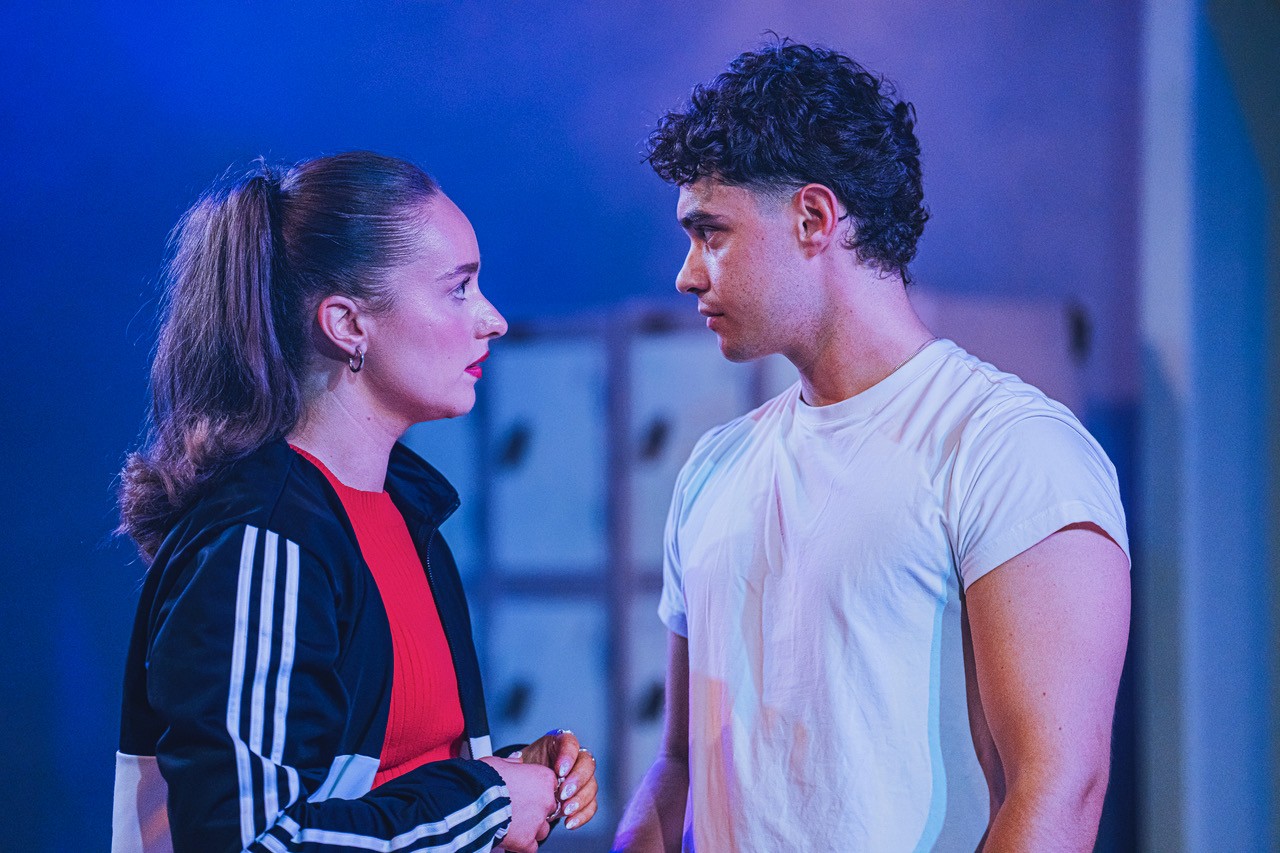
Did the script almost write itself, or was it a long process to get it to where it is now?
The first draft came quite quickly because I knew the world and the characters. Turning that into the version audiences saw in Swansea took years. There were lots of rewrites. ‘Leaner and meaner’ is something I kept coming back to. Audiences are clever. They don’t need to be spoon-fed exposition or told how a character feels. I really enjoyed the collaboration with Grand Ambition, because the script isn’t finished when you write ‘The End’ — it’s finished when it’s been challenged by actors, directors, a creative team and an audience.
As an actor in your own play, did you feel protective of the script, or did you embrace the input of the other performers and your director once you were in the rehearsal room?
At first I was very protective — I’d lived with the script for four years. But there was also something comforting about sharing the responsibility. The cast were world class. I said to everyone on the first day that these characters were now theirs to look after. They were extraordinary, and our director, Richard Mylan, created an environment where everyone felt comfortable contributing. There are moments in the final production that simply wouldn’t have landed if I’d tried to hold onto every word exactly as I’d written it.
Writing is insular; acting, with its immediate audience and collaboration, is the opposite. Do you gravitate towards one? And does being a writer help your acting, and vice versa?
From a dialogue perspective, acting gives me an immediate understanding of how the words feel in my body and on stage. Writing has given me a better idea of structure, rhythm, and what every scene is trying to achieve. It can be easy to fall into the trap of just saying lines in the rhythm they were written. That’s why a great director matters. Richard was constantly encouraging me to find something new in the text, to keep it fresh and find the truth in the line. Personally, I don’t really see them as separate anymore. They constantly inform each other.
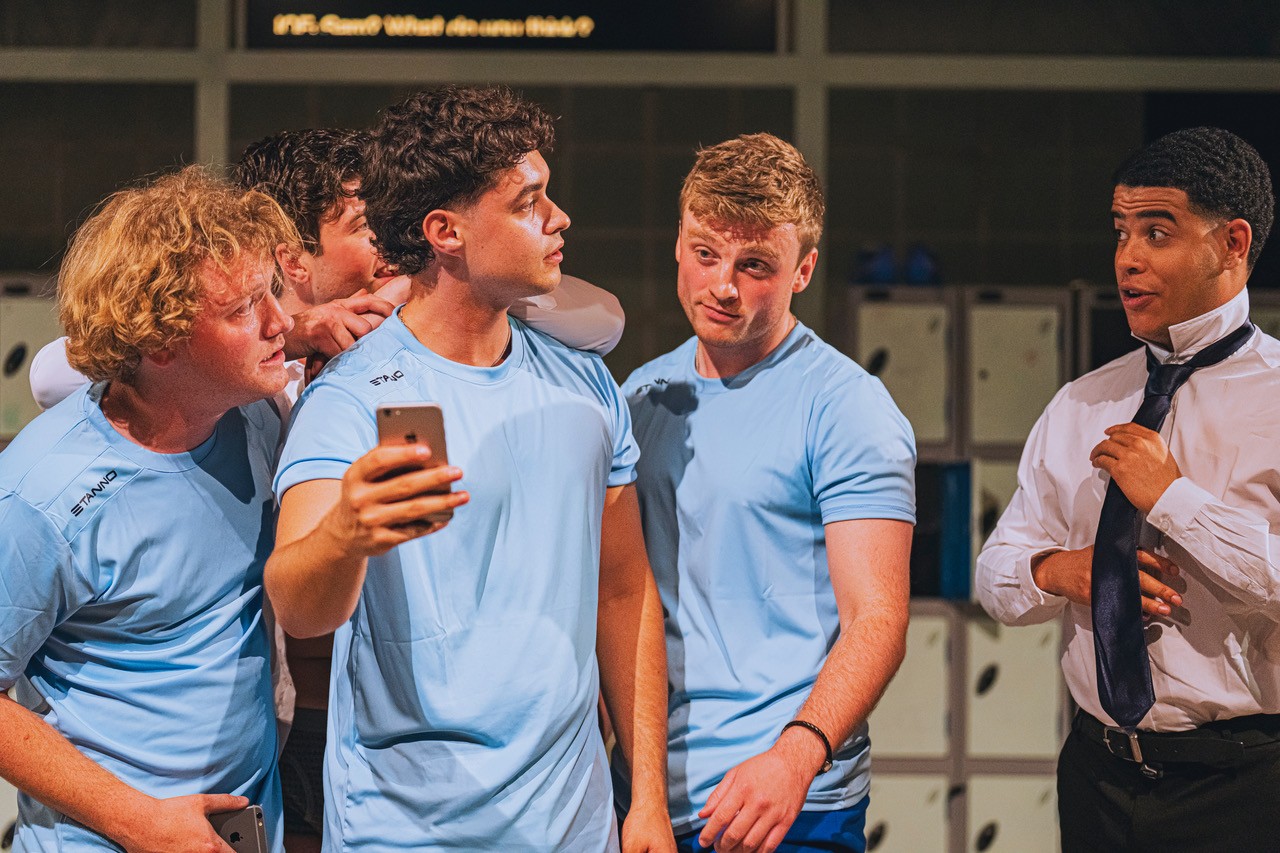
When you come off stage after the applause, how long does the adrenaline take to pass? Is it easy to shake off a character?
After a show you’re buzzing, especially if you’ve had a great audience. That’s why it’s nice to debrief with the cast afterwards. You’re all going through something similar, so a few hours to unwind is often the best way to deal with the excitement. I don’t find it too difficult to leave the character behind, but sometimes the world of the play can have quite the effect on you.
Any pre-show routines?
A solid warm-up, both vocally and physically, really puts you in the right headspace — but other than that it’s usually just learning how to deal with the nerves and turn them into excitement. We were lucky with this play, as the opening scene threw us straight into the action.
Tell us about your background, and when you first knew you wanted to act.
I grew up in Gorseinon and didn’t start taking it seriously until A-levels. School productions were my first taste of theatre, and I was involved in regional amateur drama groups — but I didn’t find out about drama school until I was seventeen or eighteen. I was lucky to have dedicated tutors at college who nudged me in the right direction. I then trained at the Royal Birmingham Conservatoire and moved to London after graduating. Birmingham gave me the tools to build a career, and moving to London was a necessary step. I’ve learned to love London, but Swansea will always be my home.
Is the industry what you thought it would be? People imagine glamour, but it’s long hours, hard work, and often chasing the next gig.
In some ways yes, in some ways no. There’s this idea of acting being glamorous, but the reality is less so. Constant auditioning, not hearing back, getting to the final round and then looking ahead to the next job. I’ve also often had to pack up my life and move somewhere completely alien with less than a week’s notice. So yes, it’s hard work — but it’s incredibly rewarding when you get to tell stories that mean something. One of my favourite aspects of this industry is when you truly bond with people in the cast. You work so closely that you often become a little family. Physical Education has definitely been one of those jobs.
Which writers or actors do you draw influence from?
As an actor, I really admire performers like Paul Mescal, because everything feels so truthful and understated — but it’s also inspiring to see how much talent comes from Wales. Matthew Rhys is an actor I’m drawn to right now. As a writer, I’m inspired by playwrights who combine humour with emotional honesty. Gary Owen has had a significant influence on me. ‘Killology’ was one of the first pieces of new writing I ever saw, and I was utterly blown away by it. I’ve recently been reading a lot of Emlyn Williams too — his play ‘Night Must Fall’ is one of my favourites. I take inspiration from work that makes an audience laugh one minute and quietly breaks their heart the next. As an actor and writer, nuanced, complicated, morally grey characters are what I’m interested in exploring right now.
All eyes go to London when people think of UK theatre, but Swansea has a pretty cool stage scene, don’t you think?
It really does. People will look straight to London, but there are brilliant artists making exciting work in Swansea. Grand Ambition is championing those unheard voices. I think their success as a company is partly down to their willingness to take risks. The work never feels ‘safe’ or ‘easy’. Physical Education is proof that bold stories can and should be developed here.
Growing up in Swansea, did you feel supported in wanting a career in the arts? Was drama much of a thing at school?
I was very fortunate to have people who encouraged me, particularly my parents. They recognised how much I loved performing and, thankfully, never said no. Sadly it isn’t the same for everyone, and I’d be lying if I said the decision didn’t come with challenges. But if it was plain sailing, I wouldn’t have written Physical Education. At school and college, my drama tutors gave me confidence and a creative outlet — something every young person deserves access to.
What about acting and writing opportunities for new talent in the city? Does that need work?
Creatively, Swansea is definitely improving, but there’s always room for more opportunities. One of the reasons Physical Education means so much to me is that it shows what can happen when new writers are trusted. I’ll forever be grateful to Grand Ambition for believing in me and the play. They’re incredible at nurturing Swansea talent. If we want Welsh stories to get the recognition they deserve, we need to keep investing in Welsh artists.
Any advice for budding writers or performers in Swansea and South Wales?
Just do it. Create your own work. Don’t wait for the phone to ring. You’ll learn far more by making something than by waiting for the perfect opportunity. If you’re writing, don’t worry about getting it perfect first time. Your first draft is never going to be the one that ends up on stage, so don’t be afraid of rewriting — most good writing comes from editing, and for me that’s the most exciting part. I’d also say consume as much art as you can. Read plays, watch theatre, go to the cinema, listen to music. Everything you experience feeds into your work. And remember you’re always learning. During rehearsals there were moments when I’d just stop and think, “They’re brilliant.” Watching other actors make choices I’d never have thought of has made me a better actor and a better writer.
Finally, what’s next?
I’m currently in rehearsals for a summer rep season in Norfolk, performing in four different plays between July and September. It’s bittersweet. I loved Physical Education, so there’s naturally a sense of letting go now the production has finished — but I feel incredibly lucky to have gone straight into another job that pushes me in completely different ways. Later this year I’ll also appear in an ITV drama called ‘The Party’. Luke Evans plays Martin Gilmour in the present day, and I play Martin in the flashbacks. It’s a project I’m really proud of, and I’m excited for people to finally see it.
I’m also very excited to see what the future holds for Physical Education. There have already been lots of conversations about where it might go next, so hopefully this is just the beginning.
Jonathan Houlston can be seen in the ITV series ‘The Party’ this autumn.
Related stories from Swansea Bay News
THEATRE INTERVIEW: ‘Authentic. Dangerous. Tender.’ — Richard Mylan on Physical Education
The play’s director on masculinity, a three-week rehearsal room, and telling Swansea’s uncomfortable stories.
THEATRE REVIEW: ‘Quite simply phenomenal’ — Physical Education lays bare life for Swansea’s teenage boys
Our review of Grand Ambition’s raw, funny portrait of the city’s young men.
More from the Swansea Grand Theatre
All our coverage of shows and stars at the city’s landmark venue.
Discover more from Swansea Bay News
Subscribe to get the latest posts sent to your email.