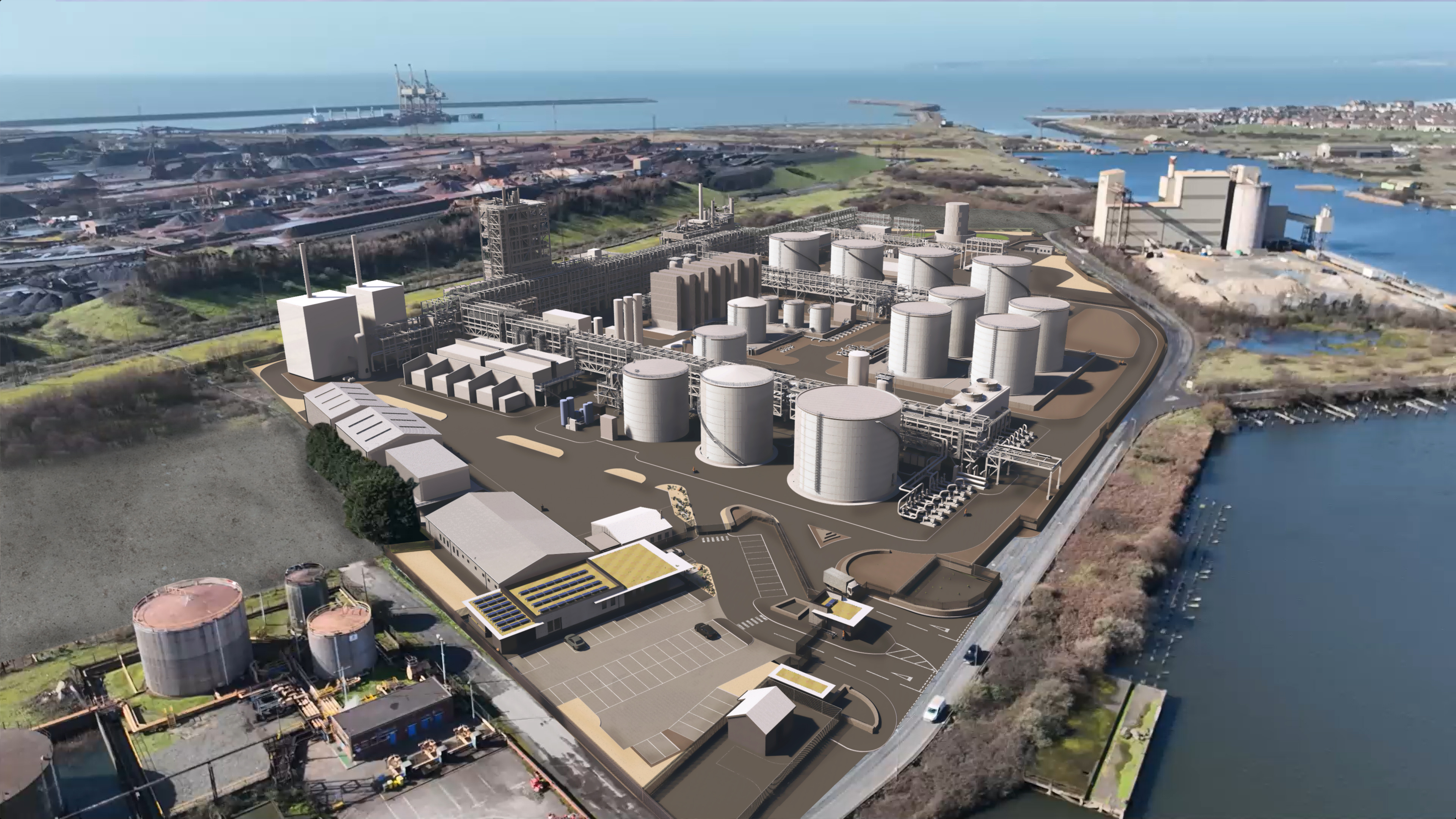
A long-planned green jet fuel plant for Port Talbot has been scrapped, the company behind it has confirmed — ending a project it had been working on for well over a decade.
LanzaTech said it had taken the “difficult decision” not to go ahead with its sustainable aviation fuel facility, known as DRAGON I, “at this time.”
The plant would have turned waste gases into ethanol, then processed that into cleaner fuel for aircraft.
The company had been pursuing the project since 2012, and won planning approval in March 2024 after a series of steps that began when the £25m facility was first announced at the end of 2022.
But the ground shifted under the scheme. The plant had been designed to capture waste gases from Tata Steel’s blast furnaces and convert them into ethanol.
When Tata closed those blast furnaces in 2024, with the loss of around 2,000 jobs, that source of waste gas disappeared.
LanzaTech said it then looked at an alternative — bringing in imported ethanol to convert into fuel at the site instead.
But its managing director for the UK, Jim Woodger, said that even with that change, the Port Talbot site remained “significantly more expensive” for production than rival locations.
He said the capital costs were “not competitive” with sites that already had the right infrastructure in place, and that even with public funding on offer, the project did not reach the threshold needed for a viable investment.
The company also explored producing ethanol elsewhere in Wales to feed the plant — including a facility at Milford Haven that would have used captured carbon dioxide and green hydrogen.
That option has also been dropped. Mr Woodger said the high cost of green hydrogen in the UK made the route “economically unviable,” and that despite talks with government departments, there had been no policy changes sufficient to bring those costs down.
As a result, the firm said it had “ceased developing all UK ethanol production facilities” that would have used that method.
Mr Woodger thanked local stakeholders, along with the Welsh and UK governments and Neath Port Talbot Council, for their support over the years.
“We appreciate that not moving forward with the DRAGON I project will be a disappointment in Port Talbot and Wales,” he said.
“It is a conclusion reached only after sustained technical, commercial and policy work to make the project viable.”
The company said the lessons learned had been fed into a second project, DRAGON II, in Humberside, which it said was now “moving forward at pace” — with a final investment decision hoped for in 2027.
The collapse of the scheme is a fresh blow to the green-jobs ambitions tied to Port Talbot’s industrial future, coming the same week that Tata warned new UK steel import rules left the site exposed.
It also lands as the town’s wider transition continues to face hurdles, with Tata’s replacement electric arc furnace itself facing possible delays over a grid connection hold-up.
The project had also been part of the wider clean-energy ambitions for the area, including the Celtic Freeport, which aims to draw green industry and jobs to Port Talbot and Milford Haven.